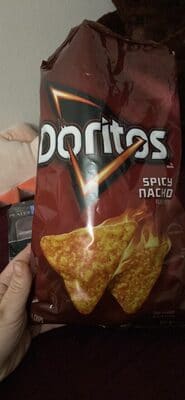
Corn chips
Doritos Spicy Nacho
9.25 oz
Score
- Dye with an EU warning label
- Contains synthetic dyes
- Ultra-processed
- High in salt
- Contains added sugars
- Contains seed oils
- Contains artificial flavors
Why it scores 17
Doritos Spicy Nacho scores 17 out of 100 (Bad) under GoodSwap’s published rules. What moved the score most:
- minus 20 points Dextrose: An added sugar. Strong
- minus 20 points Lactose: An added sugar. Strong
- minus 18 points Ultra-processed (NOVA 4): Classified NOVA 4: made with industrial ingredients and additives. Strong
Every line of the math is on The Receipt below, with its evidence tier and sources.
Better tortilla chips
-
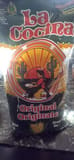 Nacho chips La Cocina · 400 g No EU warning-label dyes · No synthetic dyes Score 76 out of 100 , 59 points higher
 -
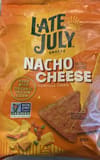 Nacho Cheese Late July · 7.8 oz No EU warning-label dyes · No synthetic dyes Score 58 out of 100 , 41 points higher
 -
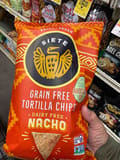 Tortilla Chips Nacho Siete · 142 g No EU warning-label dyes · No synthetic dyes Score 79 out of 100 , 62 points higher
 -
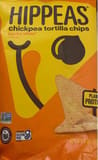 Nacho Vibes Chickpea Tortilla Chips Hippeas No EU warning-label dyes · No synthetic dyes Score 65 out of 100 , 48 points higher
 -
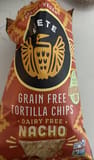 Grain Free Tortilla Chips Nacho Siete · 1 oz No EU warning-label dyes · No synthetic dyes Score 79 out of 100 , 62 points higher
The same kind of product, at least 10 points higher, sold in the US. Never paid placements.
The Receipt
Spicy Nacho
Ingredients
- Dextrose minus 20 points
- Lactose minus 20 points
- Yellow 6 minus 10 points
Processing
- Ultra-processed (NOVA 4) minus 18 points
- 5 kinds of ultra-processing markers minus 6 points
Nutrition per 100 g
- Saturated fat 3.6 g / 100 g minus 3 points
- Salt 1.7 g / 100 g minus 5 points
- Energy 536 kcal / 100 g minus 3 points
- Fiber 3.6 g / 100 g plus 2 points
100 − 83 = 17
Can’t score above 79. Contains dextrose, an ingredient of high concern. [1][2][3][4][5][6][7][8][12][13]
Can’t score above 79. High in fat and salt (above the front-of-pack "high" level). [14]
Nutrition per 100 g
| Energy | 536 kcal |
|---|---|
| Fat | 28.6 g |
| Saturated fat | 3.6 g |
| Trans fat | 0 g |
| Carbohydrates | 64.3 g |
| Sugars | 3.6 g |
| Added sugars | 0 g |
| Fiber | 3.6 g |
| Protein | 7.1 g |
| Salt | 1.7 g |
Serving: 28 g
Ingredients
- CORN
- VEGETABLE OIL (CORN, CANOLA, SUNFLOWER OIL)
- MALTODEXTRIN (MADE FROM CORN)
- SALT
- WHEY
- MONOSODIUM GLUTAMATE
- BUTTERMILK
- ROMANO CHEESE (COW'S MILK, CHEESE CULTURES, SALT, ENZYMES)
- CHEDDAR CHEESE (MILK, CHEESE CULTURES, SALT, ENZYMES)
- CORN STARCH
- ONION POWDER
- GARLIC POWDER
- DEXTROSE (high concern)
- NATURAL AND ARTIFICIAL FLAVOR
- SPICES
- LACTOSE (high concern)
- SODIUM CASEINATE
- ARTIFICIAL COLOR (YELLOW 6 LAKE, RED 40 LAKE, YELLOW 6, RED 40, YELLOW 5, BLUE 1)
- CITRIC ACID
- SUGAR (high concern)
- LACTIC ACID
- SKIM MILK
- DISODIUM INOSINATE
- DISODIUM GUANYLATE
Label text, as published
CORN, VEGETABLE OIL (CORN, CANOLA, AND/OR SUNFLOWER OIL), MALTODEXTRIN (MADE FROM CORN), SALT, WHEY, MONOSODIUM GLUTAMATE, BUTTERMILK, ROMANO CHEESE (COW'S MILK, CHEESE CULTURES, SALT, ENZYMES), CHEDDAR CHEESE (MILK, CHEESE CULTURES, SALT, ENZYMES), CORN STARCH, ONION POWDER, GARLIC POWDER, DEXTROSE, NATURAL AND ARTIFICIAL FLAVOR, SPICES, LACTOSE, SODIUM CASEINATE, ARTIFICIAL COLOR (YELLOW 6 LAKE, RED 40 LAKE, YELLOW 6, RED 40, YELLOW 5, BLUE 1), CITRIC ACID, SUGAR, LACTIC ACID, SKIM MILK, DISODIUM INOSINATE, AND DISODIUM GUANYLATE.
Allergens and diets
Contains: Milk
- Not vegan
- Palm-oil-free
Always check the package: recipes change.
More corn chips on GoodSwap
-
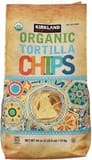 Organic Tortilla Chips Kirkland Signature · 40 oz Contains seed oilsCertified organicNo additives Score 76 out of 100 Good
 -
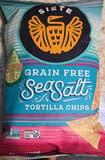 Grain Free Tortilla Chips Siete · 5 oz (142 g) No additivesSeed-oil free Score 79 out of 100 Good
 -
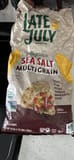 Organic Sea Salt Multigrain Late July Snacks · 1 Contains added sugarsContains seed oilsCertified organicNo additives Score 64 out of 100 Good
 -
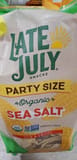 Organic Sea Salt Thin & Crispy Tortilla Chips Late July Snacks · 14.75 oz Contains seed oilsCertified organicNo additives Score 79 out of 100 Good
 -
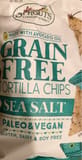 Grain Free Tortilla Chips Sprouts No additivesSeed-oil free Score 79 out of 100 Good
 -
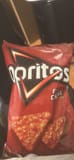
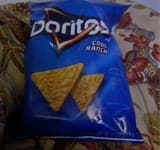 Cool ranch Doritos Frito Lay · 2 3/4 Dye with an EU warning labelContains synthetic dyesUltra-processedHigh in salt Score 19 out of 100 Bad
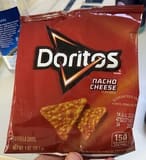
More from Doritos
Sources
-
Guideline: sugars intake for adults and children
“In both adults and children, WHO recommends reducing the intake of free sugars to less than 10% of total energy intake”
who.int
-
Dietary Guidelines for Americans, 2025–2030
“Limit foods and beverages that include artificial flavors, petroleum-based dyes, artificial preservatives, and low-calorie non-nutritive sweeteners.”
cdn.realfood.gov
-
Added and free sugars should be as low as possible
“Sugar consumption is a known cause of dental caries.”
efsa.europa.eu
-
Regulation (EC) No 1333/2008 of 16 December 2008 on food additives
“may have an adverse effect on activity and attention in children.”
eur-lex.europa.eu
-
“may have an adverse effect on activity and attention in children.”
legislation.gov.uk
-
“Artificial colours or a sodium benzoate preservative (or both) in the diet result in increased hyperactivity in 3-year-old and 8/9-year-old children in the general population.”
doi.org
-
Tracking Food Industry Pledges to Remove Petroleum Based Food Dyes
“FD&C Green No. 3, FD&C Red No. 40, FD&C Yellow No. 5, FD&C Yellow No. 6, FD&C Blue No. 1, and FD&C Blue No. 2—by the end of 2027.”
fda.gov
-
California AB 2316 (2024), Pupil nutrition: substances: prohibition
“beginning December 31, 2027, would prohibit a school district, county superintendent of schools, or charter school”
leginfo.legislature.ca.gov
-
Saturated fatty acid and trans-fatty acid intake for adults and children: WHO guideline
“WHO recommends that adults and children reduce saturated fatty acid intake to 10% of total energy intake (strong recommendation).”
who.int
-
“For adults, WHO recommends less than 2000 mg/day of sodium (equivalent to less than 5 g/day salt), or just under a teaspoon.”
who.int
-
List of Select Chemicals in the Food Supply Under FDA Review
“The table below includes select food ingredients (including food and color additives), food contact substances, and contaminants under FDA review as of May 12, 2026 .”
fda.gov
-
21 CFR 74.705 FD&C Yellow No. 5
“shall specifically declare the presence of FD&C Yellow No. 5 by listing the color additive as FD&C Yellow No. 5 among the list of ingredients.”
ecfr.gov
-
“Table 3: Criteria for drinks (per 100ml)”
assets.publishing.service.gov.uk
-
HHS, FDA to Phase Out Petroleum-Based Synthetic Dyes in Nation’s Food Supply (press release)
“Initiating the process to revoke authorization for two synthetic food colorings—Citrus Red No. 2 and Orange B—within the coming months.”
fda.gov
-
“Greater exposure to ultra-processed food was associated with a higher risk of adverse health outcomes, especially cardiometabolic, common mental disorder, and mortality outcomes.”
doi.org
-
“replacement of saturated fat in the diet with linoleic acid effectively lowers serum cholesterol but does not support the hypothesis that this translates to a lower risk of death from coronary heart disease or all causes.”
doi.org
-
“These data provide support for current recommendations to replace saturated fat with polyunsaturated fat for primary prevention of CHD.”
doi.org