Breakfast cereals
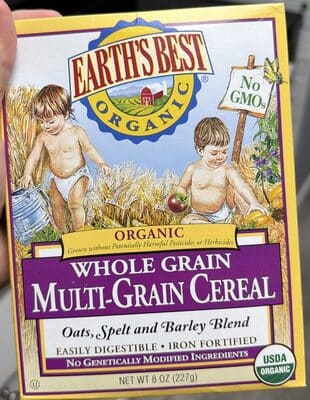
Earth's Best Whoel Grain Multi-Grain Cereal
8 oz
Score
- Certified organic
- Contains whole grains
Why it scores 96
Earth's Best Whoel Grain Multi-Grain Cereal scores 96 out of 100 (Excellent) under GoodSwap’s published rules. What moved the score most:
- minus 11 points Sugars 21.4 g / 100 g: Very high in sugar. Strong
- plus 5 points Certified organic: Carries a certified-organic label. Info
- plus 4 points Fiber 14.3 g / 100 g: A good source of fiber. Strong
Every line of the math is on The Receipt below, with its evidence tier and sources.
The Receipt
Whoel Grain Multi-Grain Cereal
Nutrition per 100 g
- Sugars 21.4 g / 100 g minus 11 points
- Energy 429 kcal / 100 g minus 2 points
- Fiber 14.3 g / 100 g plus 4 points
Bonuses
- Certified organic plus 5 points
100 − 4 = 96
Nutrition per 100 g
| Energy | 429 kcal |
|---|---|
| Fat | 3.6 g |
| Saturated fat | 0 g |
| Trans fat | 0 g |
| Carbohydrates | 78.6 g |
| Sugars | 21.4 g |
| Added sugars | 0 g |
| Fiber | 14.3 g |
| Protein | 14.3 g |
| Salt | 0 g |
Serving: 4 tbsp (14 g)
Ingredients
- Organic whole grain oat flour
- organic whole grain barley flour
- organic whole grain spelt (wheat) flour
- electrolytic iron
- vitamin E (mixed tocopherols) added to preserve freshness
Label text, as published
Organic whole grain oat flour, organic whole grain barley flour, organic whole grain spelt (wheat) flour, electrolytic iron, vitamin E (mixed tocopherols) added to preserve freshness.
Allergens and diets
Contains: Wheat, Gluten
- Vegan
- Vegetarian
- Not gluten-free
- Palm-oil-free
Always check the package: recipes change.
More breakfast cereals on GoodSwap
-
 Grape-Nuts Cereal Post · 20.5 oz (1 lb 4.5 oz) 581 g No additivesContains whole grains Score 93 out of 100 Excellent
 -
 Lightly Sweetened Maple Berry Blend Cereal Morning Summit · 1 box, 2 lb 6 oz High in sugarHigh in saturated fatContains added sugarsNo additives Score 22 out of 100 Poor
 -
 Catalina Crunch Cinnamon Toast Protein Cereal Catalina Crunch · 24 oz Ultra-processedContains non-nutritive sweetenersContains seed oils Score 61 out of 100 Good
 -
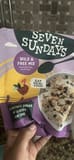 Wild & Free Mix Seven Sundays · 12 oz Contains added sugarsNo additivesContains whole grains Score 73 out of 100 Good
 -
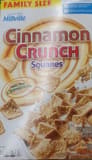 Cinnamon Crunch Squares Milville Ultra-processedHigh in sugarContains added sugarsContains seed oils Score 11 out of 100 Bad
 -
 overnight oats Blueberry Mush · 5 oz Contains added sugarsNo additivesContains whole grains Score 69 out of 100 Good
More from Earth's Best
-
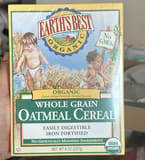 Whole Grain Oatmeal Cereal Earth's Best · 227 g Score 100 out of 100 Excellent
 -
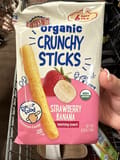 Organic Crunchy Sticks Earth's Best Score 70 out of 100 Good
 -
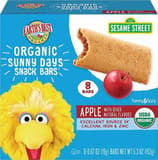 Organic sesame street sunny day toddler snack Earth's Best · 4.69 oz/133 g Score 10 out of 100 Bad
 -
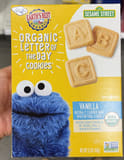 Organic Letter Of The Day Cookies Very Vanilla Earth's Best · 5.3 oz/150 g Score 11 out of 100 Bad
Sources
-
Guideline: sugars intake for adults and children
“In both adults and children, WHO recommends reducing the intake of free sugars to less than 10% of total energy intake”
who.int
-
Dietary Guidelines for Americans, 2025–2030
“Limit foods and beverages that include artificial flavors, petroleum-based dyes, artificial preservatives, and low-calorie non-nutritive sweeteners.”
cdn.realfood.gov
-
7 CFR 205.102 Use of the term "organic" (National Organic Program)
“Any agricultural product that is sold, labeled, or represented as “100 percent organic,” “organic,” or “made with organic (specified ingredients or food group(s))” must be: (a) Produced in accordance with the requirements specified in § 205.101 or §§ 205.202 through 205.207”
ecfr.gov