Breakfast cereals
Kashi Cinnamon Walnut Cereal
14.5 oz
Score
- Contains added sugars
- Contains seed oils
- Contains whole grains
Why it scores 44
Kashi Cinnamon Walnut Cereal scores 44 out of 100 (Okay) under GoodSwap’s published rules. What moved the score most:
- minus 20 points Corn syrup: An added sugar. Strong
- minus 20 points Sugar: An added sugar. Strong
- minus 10 points Molasses: An added sugar. Strong
Every line of the math is on The Receipt below, with its evidence tier and sources.
Better breakfast cereals
-
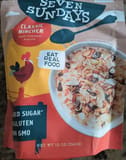 Classic Bircher Apple Cinnamon Almond Muesli Cereal Seven Sundays · 12 oz (340 g) No added sugars · No seed oils Score 97 out of 100 , 53 points higher
 -
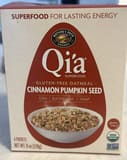 Qi'a Gluten-Free Oatmeal – Cinnamon Pumpkin Seed Nature's Path · 8 oz No added sugars · No seed oils Score 91 out of 100 , 47 points higher
 -
 Old Country Style Muesli Whole Grain Hot or Cold Cereal Bob's Red Mill · 1.13 kg No added sugars · No corn syrup Score 84 out of 100 , 40 points higher
 -
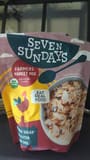 Farmers Market Mix Seven Sundays · 12 oz No added sugars · No seed oils Score 100 out of 100 , 56 points higher
 -
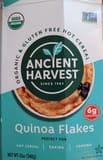 Quinoa Flakes Ancient Harvest · 12 oz No added sugars · No seed oils Score 100 out of 100 , 56 points higher
The same kind of product, at least 10 points higher, sold in the US. Never paid placements.
The Receipt
Cinnamon Walnut Cereal
Ingredients
- Corn syrup minus 20 points
- Sugar minus 20 points
- Molasses minus 10 points
Nutrition per 100 g
- Sugars 14 g / 100 g minus 8 points
- Energy 404 kcal / 100 g minus 2 points
- Fiber 14 g / 100 g plus 4 points
100 − 56 = 44
Can’t score above 79. Contains corn syrup, an ingredient of high concern. [1][2][3]
Nutrition per 100 g
| Energy | 404 kcal |
|---|---|
| Fat | 10.5 g |
| Saturated fat | 0.9 g |
| Trans fat | 0 g |
| Carbohydrates | 75.4 g |
| Sugars | 14 g |
| Added sugars | 12.3 g |
| Fiber | 14 g |
| Protein | 10.5 g |
| Salt | 0.3 g |
Serving: 0.75 cup (57 g)
Ingredients
- ROLLED OATS
- BROWN RICE SYRUP (high concern)
- KASHI PUFFED WHOLE GRAIN BLEND (WHEAT, BROWN RICE, BARLEY, RYE) (not recognized)
- CANE SUGAR (high concern)
- CHICORY ROOT FIBER
- WALNUTS
- PUFFED MILLET
- CANOLA OIL
- MOLASSES (high concern)
- SOY FLAKES (not recognized)
- CINNAMON
- SALT
- MIXED TOCOPHEROLS (VITAMIN E) FOR FRESHNESS
- VITAMIN D MUSHROOM POWDER
- TRITICALE (not recognized)
- BUCKWHEAT
- SESAME SEEDS
Label text, as published
ROLLED OATS, BROWN RICE SYRUP, KASHI PUFFED WHOLE GRAIN BLEND (WHEAT, BROWN RICE, BARLEY, RYE), CANE SUGAR, CHICORY ROOT FIBER, WALNUTS, PUFFED MILLET, CANOLA OIL, MOLASSES, SOY FLAKES, CINNAMON, SALT, MIXED TOCOPHEROLS (VITAMIN E) FOR FRESHNESS, VITAMIN D MUSHROOM POWDER, TRITICALE, BUCKWHEAT, SESAME SEEDS
Allergens and diets
Contains: Tree nuts, Wheat, Gluten, Sesame
- Not gluten-free
Always check the package: recipes change.
More breakfast cereals on GoodSwap
-
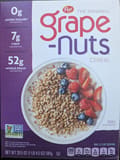 Grape-Nuts Cereal Post · 20.5 oz (1 lb 4.5 oz) 581 g No additivesContains whole grains Score 93 out of 100 Excellent
 -
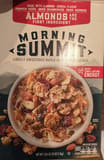 Lightly Sweetened Maple Berry Blend Cereal Morning Summit · 1 box, 2 lb 6 oz High in sugarHigh in saturated fatContains added sugarsNo additives Score 22 out of 100 Poor
 -
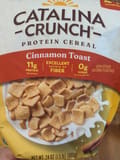 Catalina Crunch Cinnamon Toast Protein Cereal Catalina Crunch · 24 oz Ultra-processedContains non-nutritive sweetenersContains seed oils Score 61 out of 100 Good
 -
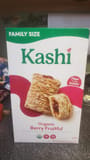 Organic Berry Fruit Cereal Kadhi · 4 × 72 g Ultra-processedContains added sugarsCertified organicContains whole grains Score 30 out of 100 Poor
 -
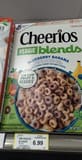 Cheerios Veggie Blends Blueberry Banana Cheerios · 10.6 oz Ultra-processedContains added sugarsContains seed oilsContains whole grains Score 20 out of 100 Poor
 - Peach mango cheerios General Mills · 18.1 oz High in sugarContains added sugarsContains seed oilsNo synthetic dyes Score 17 out of 100 Bad
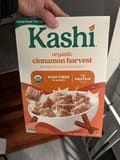
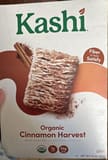
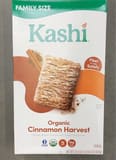
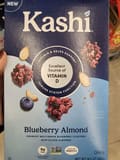
More from Kashi
Sources
-
Guideline: sugars intake for adults and children
“In both adults and children, WHO recommends reducing the intake of free sugars to less than 10% of total energy intake”
who.int
-
Dietary Guidelines for Americans, 2025–2030
“Limit foods and beverages that include artificial flavors, petroleum-based dyes, artificial preservatives, and low-calorie non-nutritive sweeteners.”
cdn.realfood.gov
-
Added and free sugars should be as low as possible
“Sugar consumption is a known cause of dental caries.”
efsa.europa.eu
-
“replacement of saturated fat in the diet with linoleic acid effectively lowers serum cholesterol but does not support the hypothesis that this translates to a lower risk of death from coronary heart disease or all causes.”
doi.org
-
“These data provide support for current recommendations to replace saturated fat with polyunsaturated fat for primary prevention of CHD.”
doi.org