Oatmeal
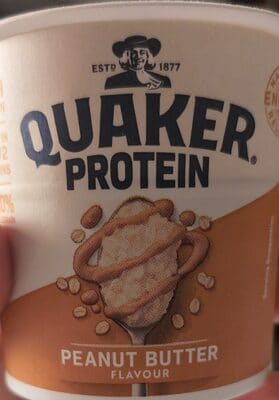
Quaker Peanut Butter Flavour Hot Oat Cereal with Soy Protein
58 g
Score
- Ultra-processed
- Contains added sugars
- Contains whole grains
Why it scores 42
Quaker Peanut Butter Flavour Hot Oat Cereal with Soy Protein scores 42 out of 100 (Okay) under GoodSwap’s published rules. What moved the score most:
- minus 20 points Sugar: An added sugar. Strong
- minus 18 points Ultra-processed (NOVA 4): Classified NOVA 4: made with industrial ingredients and additives. Strong
- minus 8 points Sugars 16.4 g / 100 g: High in sugar. Strong
Every line of the math is on The Receipt below, with its evidence tier and sources.
Better breakfast cereals
-
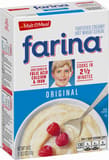 Fortified Creamy Hot Wheat Cereal Malt O Meal · 18 oz (1 lb 2 oz) 510 g Not ultra-processed · No added sugars Score 100 out of 100 , 58 points higher
 -
 Old Country Style Muesli Whole Grain Hot or Cold Cereal Bob's Red Mill · 1.13 kg Not ultra-processed · No added sugars Score 84 out of 100 , 42 points higher
 -
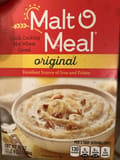 Malt-O-Meal original Quick Cooking Hot Wheat Cereal Malt O Meal · 36 oz Not ultra-processed · No sugar Score 79 out of 100 , 37 points higher
 -
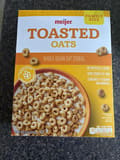 Toasted Oats Whole Grain Oat Cereal Meijer · 18 oz No added sugars · No sugar Score 79 out of 100 , 37 points higher
 -
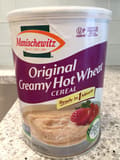 Original creamy hot wheat cereal Manischewitz · 340 g Not ultra-processed · No added sugars Score 100 out of 100 , 58 points higher
The same kind of product, at least 10 points higher, sold in the US. Never paid placements.
The Receipt
Peanut Butter Flavour Hot Oat Cereal with Soy Protein
Ingredients
- Sugar minus 20 points
- Soy protein isolate / concentrate minus 2.5 points
- Natural flavors minus 2.5 points
- Soy lecithin minus 1.5 points
- Calcium phosphate minus 1.5 points
Processing
- Ultra-processed (NOVA 4) minus 18 points
- 3 kinds of ultra-processing markers minus 3 points
Nutrition per 100 g
- Sugars 16.4 g / 100 g minus 8 points
- Salt 0.7 g / 100 g minus 3 points
- Energy 372 kcal / 100 g minus 2 points
- Fiber 6 g / 100 g plus 4 points
100 − 58 = 42
Can’t score above 79. Contains sugar, an ingredient of high concern. [1][2][3]
Nutrition per 100 g
| Energy | 372 kcal |
|---|---|
| Fat | 5.7 g |
| Saturated fat | 1 g |
| Carbohydrates | 56.9 g |
| Sugars | 16.4 g |
| Added sugars | 0 g |
| Fiber | 6 g |
| Protein | 20.7 g |
| Salt | 0.7 g |
Serving: 1 pot (58 g)
Ingredients
- Quaker Rolled Oats (67%)
- Skimmed Milk Powder
- Soy Protein (9%)
- Sugar (high concern)
- Salt
- Natural Flavourings
- Emulsifier (Soy Lecithin) (not recognized)
- Anticaking Agent (Calcium Phosphate) (not recognized)
Label text, as published
Quaker Rolled Oats (67%), Skimmed Milk Powder, Soy Protein (9%), Sugar, Salt, Natural Flavourings, Emulsifier (Soy Lecithin), Anticaking Agent (Calcium Phosphate). ALLERGY ADVICE: For allergens, see ingredients in bold. May contain wheat, barley. For BEST BEFORE see base of pot.
Allergens and diets
Contains: Milk, Soy, Gluten
- Not vegan
- Not gluten-free
- Palm-oil-free
Always check the package: recipes change.
More oatmeal on GoodSwap
-
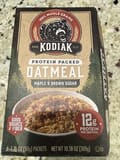 Protein Packed Oatmeal Maple & Brown Sugar Kodiak · 10.58 oz, 6 × 1.76 oz packets Ultra-processedContains added sugarsContains whole grains Score 17 out of 100 Bad
 -
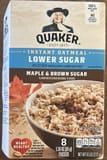 Instant Oatmeal Lower Sugar Maple & Brown Sugar Quaker · 9.5 oz, 8 × 1.19 oz packets Ultra-processedHigh in saltContains non-nutritive sweetenersContains added sugars Score 49 out of 100 Okay
 -
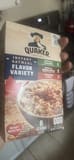 Instant Oatmeal Flavor Variety Quaker · 12.1 oz, 8z 1.51 oz packets Ultra-processedHigh in sugarContains added sugarsNo additives Score 47 out of 100 Okay
 -
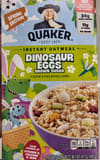 Instant Oatmeal Dinosaur Eggs Brown Sugar Quaker · 14.1 oz, 8 × 1.76 oz packets Ultra-processedContains added sugarsContains palm oilSeed-oil free Score 8 out of 100 Bad
 -
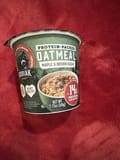 Protein-Packed Oatmeal Maple & Brown Sugar Kodiak Cakes · 2.12 oz Ultra-processedContains added sugarsNo additivesContains whole grains Score 25 out of 100 Poor
 -
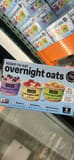 Overnight Oats Mush Contains added sugarsNo additivesContains whole grains Score 69 out of 100 Good
More from Quaker
-
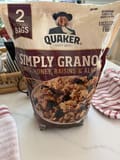 Simply Granola Oats, Honey, Raisins & Almonds Quaker · 1.95 kg Score 19 out of 100 Bad
 -
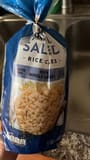 Quaker Lightly Salted Rice Cakes Quaker · 127 g Score 94 out of 100 Excellent
 - Quaker, instant oatmeal, maple & brown sugar Quaker · 60.6 oz/1.72 kg Score 42 out of 100 Okay
-
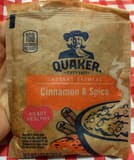 Instant Oatmeal Cinnamon & Spice Quaker Score 43 out of 100 Okay
Sources
-
Guideline: sugars intake for adults and children
“In both adults and children, WHO recommends reducing the intake of free sugars to less than 10% of total energy intake”
who.int
-
Dietary Guidelines for Americans, 2025–2030
“Limit foods and beverages that include artificial flavors, petroleum-based dyes, artificial preservatives, and low-calorie non-nutritive sweeteners.”
cdn.realfood.gov
-
Added and free sugars should be as low as possible
“Sugar consumption is a known cause of dental caries.”
efsa.europa.eu
-
21 CFR 101.22 Foods; labeling of spices, flavorings, colorings and chemical preservatives
“whose significant function in food is flavoring rather than nutritional.”
ecfr.gov
-
EFSA issues new advice on phosphates
“We estimated that dietary exposure to phosphates may exceed the new ADI for infants, toddlers and children with average consumption of phosphates in their diet.”
efsa.europa.eu
-
“For adults, WHO recommends less than 2000 mg/day of sodium (equivalent to less than 5 g/day salt), or just under a teaspoon.”
who.int
-
“Greater exposure to ultra-processed food was associated with a higher risk of adverse health outcomes, especially cardiometabolic, common mental disorder, and mortality outcomes.”
doi.org