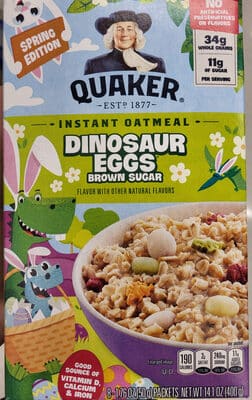
Oatmeal
Quaker Instant Oatmeal Dinosaur Eggs Brown Sugar
14.1 oz, 8 × 1.76 oz packets
Score
- Ultra-processed
- Contains added sugars
- Contains palm oil
- Seed-oil free
- No synthetic dyes
- Contains whole grains
Why it scores 8
Quaker Instant Oatmeal Dinosaur Eggs Brown Sugar scores 8 out of 100 (Bad) under GoodSwap’s published rules. What moved the score most:
- minus 20 points Sugar: An added sugar. Strong
- minus 20 points Dextrose: An added sugar. Strong
- minus 18 points Ultra-processed (NOVA 4): Classified NOVA 4: made with industrial ingredients and additives. Strong
Every line of the math is on The Receipt below, with its evidence tier and sources.
Better oatmeal and hot cereal
-
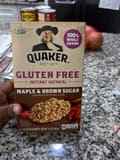 Gluten Free Instant Oatmeal Maple & Brown Sugar Quaker · 12.1 oz, 8 × 1.51 oz packets No palm oil · No sugar Score 50 out of 100 , 42 points higher
 -
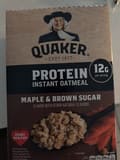 Protein Instant Oatmeal Maple & Brown Sugar Quaker · 12.8 oz (362 g), 6z 2.11 oz packets No palm oil · No dextrose Score 49 out of 100 , 41 points higher
 -
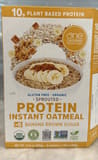 Protein Instant Oatmeal Banana Brown Sugar One Degree Organic Foods · 11.6 oz Not ultra-processed · No palm oil Score 66 out of 100 , 58 points higher
 -
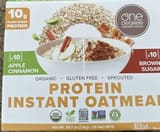 Protein Oatmeal Brown Sugar One Degree Organic Foods · 55 g Not ultra-processed · No palm oil Score 65 out of 100 , 57 points higher
 -
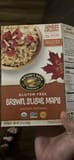 Brown Sugar Maple Instant Oatmeal Nature's Path Organic Not ultra-processed · No palm oil Score 40 out of 100 , 32 points higher
The same kind of product, at least 10 points higher, sold in the US. Never paid placements.
The Receipt
Instant Oatmeal Dinosaur Eggs Brown Sugar
Ingredients
- Sugar minus 20 points
- Dextrose minus 20 points
- Molasses minus 10 points
Processing
- Ultra-processed (NOVA 4) minus 18 points
- 7 kinds of ultra-processing markers minus 8 points
Nutrition per 100 g
- Sugars 22 g / 100 g minus 11 points
- Saturated fat 4 g / 100 g minus 3 points
- Salt 1.2 g / 100 g minus 3 points
- Energy 633 kcal / 100 g minus 3 points
- Fiber 6 g / 100 g plus 4 points
100 − 92 = 8
Can’t score above 79. Contains sugar, an ingredient of high concern. [1][2][3]
Nutrition per 100 g
| Energy | 633 kcal |
|---|---|
| Fat | 9 g |
| Saturated fat | 4 g |
| Trans fat | 0 g |
| Carbohydrates | 72 g |
| Sugars | 22 g |
| Added sugars | 16.8 g |
| Fiber | 6 g |
| Protein | 10 g |
| Salt | 1.2 g |
Serving: 1 portion (50 g)
Ingredients
- Whole grain oats
- dinosaur egg shaped pieces (sugar, dextrose, hydrogenated palm kernel oil, palm kernel oil, palm oil, annatto [color], carnauba wax, confectioner's glaze, corn maltodextrin, magnesium stearate, modified corn starch, natural flavor, red radish juice [color], spirulina extract [color], sunflower lecithin, turmeric [color]) (not recognized)
- sugar (high concern)
- salt
- natural flavor
- calcium carbonate
- carob powder
- molasses (high concern)
- reduced iron
- niacinamide
- folic acid
- cholecalciferol (vitamin D3)
- pyridoxine hydrochloride
- riboflavin
- thiamine mononitrate
Label text, as published
Whole grain oats, dinosaur egg shaped pieces (sugar, dextrose, hydrogenated palm kernel oil, palm kernel oil, palm oil, annatto [color], carnauba wax, confectioner's glaze, corn maltodextrin, magnesium stearate, modified corn starch, natural flavor, red radish juice [color], spirulina extract [color], sunflower lecithin, turmeric [color]), sugar, salt, natural flavor, calcium carbonate, carob powder, molasses, reduced iron, niacinamide, folic acid, cholecalciferol (vitamin D3), pyridoxine hydrochloride, riboflavin, thiamine mononitrate.
Allergens and diets
Contains: Gluten
- Not vegan
- Not gluten-free
- Not palm-oil-free
Always check the package: recipes change.
Packaging
Composite material, Paperboard
Context only: no points in v1.
More oatmeal on GoodSwap
-
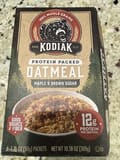 Protein Packed Oatmeal Maple & Brown Sugar Kodiak · 10.58 oz, 6 × 1.76 oz packets Ultra-processedContains added sugarsContains whole grains Score 17 out of 100 Bad
 -
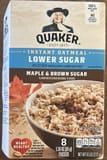 Instant Oatmeal Lower Sugar Maple & Brown Sugar Quaker · 9.5 oz, 8 × 1.19 oz packets Ultra-processedHigh in saltContains non-nutritive sweetenersContains added sugars Score 49 out of 100 Okay
 -
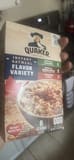 Instant Oatmeal Flavor Variety Quaker · 12.1 oz, 8z 1.51 oz packets Ultra-processedHigh in sugarContains added sugarsNo additives Score 47 out of 100 Okay
 -
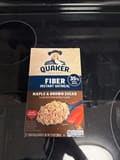 Fiber Instant Oatmeal Maple & Brown Sugar Quaker · 12.6 oz, 8 × 1.58 oz Ultra-processedContains non-nutritive sweetenersContains added sugarsContains whole grains Score 43 out of 100 Okay
 -
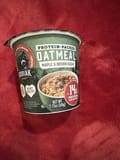 Protein-Packed Oatmeal Maple & Brown Sugar Kodiak Cakes · 2.12 oz Ultra-processedContains added sugarsNo additivesContains whole grains Score 25 out of 100 Poor
 -
 Overnight Oats Mush Contains added sugarsNo additivesContains whole grains Score 69 out of 100 Good
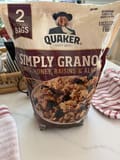
More from Quaker
Sources
-
Guideline: sugars intake for adults and children
“In both adults and children, WHO recommends reducing the intake of free sugars to less than 10% of total energy intake”
who.int
-
Dietary Guidelines for Americans, 2025–2030
“Limit foods and beverages that include artificial flavors, petroleum-based dyes, artificial preservatives, and low-calorie non-nutritive sweeteners.”
cdn.realfood.gov
-
Added and free sugars should be as low as possible
“Sugar consumption is a known cause of dental caries.”
efsa.europa.eu
-
Saturated fatty acid and trans-fatty acid intake for adults and children: WHO guideline
“WHO recommends that adults and children reduce saturated fatty acid intake to 10% of total energy intake (strong recommendation).”
who.int
-
“For adults, WHO recommends less than 2000 mg/day of sodium (equivalent to less than 5 g/day salt), or just under a teaspoon.”
who.int
-
“Greater exposure to ultra-processed food was associated with a higher risk of adverse health outcomes, especially cardiometabolic, common mental disorder, and mortality outcomes.”
doi.org
-
“Glycidyl fatty acid esters, expressed as glycidol”
eur-lex.europa.eu