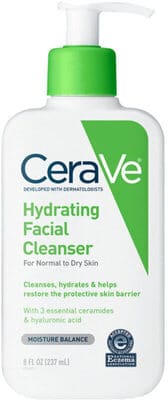
Open Beauty Facts
CeraVe Hydrating Facial Cleanser
Score
- Contains parabens
- Contains emulsifiers studied for gut effects
- May contain traces of 1,4-dioxane
- Contains quaternary ammonium compounds
Why it scores 91
CeraVe Hydrating Facial Cleanser scores 91 out of 100 (Excellent) under GoodSwap’s published rules. What moved the score most:
- minus 5 points Propylparaben: The EU limits propyl- and butylparaben (0.14% combined) and bans them in leave-on nappy-area products for children under 3 because a risk could not be excluded. Regulatory
- minus 1 points Behentrimonium chloride: A 2023 review describes quaternary ammonium compounds as a class of emerging concern. Emerging
- minus 1 points Polyethylene glycols (PEG) and ethoxylates: Ingredients named with PEG, -eth- or -oxynol- can carry trace 1,4-dioxane from manufacturing (IARC Group 2B). Strong
Every line of the math is on The Receipt below, with its evidence tier and sources.
The Receipt
Hydrating Facial Cleanser
Ingredients
- Propylparaben minus 5 points
- Behentrimonium chloride minus 1 points
- Polyethylene glycols (PEG) and ethoxylates minus 1 points
- Mono- and diglycerides minus 0.5 points
- Polysorbates (cosmetic) minus 0.5 points
- Potassium phosphate minus 0.5 points
- Methylparaben minus 0.5 points
100 − 9 = 91
Ingredients
- Purified Water
- Glycerin
- Behentrimonium Methosulfate and Cetearyl Alcohol
- Ceramide 3
- Ceramide 6-11
- Ceramide 1
- Hyaluronic Acid
- Cholesterol
- Polyoxyl 40 Stearate
- Glyceryl Monostearate
- Stearyl Alcohol
- Polysorbate 20
- Potassium Phosphate
- Dipotassium Phosphate
- Sodium Lauroyl Lactylate
- Cetyl Alcohol
- Disodium EDTA
- Phytosphingosine
- Methylparaben
- Propylparaben (moderate concern)
- Carbomer
- Xanthan Gum
Label text, as published
Purified Water, Glycerin, Behentrimonium Methosulfate and Cetearyl Alcohol, Ceramide 3, Ceramide 6-11, Ceramide 1, Hyaluronic Acid, Cholesterol, Polyoxyl 40 Stearate, Glyceryl Monostearate, Stearyl Alcohol, Polysorbate 20, Potassium Phosphate, Dipotassium Phosphate, Sodium Lauroyl Lactylate, Cetyl Alcohol, Disodium EDTA, Phytosphingosine, Methylparaben, Propylparaben, Carbomer, Xanthan Gum.
Allergens and diets
- Palm-oil-free
Always check the package: recipes change.
More open beauty facts on GoodSwap
-
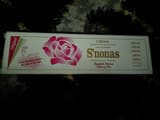 Crema Manos S'nonas · 150 mL Contains a formaldehyde-releasing preservativeContains parabensContains fragranceContains sulfate surfactants Score 72 out of 100 Good
 -
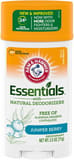 Essentials with NATURAL DEODORIZERS JUNIPER BERRY DEODORANT Arm & Hammer · 2.5 oz (71 g) Contains fragrance Score 93 out of 100 Excellent
 -
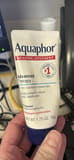 Healing ointment Aquaphor Score 99 out of 100 Excellent
 -
 Fresh Falls Deodorant Dr. Squatch · 2.65 oz Contains fragrance Score 92 out of 100 Excellent
 -
 Bloom Colostrum & Collagen Peptides (unflavored) Henkel Score 99 out of 100 Excellent
 -
 Dove Women Cool Essentials Spray Dove Contains fragranceMay contain traces of 1,4-dioxaneContains cyclic silicones (D4/D5/D6) Score 85 out of 100 Excellent
More from CeraVe
Sources
-
“butylparaben and propylparaben should be prohibited in leave-on cosmetic products designed for application on the nappy area of children below three years.”
eur-lex.europa.eu
-
Quaternary Ammonium Compounds: A Chemical Class of Emerging Concern
“Suspected or known adverse health outcomes include dermal and respiratory effects, developmental and reproductive toxicity, disruption of metabolic function such as lipid homeostasis, and impairment of mitochondrial function.”
doi.org
-
1,4-Dioxane in Cosmetics: A Manufacturing Byproduct
“1,4-dioxane forms as a byproduct during the manufacturing process of certain cosmetic ingredients.”
fda.gov
-
Agents Classified by the IARC Monographs, Volumes 1–142 (List of Classifications)
monographs.iarc.who.int
-
“This study found positive associations between risk of CVD and intake of five individual and two groups of food additive emulsifiers widely used in industrial foods.”
doi.org
-
Re-evaluation of mono- and di-glycerides of fatty acids (E 471) as food additives
“The available studies did not raise any concern with regard to genotoxicity.”
doi.org
-
EFSA issues new advice on phosphates
“We estimated that dietary exposure to phosphates may exceed the new ADI for infants, toddlers and children with average consumption of phosphates in their diet.”
efsa.europa.eu
-
“for these compounds, the human risk cannot be evaluated.”
eur-lex.europa.eu
-
California AB 2762 (2020), Toxic-Free Cosmetics Act (Health and Safety Code §108980)
“Commencing January 1, 2025, no person or entity shall manufacture, sell, deliver, hold, or offer for sale, in commerce any cosmetic product that contains any of the following intentionally added ingredients”
leginfo.legislature.ca.gov
-
Dietary emulsifiers impact the mouse gut microbiota promoting colitis and metabolic syndrome
“carboxymethylcellulose and polysorbate-80, induced low-grade inflammation and obesity/metabolic syndrome in wild-type hosts and promoted robust colitis in mice predisposed to this disorder.”
doi.org
-
“Relative to control subjects, CMC consumption modestly increased postprandial abdominal discomfort and perturbed gut microbiota composition in a way that reduced its diversity.”
doi.org