Open Beauty Facts
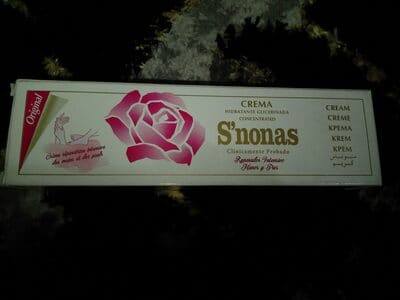
S'nonas Crema Manos
150 mL
Score
- Contains a formaldehyde-releasing preservative
- Contains parabens
- Contains fragrance
- Contains sulfate surfactants
Why it scores 72
S'nonas Crema Manos scores 72 out of 100 (Good) under GoodSwap’s published rules. What moved the score most:
- minus 12 points Diazolidinyl urea: Releases formaldehyde; in the EU products must state "releases formaldehyde" when total released formaldehyde exceeds 0.001% (10 ppm). Regulatory
- minus 5 points Sodium lauryl sulfate (SLS): An effective surfactant that is safe in rinse-off use but can irritate skin and eyes, especially at higher concentrations or with long contact. Strong
- minus 5 points Fragrance (parfum): A single label term covers an undisclosed mixture. Regulatory
Every line of the math is on The Receipt below, with its evidence tier and sources.
The Receipt
Crema Manos
Ingredients
- Diazolidinyl urea minus 12 points
- Sodium lauryl sulfate (SLS) minus 5 points
- Fragrance (parfum) minus 5 points
- Amyl cinnamal minus 0.5 points
- Benzyl salicylate minus 0.5 points
- Geraniol minus 0.5 points
- Linalool minus 0.5 points
- Citronellol minus 0.5 points
- Eugenol minus 0.5 points
- Benzyl cinnamate minus 0.5 points
- Hydroxycitronellal minus 0.5 points
- Benzyl alcohol minus 0.5 points
- Propylene glycol minus 0.5 points
- Methylparaben minus 0.5 points
- Ethylparaben minus 0.5 points
100 − 28 = 72
Ingredients
- Aqua
- Glycerin
- Isodecyl Oleate (not recognized)
- Cetearyl Alcohol
- Dimethicone
- Cetyl Alcohol
- Sodium Lauryl Sulfate (moderate concern)
- Sodium Cetearyl Sulfate (moderate concern)
- Parfum (moderate concern)
- Amyl Cinnamal
- Benzyl Salicylate
- Geraniol
- Linalool
- Citronellol
- Eugenol
- Benzyl Cinnamate
- Hydroxycitronellal
- Benzyl Alcohol
- Propylene Glycol
- Diazolidinyl Urea (high concern)
- Citric Acid
- Methylparaben
- Ethylparaben
- Tocopherol
Label text, as published
Aqua, Glycerin, Isodecyl Oleate, Cetearyl Alcohol, Dimethicone, Cetyl Alcohol, Sodium Lauryl Sulfate, Sodium Cetearyl Sulfate, Parfum, Amyl Cinnamal, Benzyl Salicylate, Geraniol, Linalool, Citronellol, Eugenol, Benzyl Cinnamate, Hydroxycitronellal, Benzyl Alcohol, Propylene Glycol, Diazolidinyl Urea, Citric Acid, Methylparaben, Ethylparaben, Tocopherol
Allergens and diets
- Palm-oil-free
Always check the package: recipes change.
More open beauty facts on GoodSwap
-
 Essentials with NATURAL DEODORIZERS JUNIPER BERRY DEODORANT Arm & Hammer · 2.5 oz (71 g) Contains fragrance Score 93 out of 100 Excellent
 -
 Healing ointment Aquaphor Score 99 out of 100 Excellent
 - Evolution of smooth shea better 24H moisture body lotion Shea Moisture Contains fragrance Score 93 out of 100 Excellent
-
 Active Control Sanex Contains fragranceMay contain traces of 1,4-dioxane Score 94 out of 100 Excellent
 -
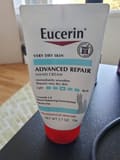 Advanced Repair Hand Cream Eucerin Contains sulfate surfactants Score 94 out of 100 Excellent
 -
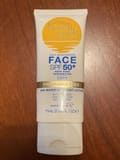 Daily Moisturising face SPF 50+ Bondi Sands · 75 mL Contains chemical UV filtersMay contain traces of 1,4-dioxaneContains cyclic silicones (D4/D5/D6)Contains ethanolamines (MEA/DEA/TEA) Score 73 out of 100 Good
Sources
-
“shall be labelled with the warning “releases formaldehyde” where the total concentration of formaldehyde released in the finished product exceeds 0,001 % (10 ppm)”
eur-lex.europa.eu
-
Revised Code of Washington, Chapter 70A.560 (Toxic-Free Cosmetics Act)
“(a) Ortho-phthalates; (b) Perfluoroalkyl and polyfluoroalkyl substances; (c) Formaldehyde (CAS 50-00-0) and chemicals determined by the department to release formaldehyde;”
app.leg.wa.gov
-
“when their concentration exceeds 0,001 % in leave-on products and 0,01 % in rinse-off products.”
eur-lex.europa.eu
-
Regulation (EC) No 1223/2009 of 30 November 2009 on cosmetic products
“cosmetic products shall not contain any of the following: (a) prohibited substances — prohibited substances listed in Annex II”
eur-lex.europa.eu
-
fda.gov
-
“Allergic and irritant contact dermatitis and systemic cutaneous reactions to PG, which has become an increasingly common ingredient, have been documented.”
doi.org
-
“butylparaben and propylparaben should be prohibited in leave-on cosmetic products designed for application on the nappy area of children below three years.”
eur-lex.europa.eu
-
“Formaldehyde should also be added to the list of substances prohibited in cosmetic products in Annex II to Regulation (EC) No 1223/2009.”
eur-lex.europa.eu
-
Agents Classified by the IARC Monographs, Volumes 1–142 (List of Classifications)
monographs.iarc.who.int
-
“for these compounds, the human risk cannot be evaluated.”
eur-lex.europa.eu
-
California AB 2762 (2020), Toxic-Free Cosmetics Act (Health and Safety Code §108980)
“Commencing January 1, 2025, no person or entity shall manufacture, sell, deliver, hold, or offer for sale, in commerce any cosmetic product that contains any of the following intentionally added ingredients”
leginfo.legislature.ca.gov