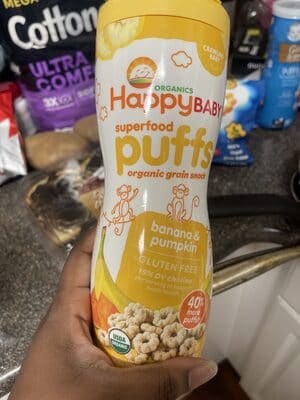
Snacks and desserts for babies
Happy Baby Superfood Puffs, Baby Food, Banana & Pumpkin
Score
- Ultra-processed
- Contains added sugars
- Certified organic
- Contains whole grains
Why it scores 55
Happy Baby Superfood Puffs, Baby Food, Banana & Pumpkin scores 55 out of 100 (Okay) under GoodSwap’s published rules. What moved the score most:
- minus 20 points Fruit juice concentrate (sweetener): An added sugar. Strong
- minus 18 points Ultra-processed (NOVA 4): Classified NOVA 4: made with industrial ingredients and additives. Strong
- minus 8 points Sugars 14.3 g / 100 g: High in sugar. Strong
Every line of the math is on The Receipt below, with its evidence tier and sources.
Better baby and toddler snacks
-
 Organic Blueberry Puffs Little Bellies Not ultra-processed · No added sugars Score 97 out of 100 , 42 points higher
 -
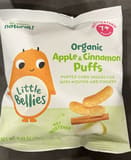 Organic Apple & Cinnamon Puffs Little Bellies Not ultra-processed · No added sugars Score 92 out of 100 , 37 points higher
 -
 Baby puffs Little Spoon · 1 oz Not ultra-processed · No added sugars Score 93 out of 100 , 38 points higher
 -
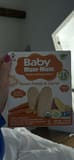 Sweet Potato & Carrot Gentle teething wafers Baby Mum-Mum Not ultra-processed · No fruit juice concentrate (sweetener) Score 72 out of 100 , 17 points higher
 -
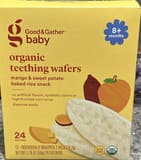 Organic Teething Wafers Good & Gather Not ultra-processed · No fruit juice concentrate (sweetener) Score 72 out of 100 , 17 points higher
The same kind of product, at least 10 points higher, sold in the US. Never paid placements.
The Receipt
Superfood Puffs, Baby Food, Banana & Pumpkin
Ingredients
- Fruit juice concentrate (sweetener) minus 20 points
- Calcium phosphate minus 2.5 points
Processing
- Ultra-processed (NOVA 4) minus 18 points
Nutrition per 100 g
- Sugars 14.3 g / 100 g minus 8 points
- Energy 357 kcal / 100 g minus 2 points
Bonuses
- Certified organic plus 5 points
100 − 45.5 = 54.5 → 55
Can’t score above 79. Contains fruit juice concentrate (sweetener), an ingredient of high concern. [1][2][3]
Nutrition per 100 g
| Energy | 357 kcal |
|---|---|
| Fat | 0 g |
| Trans fat | 0 g |
| Carbohydrates | 85.7 g |
| Sugars | 14.3 g |
| Fiber | 0 g |
| Protein | 0 g |
| Salt | 0 g |
Serving: 7 g (0.5 cup)
Ingredients
- organic brown rice flour
- organic white rice flour
- organic apple juice concentrate (high concern)
- organic pumpkin powder
- organic banana powder
- mixed tocopherols
- vitamins and minerals: dicalcium phosphate
- choline bitartrate (choline)
- potassium chloride
- calcium carbonate
- sodium ascorbate (vitamin c)
- tricalcium phosphate
- ferric pyrophosphate (iron)
- dl-alpha-tocopherol acetate (vitamin e)
- vitamin a acetate
- cholecalciferol (vitamin d3)
- calcium d-pantothenate [pantothenic acid (vitamin b5)]
- zinc oxide
- niacinamide (vitamin b3)
- thiamine mononitrate (vitamin b1)
- riboflavin (vitamin b2)
- pyridoxine hydrochloride (vitamin b6)
- cyanocobalamin (vitamin b12)
Label text, as published
organic brown rice flour, organic white rice flour, organic apple juice concentrate, organic pumpkin powder, organic banana powder, mixed tocopherols, vitamins and minerals: dicalcium phosphate, choline bitartrate (choline), potassium chloride, calcium carbonate, sodium ascorbate (vitamin c), tricalcium phosphate, ferric pyrophosphate (iron), dl-alpha-tocopherol acetate (vitamin e), vitamin a acetate, cholecalciferol (vitamin d3), calcium d-pantothenate [pantothenic acid (vitamin b5)], zinc oxide, niacinamide (vitamin b3), thiamine mononitrate (vitamin b1), riboflavin (vitamin b2), pyridoxine hydrochloride (vitamin b6), cyanocobalamin (vitamin b12),
Allergens and diets
- Palm-oil-free
Always check the package: recipes change.
More snacks and desserts for babies on GoodSwap
More from Happy Baby
Sources
-
Guideline: sugars intake for adults and children
“In both adults and children, WHO recommends reducing the intake of free sugars to less than 10% of total energy intake”
who.int
-
Dietary Guidelines for Americans, 2025–2030
“Limit foods and beverages that include artificial flavors, petroleum-based dyes, artificial preservatives, and low-calorie non-nutritive sweeteners.”
cdn.realfood.gov
-
Added and free sugars should be as low as possible
“Sugar consumption is a known cause of dental caries.”
efsa.europa.eu
-
EFSA issues new advice on phosphates
“We estimated that dietary exposure to phosphates may exceed the new ADI for infants, toddlers and children with average consumption of phosphates in their diet.”
efsa.europa.eu
-
7 CFR 205.102 Use of the term "organic" (National Organic Program)
“Any agricultural product that is sold, labeled, or represented as “100 percent organic,” “organic,” or “made with organic (specified ingredients or food group(s))” must be: (a) Produced in accordance with the requirements specified in § 205.101 or §§ 205.202 through 205.207”
ecfr.gov
-
“Greater exposure to ultra-processed food was associated with a higher risk of adverse health outcomes, especially cardiometabolic, common mental disorder, and mortality outcomes.”
doi.org