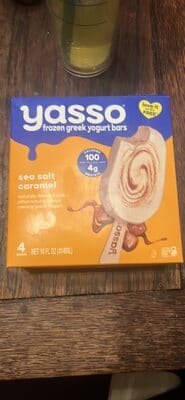
Frozen desserts
Yasso Sea Salt Caramel Frozen Greek Yogurt Bars
14 fl oz/414 mL
Score
- Ultra-processed
- High in sugar
- Contains added sugars
- Seed-oil free
- No synthetic dyes
Why it scores 13
Yasso Sea Salt Caramel Frozen Greek Yogurt Bars scores 13 out of 100 (Bad) under GoodSwap’s published rules. What moved the score most:
- minus 20 points Caramel: An added sugar. Strong
- minus 20 points Invert sugar: An added sugar. Strong
- minus 18 points Ultra-processed (NOVA 4): Classified NOVA 4: made with industrial ingredients and additives. Strong
Every line of the math is on The Receipt below, with its evidence tier and sources.
Better ice cream bars and frozen treats
-
 Zero Sugar Greek Yogurt Bars Clio Less sugar · No added sugars Score 55 out of 100 , 42 points higher
 -
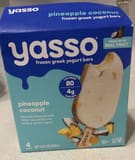 Pineapple Coconut Frozen Greek Yogurt Bars Yasso Less sugar · No caramel Score 40 out of 100 , 27 points higher
 -
 Salted caramel almond ice cream bar Keto Pint Less sugar · No added sugars Score 47 out of 100 , 34 points higher
 -
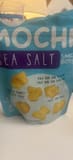 Mochi Sea Salt Snack Bites Sun Tropics Not ultra-processed · Less sugar Score 79 out of 100 , 66 points higher
 -
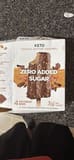 Peanut Butter Caramel Ice Cream Bars Keto Less sugar · No added sugars Score 44 out of 100 , 31 points higher
The same kind of product, at least 10 points higher, sold in the US. Never paid placements.
The Receipt
Sea Salt Caramel Frozen Greek Yogurt Bars
Ingredients
- Caramel minus 20 points
- Invert sugar minus 20 points
- Sugar minus 10 points
Processing
- Ultra-processed (NOVA 4) minus 18 points
- 6 kinds of ultra-processing markers minus 7.5 points
Nutrition per 100 g
- Sugars 24.6 g / 100 g minus 11 points
- Salt 0.4 g / 100 g minus 1 points
100 − 87.5 = 12.5 → 13
Can’t score above 79. Contains caramel, an ingredient of high concern. [1][2][3]
Can’t score above 79. High in sugars (above the front-of-pack "high" level). [6]
Nutrition per 100 g
| Energy | 154 kcal |
|---|---|
| Fat | 1.5 g |
| Saturated fat | 0 g |
| Trans fat | 0 g |
| Carbohydrates | 27.7 g |
| Sugars | 24.6 g |
| Added sugars | 18.5 g |
| Fiber | 0 g |
| Protein | 6.2 g |
| Salt | 0.4 g |
Serving: 1 bar (65 g)
Ingredients
- NONFAT MILK
- CARAMEL SWIRL (INVERT CANE SUGAR, SWEETENED CONDENSED MILK, WATER, CANE SUGAR, COM STARCH, SEA SALT, PECTIN, SODIUM BICARBONATE, LOCUST BEAN GUM) (high concern)
- GREEK YOGURT (NONFAT MILK, MILK PROTEIN CONCENTRATE, CULTURES)
- SUGAR (high concern)
- CARAMEL BASE (SUGAR, WATER, NONFAT MILK, BROWN SUGAR, BUTTER, SEA SALT, BAKING SODA, SOY LECITHIN) (high concern)
- MILK PROTEIN CONCENTRATE
- MALTODEXTRIN
- CREAM
- NATURAL FLAVOR"
- FRUIT AND VEGETABLE JUICE FOR COLOR
- HIBISCUS CONCENTRATE FOR COLOR
- GUAR GUM
- LOCUST BEAN GUM
Label text, as published
NONFAT MILK, CARAMEL SWIRL (INVERT CANE SUGAR*, SWEETENED CONDENSED MILK [MILK, SUGAR*], WATER, CANE SUGAR*, COM STARCH*, SEA SALT*, PECTIN*, SODIUM BICARBONATE*, LOCUST BEAN GUM*), GREEK YOGURT (NONFAT MILK, MILK PROTEIN CONCENTRATE, CULTURES), SUGAR, CARAMEL BASE (SUGAR*, WATER, NONFAT MILK, BROWN SUGAR [SUGAR*, INVERT SUGAR*, CANE MOLASSES*], BUTTER [CREAM, SALT"], SEA SALT*, BAKING SODA*, SOY LECITHIN*), MILK PROTEIN CONCENTRATE, MALTODEXTRIN*, CREAM, NATURAL FLAVOR", FRUIT AND VEGETABLE JUICE FOR COLOR, HIBISCUS CONCENTRATE FOR COLOR*, GUAR GUM*, LOCUST BEAN GUM*
Allergens and diets
Contains: Milk, Soy
- Not vegan
- Palm-oil-free
Always check the package: recipes change.
More frozen desserts on GoodSwap
-
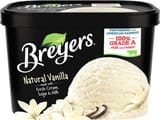 Natural Vanilla Ice Cream Breyers · 1.5 Quart/1.41 L Ultra-processedHigh in saturated fatContains added sugars Score 37 out of 100 Poor
 -
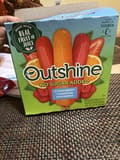 Assorted Fruit Ice Pops Outshine · 18 fl oz/532 mL Ultra-processedContains non-nutritive sweetenersContains added sugarsContains sugar alcohols Score 32 out of 100 Poor
 -
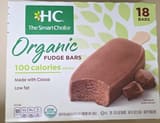 Organic Fudge Bars HC The Smart Choice · 54 fl oz/1.6 L Ultra-processedContains added sugarsCertified organic Score 29 out of 100 Poor
 -
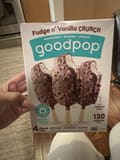 Frozen dessert Goodpop · 9 fl oz/266.2 mL Ultra-processedHigh in saturated fatContains added sugarsContains seed oils Score 18 out of 100 Bad
 -
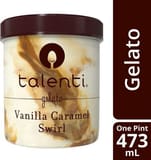 Vanilla Caramel Swirl Talenti · 1 PT/473 mL Ultra-processedHigh in sugarHigh in saturated fatContains added sugars Score 12 out of 100 Bad
 -
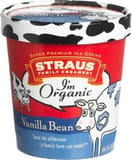 Vanilla Bean Straus Family Creamery Organic · 1 PT/473 mL High in saturated fatContains added sugarsCertified organicNo additives Score 51 out of 100 Okay
More from Yasso
-
 Mint Chocolate Chip Frozen Greek Yogurt Bars Yasso · 14 fl oz/414 mL Score 13 out of 100 Bad
 -
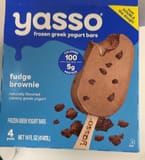 Fudge Brownie Frozen Greek Yogurt Bars Yasso · 414 mL Score 15 out of 100 Bad
 -
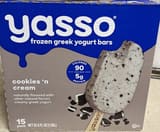 Cookies 'n Cream Frozen Greek Yogurt Bars Yasso · 52.5 fl oz Score 35 out of 100 Poor
 -
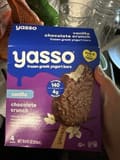 Vanilla Chocolate Crunch Frozen Greek Yogurt Bars Yasso · 4 × 10.6 fl oz Score 30 out of 100 Poor
Sources
-
Guideline: sugars intake for adults and children
“In both adults and children, WHO recommends reducing the intake of free sugars to less than 10% of total energy intake”
who.int
-
Dietary Guidelines for Americans, 2025–2030
“Limit foods and beverages that include artificial flavors, petroleum-based dyes, artificial preservatives, and low-calorie non-nutritive sweeteners.”
cdn.realfood.gov
-
Added and free sugars should be as low as possible
“Sugar consumption is a known cause of dental caries.”
efsa.europa.eu
-
“For adults, WHO recommends less than 2000 mg/day of sodium (equivalent to less than 5 g/day salt), or just under a teaspoon.”
who.int
-
“Table 3: Criteria for drinks (per 100ml)”
assets.publishing.service.gov.uk
-
“Greater exposure to ultra-processed food was associated with a higher risk of adverse health outcomes, especially cardiometabolic, common mental disorder, and mortality outcomes.”
doi.org