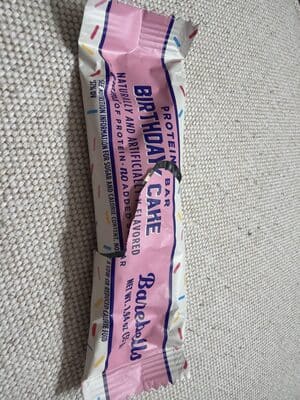
Protein bars
Barebells Protein Bar Birthday Cake
1.94 oz
Score
- Dye with an EU warning label
- Contains synthetic dyes
- Contains non-nutritive sweeteners
- Contains sugar alcohols
- Contains seed oils
- Contains artificial flavors
Why it scores 61
Barebells Protein Bar Birthday Cake scores 61 out of 100 (Good) under GoodSwap’s published rules. What moved the score most:
- minus 12 points Red 40: In the EU and UK, foods with this color must state that it "may have an adverse effect on activity and attention in children". Regulatory
- minus 12 points Yellow 5: In the EU and UK, foods with this color must state that it "may have an adverse effect on activity and attention in children". Regulatory
- minus 5 points Blue 2: The FDA is working with industry to remove six petroleum-based dyes from US food by the end of 2027; California bans them in school meals from December 31, 2027. Regulatory
Every line of the math is on The Receipt below, with its evidence tier and sources.
The Receipt
Protein Bar Birthday Cake
Ingredients
- Red 40 minus 12 points
- Yellow 5 minus 12 points
- Blue 2 minus 5 points
- Blue 1 minus 2.5 points
- Sucralose minus 2.5 points
- Milk protein concentrate / isolate minus 0.5 points
- Caseinate minus 0.5 points
- Whey protein concentrate / isolate minus 0.5 points
- Glycerin minus 0.5 points
- Collagen minus 0.5 points
- Maltitol minus 0.5 points
- Soluble corn fiber (resistant dextrin) minus 0.5 points
- Sunflower oil minus 0.5 points
- Soy protein isolate / concentrate minus 0.5 points
- Natural and artificial flavors minus 0.5 points
- Sunflower lecithin minus 0.5 points
100 − 39.5 = 60.5 → 61
Nutrition per 100 g
| Energy | 380 kcal |
|---|---|
| Fat | 12.7 g |
| Saturated fat | 6.4 g |
| Trans fat | 0 g |
| Carbohydrates | 36.4 g |
| Sugars | 1.8 g |
| Added sugars | 0 g |
| Fiber | 3.6 g |
| Protein | 36.4 g |
| Salt | 0.6 g |
Serving: 1 bar (55 g)
Ingredients
- Milk protein blend (calcium caseinate, whey protein isolate, whey protein concentrate)
- glycerin
- bovine collagen hydrolysate
- maltitol
- cocoa butter
- polydextrose
- water
- confetti blend (maltitol, rice flour, potato starch, sunflower oil, red 40 lake, blue 2 lake, yellow 5 lake, blue 1 lake) (not recognized)
- dry whole milk
- soy protein isolate
- sunflower oil
- natural and artificial flavors
- tapioca starch
- salt
- sunflower lecithin
- citric acid
- sucralose (moderate concern)
Label text, as published
Milk protein blend (calcium caseinate, whey protein isolate, whey protein concentrate), glycerin, bovine collagen hydrolysate, maltitol, cocoa butter, polydextrose, water, confetti blend (maltitol, rice flour, potato starch, sunflower oil, red 40 lake, blue 2 lake, yellow 5 lake, blue 1 lake), dry whole milk, soy protein isolate, sunflower oil, natural and artificial flavors, tapioca starch, salt, sunflower lecithin, citric acid, sucralose.
Allergens and diets
Contains: Milk, Soy
- Not vegan
- Not vegetarian
- Palm-oil-free
Always check the package: recipes change.
More protein bars on GoodSwap
-
 Blueberry RXBAR RXBAR · 52 g Ultra-processedHigh in sugarNo additives Score 64 out of 100 Good
 -
 Iq Bar 18 Protein Bar Variety Pack IQ Bar · 816 g Seed-oil free Score 97 out of 100 Excellent
 -
 Protein Bars RXBAR Score 99 out of 100 Excellent
 -
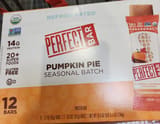 Pumpkin Pie Perfect Bar Contains added sugarsSeed-oil free Score 87 out of 100 Excellent
 -
 Salty Peanut Protein Bar Nick's · 76 oz Ultra-processedHigh in saturated fatContains non-nutritive sweetenersContains sugar alcohols Score 48 out of 100 Okay
 -
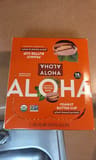 Protein Bar, Peanut Butter Cup Aloha · 1.48 lb/672 g Contains non-nutritive sweetenersContains added sugarsCertified organicSeed-oil free Score 69 out of 100 Good
More from Barebells
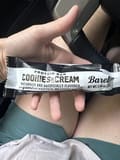
Sources
-
Regulation (EC) No 1333/2008 of 16 December 2008 on food additives
“may have an adverse effect on activity and attention in children.”
eur-lex.europa.eu
-
“may have an adverse effect on activity and attention in children.”
legislation.gov.uk
-
“Artificial colours or a sodium benzoate preservative (or both) in the diet result in increased hyperactivity in 3-year-old and 8/9-year-old children in the general population.”
doi.org
-
Tracking Food Industry Pledges to Remove Petroleum Based Food Dyes
“FD&C Green No. 3, FD&C Red No. 40, FD&C Yellow No. 5, FD&C Yellow No. 6, FD&C Blue No. 1, and FD&C Blue No. 2—by the end of 2027.”
fda.gov
-
California AB 2316 (2024), Pupil nutrition: substances: prohibition
“beginning December 31, 2027, would prohibit a school district, county superintendent of schools, or charter school”
leginfo.legislature.ca.gov
-
List of Select Chemicals in the Food Supply Under FDA Review
“The table below includes select food ingredients (including food and color additives), food contact substances, and contaminants under FDA review as of May 12, 2026 .”
fda.gov
-
21 CFR 74.705 FD&C Yellow No. 5
“shall specifically declare the presence of FD&C Yellow No. 5 by listing the color additive as FD&C Yellow No. 5 among the list of ingredients.”
ecfr.gov
-
Personalized microbiome-driven effects of non-nutritive sweeteners on human glucose tolerance
“As groups, each administered NNS distinctly altered stool and oral microbiome and plasma metabolome, whereas saccharin and sucralose significantly impaired glycemic responses.”
doi.org
-
“Sucralose-6-acetate significantly increased the expression of genes associated with inflammation, oxidative stress, and cancer”
doi.org
-
“EFSA’s experts concluded that the sweetener sucralose (E 955) continues to be safe for consumers for its currently authorised uses as a food additive.”
efsa.europa.eu
-
WHO advises not to use non-sugar sweeteners for weight control in newly released guideline
“The recommendation is based on the findings of a systematic review of the available evidence which suggests that use of NSS does not confer any long-term benefit in reducing body fat in adults or children.”
who.int
-
Dietary Guidelines for Americans, 2025–2030
“Limit foods and beverages that include artificial flavors, petroleum-based dyes, artificial preservatives, and low-calorie non-nutritive sweeteners.”
cdn.realfood.gov
-
Regulation (EU) No 1169/2011, Annex III point 2.4 (foods with more than 10 % added polyols)
“‘excessive consumption may produce laxative effects’.”
eur-lex.europa.eu
-
“replacement of saturated fat in the diet with linoleic acid effectively lowers serum cholesterol but does not support the hypothesis that this translates to a lower risk of death from coronary heart disease or all causes.”
doi.org
-
“These data provide support for current recommendations to replace saturated fat with polyunsaturated fat for primary prevention of CHD.”
doi.org
-
21 CFR 101.22 Foods; labeling of spices, flavorings, colorings and chemical preservatives
“whose significant function in food is flavoring rather than nutritional.”
ecfr.gov
-
HHS, FDA to Phase Out Petroleum-Based Synthetic Dyes in Nation’s Food Supply (press release)
“Initiating the process to revoke authorization for two synthetic food colorings—Citrus Red No. 2 and Orange B—within the coming months.”
fda.gov