Protein powders
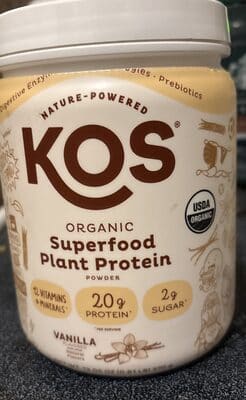
KOS Organic Plant Protein
0.81 lb/13.05 oz/370 g
Score
- Contains non-nutritive sweeteners
- Contains added sugars
- Contains whole grains
Why it scores 84
KOS Organic Plant Protein scores 84 out of 100 (Excellent) under GoodSwap’s published rules. What moved the score most:
- minus 12 points Coconut sugar: An added sugar. Strong
- minus 1 points Pea protein: An ingredient typical of ultra-processed foods (NOVA group 4). Info
- minus 1 points Inulin (chicory root fiber): An ingredient class typical of ultra-processed foods (NOVA group 4). Info
Every line of the math is on The Receipt below, with its evidence tier and sources.
The Receipt
Organic Plant Protein
Ingredients
- Coconut sugar minus 12 points
- Pea protein minus 1 points
- Inulin (chicory root fiber) minus 1 points
- Gum arabic (acacia) minus 0.5 points
- Natural flavors minus 0.5 points
- Stevia (steviol glycosides) minus 0.5 points
- Monk fruit extract minus 0.5 points
100 − 16 = 84
Nutrition per 100 g
| Energy | 405 kcal |
|---|---|
| Fat | 13.5 g |
| Saturated fat | 9.5 g |
| Trans fat | 0 g |
| Carbohydrates | 21.6 g |
| Sugars | 5.4 g |
| Added sugars | 5.4 g |
| Fiber | 5.4 g |
| Protein | 54.1 g |
| Salt | 2 g |
Serving: 37g
Ingredients
- Pea Protein
- Flax Seed
- Quinoa
- Pumpkin Seed Protein
- Chia Seed
- Coconut Milk
- Inulin
- Acacia Gum
- Apple
- Carrot
- Cranberry
- Orange
- Broccoli
- Shiitake Mushroom Extract
- Tomato
- Coconut Sugar (high concern)
- Vanilla Flavor
- Natural Flavor
- Sea Salt
- Stevia Leaf Extract
- Monk Fruit Extract
- DL-Alpha Tocopherol
- Magnesium Amino Acid Chelate
- Potassium Iodide
- Zinc Oxide
- Selenium Amino Acid Chelate
- Molybdenum Amino Acid Chelate
- Niacinamide
- Copper Oxide
- Riboflavin
- Cyanocobalamin
- Calcium D-Pantothenate
- Folic Acid
- Proteases
- Amylase
- Cellulase
- Lactase
- Lipase
Label text, as published
Pea Protein, Flax Seed, Quinoa, Pumpkin Seed Protein, Chia Seed, Coconut Milk, Inulin, Acacia Gum, Apple, Carrot, Cranberry, Orange, Broccoli, Shiitake Mushroom Extract, Tomato, Coconut Sugar, Vanilla Flavor, Natural Flavor, Sea Salt, Stevia Leaf Extract, Monk Fruit Extract, DL-Alpha Tocopherol, Magnesium Amino Acid Chelate, Potassium Iodide, Zinc Oxide, Selenium Amino Acid Chelate, Molybdenum Amino Acid Chelate, Niacinamide, Copper Oxide, Riboflavin, Cyanocobalamin, Calcium D-Pantothenate, Folic Acid, Proteases, Amylase, Cellulase, Lactase, Lipase
Allergens and diets
Contains: Tree nuts
- Palm-oil-free
Always check the package: recipes change.
More protein powders on GoodSwap
-
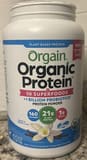 Organic Protein Orgain · 43.2 oz (2.7 lb) 1.22 kg Contains non-nutritive sweetenersContains sugar alcoholsContains seed oilsCertified organic Score 89 out of 100 Excellent
 -
 Organic Protein Orgain · 1.2 kg Contains non-nutritive sweetenersContains sugar alcoholsContains seed oilsCertified organic Score 89 out of 100 Excellent
 -
 Protein powder Optimum Nutrition · 80 × 31 g Contains non-nutritive sweetenersContains emulsifiers studied for gut effectsContains artificial flavors Score 83 out of 100 Excellent
 -
 Unflavored Whey Isolate 365 · 32 oz Score 98 out of 100 Excellent
 -
 Protein Powder Drink Mix Isopure · 16 oz Ultra-processed Score 70 out of 100 Good
 -
 Prime protein Equip · 758 g Contains non-nutritive sweeteners Score 98 out of 100 Excellent
Sources
-
Guideline: sugars intake for adults and children
“In both adults and children, WHO recommends reducing the intake of free sugars to less than 10% of total energy intake”
who.int
-
Dietary Guidelines for Americans, 2025–2030
“Limit foods and beverages that include artificial flavors, petroleum-based dyes, artificial preservatives, and low-calorie non-nutritive sweeteners.”
cdn.realfood.gov
-
Added and free sugars should be as low as possible
“Sugar consumption is a known cause of dental caries.”
efsa.europa.eu
-
21 CFR 101.22 Foods; labeling of spices, flavorings, colorings and chemical preservatives
“whose significant function in food is flavoring rather than nutritional.”
ecfr.gov
-
WHO advises not to use non-sugar sweeteners for weight control in newly released guideline
“The recommendation is based on the findings of a systematic review of the available evidence which suggests that use of NSS does not confer any long-term benefit in reducing body fat in adults or children.”
who.int