Frozen desserts
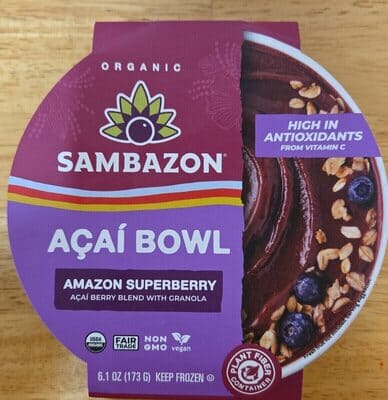
Sambazon Açaí Bowl
6.1 oz/173 g
Score
- Ultra-processed
- Contains sugar alcohols
- Contains seed oils
- Certified organic
- No synthetic dyes
Why it scores 61
Sambazon Açaí Bowl scores 61 out of 100 (Good) under GoodSwap’s published rules. What moved the score most:
- minus 18 points Ultra-processed (NOVA 4): Classified NOVA 4: made with industrial ingredients and additives. Strong
- minus 7.5 points Erythritol: A 2023 study linked higher blood erythritol to cardiovascular events and found it increased clotting activity; long-term safety studies are warranted. Strong
- minus 5 points Sugars 9.3 g / 100 g: High in sugar. Strong
Every line of the math is on The Receipt below, with its evidence tier and sources.
The Receipt
Açaí Bowl
Ingredients
- Erythritol minus 7.5 points
- Sunflower oil minus 2.5 points
- Locust bean gum minus 2.5 points
- Guar gum minus 1.5 points
- Natural flavors minus 1.5 points
Processing
- Ultra-processed (NOVA 4) minus 18 points
- 4 kinds of ultra-processing markers minus 4.5 points
Nutrition per 100 g
- Sugars 9.3 g / 100 g minus 5 points
- Saturated fat 1.2 g / 100 g minus 1 points
Bonuses
- Certified organic plus 5 points
100 − 39 = 61
Nutrition per 100 g
| Energy | 133 kcal |
|---|---|
| Fat | 3.5 g |
| Saturated fat | 1.2 g |
| Trans fat | 0 g |
| Carbohydrates | 27.8 g |
| Sugars | 9.3 g |
| Added sugars | 9.2 g |
| Fiber | 2.3 g |
| Protein | 1.7 g |
| Salt | 0 g |
Serving: 1 bowl (173 g)
Ingredients
- FAIR TRADE ACAI PUREE1+ (FILTERED WATER, ORGANIC ACAI1)
- TAPIOCA SYRUP1
- CANE SYRUP1+ (not recognized)
- ERYTHRITOL+ (moderate concern)
- FILTERED WATER
- ACEROLA JUICE (MADE FROM CONCENTRATE W/ ALTERED WATER ADDED)
- FRUIT & VEGETABLE JUICE (FOR COLOR)
- CITRIC ACID
- SUNFLOWER LECITHIN1
- LOCUST BEAN GUM1
- GUAR GUM1
- ORGANIC FLAVOR
- TOPPINGS: OATS1 (not recognized)
- BROWN SUGAR1 (not recognized)
- COCONUT OIL1
- CASHEWS1 (not recognized)
Label text, as published
FAIR TRADE ACAI PUREE1+ (FILTERED WATER, ORGANIC ACAI1), TAPIOCA SYRUP1, CANE SYRUP1+, ERYTHRITOL+, FILTERED WATER, ACEROLA JUICE (MADE FROM CONCENTRATE W/ ALTERED WATER ADDED), LESS THAN 0.2% OF: FRUIT & VEGETABLE JUICE (FOR COLOR), CITRIC ACID, SUNFLOWER LECITHIN1, LOCUST BEAN GUM1, GUAR GUM1, ORGANIC FLAVOR. TOPPINGS: OATS1, BROWN SUGAR1, COCONUT OIL1, CASHEWS1.
Allergens and diets
Contains: Tree nuts, Gluten
- Vegan
- Vegetarian
- Not gluten-free
- Palm-oil-free
Always check the package: recipes change.
More frozen desserts on GoodSwap
-
 Natural Vanilla Ice Cream Breyers · 1.5 Quart/1.41 L Ultra-processedHigh in saturated fatContains added sugars Score 37 out of 100 Poor
 -
 Assorted Fruit Ice Pops Outshine · 18 fl oz/532 mL Ultra-processedContains non-nutritive sweetenersContains added sugarsContains sugar alcohols Score 32 out of 100 Poor
 -
 Organic Fudge Bars HC The Smart Choice · 54 fl oz/1.6 L Ultra-processedContains added sugarsCertified organic Score 29 out of 100 Poor
 -
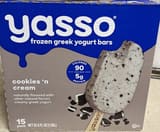 Cookies 'n Cream Frozen Greek Yogurt Bars Yasso · 52.5 fl oz Ultra-processedContains added sugars Score 35 out of 100 Poor
 -
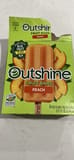 Outshine Fruit Bars Peach Outshine · 14.7 fl oz/435 mL Ultra-processedContains added sugarsNo synthetic dyes Score 40 out of 100 Okay
 -
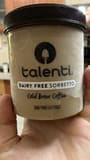 Cold Brew Coffee Dairy Free Sorbetto Talenti · 1 PT/473 mL Ultra-processedHigh in sugarHigh in saturated fatContains added sugars Score 19 out of 100 Bad
More from Sambazon

Sources
-
The artificial sweetener erythritol and cardiovascular event risk
“Our findings reveal that erythritol is both associated with incident MACE risk and fosters enhanced thrombosis. Studies assessing the long-term safety of erythritol are warranted.”
doi.org
-
Re-evaluation of erythritol (E 968) as a food additive (plain language summary)
“In all groups of people, both acute and chronic exposure to erythritol is above the newly set ADI.”
efsa.europa.eu
-
“replacement of saturated fat in the diet with linoleic acid effectively lowers serum cholesterol but does not support the hypothesis that this translates to a lower risk of death from coronary heart disease or all causes.”
doi.org
-
“These data provide support for current recommendations to replace saturated fat with polyunsaturated fat for primary prevention of CHD.”
doi.org
-
21 CFR 101.22 Foods; labeling of spices, flavorings, colorings and chemical preservatives
“whose significant function in food is flavoring rather than nutritional.”
ecfr.gov
-
Guideline: sugars intake for adults and children
“In both adults and children, WHO recommends reducing the intake of free sugars to less than 10% of total energy intake”
who.int
-
Saturated fatty acid and trans-fatty acid intake for adults and children: WHO guideline
“WHO recommends that adults and children reduce saturated fatty acid intake to 10% of total energy intake (strong recommendation).”
who.int
-
7 CFR 205.102 Use of the term "organic" (National Organic Program)
“Any agricultural product that is sold, labeled, or represented as “100 percent organic,” “organic,” or “made with organic (specified ingredients or food group(s))” must be: (a) Produced in accordance with the requirements specified in § 205.101 or §§ 205.202 through 205.207”
ecfr.gov
-
“Greater exposure to ultra-processed food was associated with a higher risk of adverse health outcomes, especially cardiometabolic, common mental disorder, and mortality outcomes.”
doi.org
-
Regulation (EU) No 1169/2011, Annex III point 2.4 (foods with more than 10 % added polyols)
“‘excessive consumption may produce laxative effects’.”
eur-lex.europa.eu