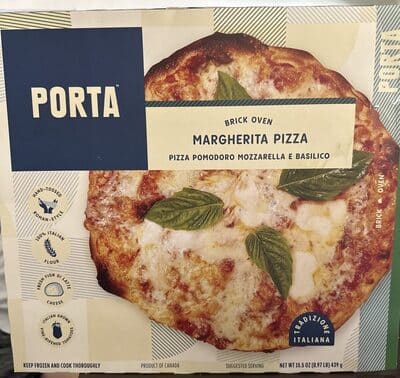
Pizzas
Porta Margherita Pizza
Score
- Ultra-processed
- Contains added sugars
- Seed-oil free
Why it scores 47
Porta Margherita Pizza scores 47 out of 100 (Okay) under GoodSwap’s published rules. What moved the score most:
- minus 20 points Malt syrup: An added sugar. Strong
- minus 18 points Ultra-processed (NOVA 4): Classified NOVA 4: made with industrial ingredients and additives. Strong
- minus 5 points Salt 1.2 g / 100 g: High in salt. Strong
Every line of the math is on The Receipt below, with its evidence tier and sources.
Better pizza
-
 Margherita Pizza Vulcano · 14.1 oz/400 g Not ultra-processed · No added sugars Score 91 out of 100 , 44 points higher
 -
 Classic Margherita Tutta Bella · 36.8 oz Not ultra-processed · No added sugars Score 85 out of 100 , 38 points higher
 -
 Pizza margherita Genio Della Pizza · 13.8 oz Not ultra-processed · No added sugars Score 93 out of 100 , 46 points higher
 -
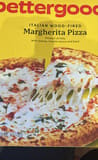 Italian wood-fired Margherita Pizza Bettergoods · 139 g Not ultra-processed · No added sugars Score 79 out of 100 , 32 points higher
 -
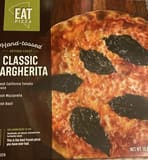 Classic Margherita Eat Pizza · 10.63 oz Not ultra-processed · No added sugars Score 87 out of 100 , 40 points higher
The same kind of product, at least 10 points higher, sold in the US. Never paid placements.
The Receipt
Margherita Pizza
Ingredients
- Malt syrup minus 20 points
- Calcium phosphate minus 2.5 points
- Calcium chloride minus 2.5 points
- Sunflower lecithin minus 1.5 points
Processing
- Ultra-processed (NOVA 4) minus 18 points
- 2 kinds of ultra-processing markers minus 1.5 points
Nutrition per 100 g
- Saturated fat 3.1 g / 100 g minus 3 points
- Salt 1.2 g / 100 g minus 5 points
- Energy 212 kcal / 100 g minus 1 points
- Protein 11 g / 100 g plus 2 points
100 − 53 = 47
Can’t score above 79. Contains malt syrup, an ingredient of high concern. [1][2][3]
Nutrition per 100 g
| Energy | 212 kcal |
|---|---|
| Fat | 6.8 g |
| Saturated fat | 3.1 g |
| Carbohydrates | 27.4 g |
| Sugars | 2.1 g |
| Added sugars | 0 g |
| Fiber | 1.4 g |
| Protein | 11 g |
| Salt | 1.2 g |
Serving: 0.33 pizza (146 g)
Ingredients
- Enriched wheat flour (wheat flour, wheat starch, reduced iron, niacin, thiamine mononitrate, riboflavin, tricalcium phosphate, folic acid)
- Water
- Part-skim mozzarella cheese (pasteurized part-skim milk, skim milk, cheese culture, salt, enzymes)
- Tomatoes (peeled tomatoes, tomato juice, citric acid)
- Fior di latte cheese (pasteurized milk, salt, calcium chloride, microbial enzyme, bacterial culture)
- Durum wheat semolina
- Olive oil
- Salt
- Basil
- Rice flour
- Sunflower lecithin
- Barley malt extract (high concern)
- Nonfat dry milk
- Yeast
Label text, as published
Enriched wheat flour (wheat flour, wheat starch, reduced iron, niacin, thiamine mononitrate, riboflavin, tricalcium phosphate, folic acid), Water, Part-skim mozzarella cheese (pasteurized part-skim milk, skim milk, cheese culture, salt, enzymes), Tomatoes (peeled tomatoes, tomato juice, citric acid), Fior di latte cheese (pasteurized milk, salt, calcium chloride, microbial enzyme, bacterial culture), Durum wheat semolina, Olive oil, Salt, Basil, Rice flour, Sunflower lecithin, Barley malt extract, Nonfat dry milk, Yeast
Allergens and diets
Contains: Milk, Wheat, Gluten
- Not vegan
- Not gluten-free
- Palm-oil-free
Always check the package: recipes change.
More pizzas on GoodSwap
-
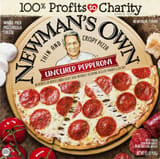 Thin & Crispy Crust Uncured Pepperoni Newman's Own · 15.1 oz Ultra-processedHigh in saltHigh in saturated fatContains nitrites or nitrates Score 20 out of 100 Poor
 - Thin and crispy pizza Newman's Own · 15.4 oz Contains added sugarsContains seed oilsContains whole grains Score 60 out of 100 Good
-
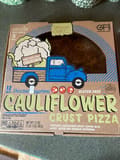 Cauliflower Crust Pizza Mama Cozzi's · 17 oz Ultra-processedHigh in saltHigh in saturated fatContains added sugars Score 47 out of 100 Okay
 -
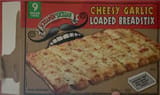 Cheesy Garlic Loaded Breadsticks Screamin' Sicilian · 15.65 oz/444 g High in saturated fatContains added sugarsContains seed oilsNo synthetic dyes Score 33 out of 100 Poor
 -
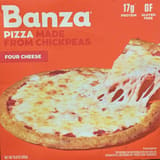 Four Cheese Pizza Banza · 10.9 oz Ultra-processedHigh in saturated fatSeed-oil free Score 67 out of 100 Good
 -
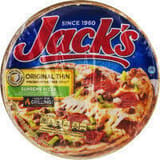 Original thin crust supreme pizza Jack's · 15.8 oz/448 g Ultra-processedContains nitrites or nitratesContains added sugarsContains seed oils Score 17 out of 100 Bad
Sources
-
Guideline: sugars intake for adults and children
“In both adults and children, WHO recommends reducing the intake of free sugars to less than 10% of total energy intake”
who.int
-
Dietary Guidelines for Americans, 2025–2030
“Limit foods and beverages that include artificial flavors, petroleum-based dyes, artificial preservatives, and low-calorie non-nutritive sweeteners.”
cdn.realfood.gov
-
Added and free sugars should be as low as possible
“Sugar consumption is a known cause of dental caries.”
efsa.europa.eu
-
EFSA issues new advice on phosphates
“We estimated that dietary exposure to phosphates may exceed the new ADI for infants, toddlers and children with average consumption of phosphates in their diet.”
efsa.europa.eu
-
Saturated fatty acid and trans-fatty acid intake for adults and children: WHO guideline
“WHO recommends that adults and children reduce saturated fatty acid intake to 10% of total energy intake (strong recommendation).”
who.int
-
“For adults, WHO recommends less than 2000 mg/day of sodium (equivalent to less than 5 g/day salt), or just under a teaspoon.”
who.int
-
“Greater exposure to ultra-processed food was associated with a higher risk of adverse health outcomes, especially cardiometabolic, common mental disorder, and mortality outcomes.”
doi.org