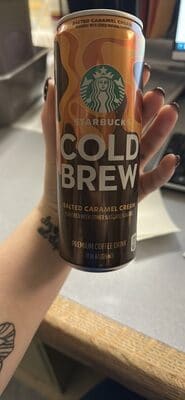
Coffee drinks
Starbucks Cold Brew Salted Caramel Cream
Score
- Ultra-processed
- Contains added sugars
- Contains caffeine
- No additives
Why it scores 48
Starbucks Cold Brew Salted Caramel Cream scores 48 out of 100 (Okay) under GoodSwap’s published rules. What moved the score most:
- minus 20 points Sugar: An added sugar. Strong
- minus 18 points Ultra-processed (NOVA 4): Classified NOVA 4: made with industrial ingredients and additives. Strong
- minus 12 points Sugars 6.2 g / 100 ml: Very high in sugar. Strong
Every line of the math is on The Receipt below, with its evidence tier and sources.
Better bottled coffee drinks
-
 Classic Cold Brew Almond Latte Pop & Bottle · 11 fl oz/325 mL Not ultra-processed · No added sugars Score 83 out of 100 , 35 points higher
 -
 Cold Brew Coffee Dunkin' · 31 fl oz/1.93 PT/917 mL Not ultra-processed · No added sugars Score 100 out of 100 , 52 points higher
 -
 Cold Brew Coffee 100% Colombian Kirkland Signature · 325 mL Not ultra-processed · No added sugars Score 100 out of 100 , 52 points higher
 -
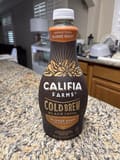 Cold Brew Black Coffee Blonde Roast Califia Farms · 48 fl oz/1.5 Quart/1.4 L Not ultra-processed · No added sugars Score 100 out of 100 , 52 points higher
 -
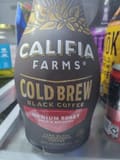 Pure Black Medium Roast Cold Brew Coffee Califa Farms · 48 fl oz/1.5 Quart/1.4 L Not ultra-processed · No added sugars Score 100 out of 100 , 52 points higher
The same kind of product, at least 10 points higher, sold in the US. Never paid placements.
The Receipt
Cold Brew Salted Caramel Cream
Ingredients
- Sugar minus 20 points
- Natural flavors minus 2.5 points
Processing
- Ultra-processed (NOVA 4) minus 18 points
Nutrition per 100 ml
- Sugars 6.2 g / 100 ml minus 12 points
- Energy 37 kcal / 100 ml minus 3 points
Bonuses
- No additives plus 3 points
100 − 52.5 = 47.5 → 48
Can’t score above 79. Contains sugar, an ingredient of high concern. [1][2][3]
Nutrition per 100 ml
| Energy | 37 kcal |
|---|---|
| Fat | 0.8 g |
| Saturated fat | 0.5 g |
| Trans fat | 0 g |
| Carbohydrates | 6.8 g |
| Sugars | 6.2 g |
| Fiber | 0 g |
| Protein | 1.2 g |
| Salt | 0.1 g |
Serving: 1 portion (11 fl oz)
Ingredients
- COLD - BREWED STARBUCKS COFFEE (WATER, COFFEE)
- SKIM MILK
- SUGAR (high concern)
- CREAM
- NATURAL FLAVORS
- SEA SALT
Label text, as published
COLD - BREWED STARBUCKS COFFEE (WATER, COFFEE), SKIM MILK, SUGAR, CREAM, NATURAL FLAVORS, SEA SALT.
Allergens and diets
Contains: Milk
- Not vegan
- Palm-oil-free
Always check the package: recipes change.
More coffee drinks on GoodSwap
-
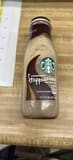 Frappuccino chilled coffee drink Starbucks · 13.7 oz Ultra-processedHigh in sugarContains added sugarsContains caffeine Score 42 out of 100 Okay
 -
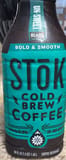 Cold Brew Coffee Stok · 48 fl oz Ultra-processedContains caffeineNo additives Score 82 out of 100 Excellent
 -
 Double Shot Espresso Black Rifle Coffee Black Rifle Coffee · 11fl Ultra-processedContains added sugarsContains emulsifiers studied for gut effectsContains caffeine Score 34 out of 100 Poor
 -
 Starbucks DoubleShot Energy Caramel Starbucks · 15 fl oz Ultra-processedContains non-nutritive sweetenersContains added sugarsContains emulsifiers studied for gut effects Score 12 out of 100 Bad
 -
 Espresso and Cream Starbucks · 6.5 oz Contains added sugarsContains caffeine Score 55 out of 100 Okay
More from Starbucks
Sources
-
Guideline: sugars intake for adults and children
“In both adults and children, WHO recommends reducing the intake of free sugars to less than 10% of total energy intake”
who.int
-
Dietary Guidelines for Americans, 2025–2030
“Limit foods and beverages that include artificial flavors, petroleum-based dyes, artificial preservatives, and low-calorie non-nutritive sweeteners.”
cdn.realfood.gov
-
Added and free sugars should be as low as possible
“Sugar consumption is a known cause of dental caries.”
efsa.europa.eu
-
21 CFR 101.22 Foods; labeling of spices, flavorings, colorings and chemical preservatives
“whose significant function in food is flavoring rather than nutritional.”
ecfr.gov
-
“Greater exposure to ultra-processed food was associated with a higher risk of adverse health outcomes, especially cardiometabolic, common mental disorder, and mortality outcomes.”
doi.org
-
Spilling the Beans: How Much Caffeine is Too Much?
“For most adults, the FDA has cited 400 milligrams* a day — that's about two to three 12-fluid-ounce cups of coffee — as an amount not generally associated with negative effects.”
fda.gov
-
Regulation (EU) No 1169/2011, Annex III point 4.1 (beverages with high caffeine content)
“‘High caffeine content. Not recommended for children or pregnant or breast-feeding women’”
eur-lex.europa.eu