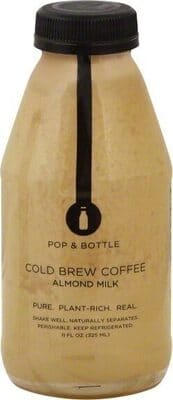
Beverages
Pop & Bottle Classic Cold Brew Almond Latte
11 fl oz/325 mL
Score
- Contains caffeine
- No additives
Why it scores 83
Pop & Bottle Classic Cold Brew Almond Latte scores 83 out of 100 (Excellent) under GoodSwap’s published rules. What moved the score most:
- minus 9 points Sugars 4 g / 100 ml: High in sugar. Strong
- minus 8 points Processed (NOVA 3): Classified NOVA 3: processed with added salt, sugar or oil. Emerging
- minus 3 points Energy 40 kcal / 100 ml: Energy-dense for its volume. Info
Every line of the math is on The Receipt below, with its evidence tier and sources.
Better bottled coffee drinks
-
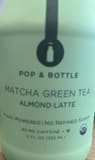 Matcha Green Tea Almond Latte Pop & Bottle · 11 fl oz/325 mL Scores +17 Score 100 out of 100 , 17 points higher
 -
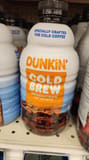 Cold Brew Coffee Dunkin' · 31 fl oz/1.93 PT/917 mL Scores +17 Score 100 out of 100 , 17 points higher
 -
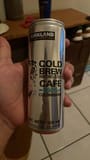 Cold Brew Coffee 100% Colombian Kirkland Signature · 325 mL Less processed Score 100 out of 100 , 17 points higher
 -
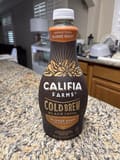 Cold Brew Black Coffee Blonde Roast Califia Farms · 48 fl oz/1.5 Quart/1.4 L Less processed Score 100 out of 100 , 17 points higher
 -
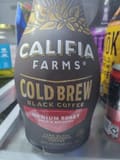 Pure Black Medium Roast Cold Brew Coffee Califa Farms · 48 fl oz/1.5 Quart/1.4 L Less processed Score 100 out of 100 , 17 points higher
The same kind of product, at least 10 points higher, sold in the US. Never paid placements.
The Receipt
Classic Cold Brew Almond Latte
Processing
- Processed (NOVA 3) minus 8 points
Nutrition per 100 ml
- Sugars 4 g / 100 ml minus 9 points
- Energy 40 kcal / 100 ml minus 3 points
Bonuses
- No additives plus 3 points
100 − 17 = 83
Nutrition per 100 ml
| Energy | 40 kcal |
|---|---|
| Fat | 2.2 g |
| Saturated fat | 0 g |
| Trans fat | 0 g |
| Carbohydrates | 5.2 g |
| Sugars | 4 g |
| Added sugars | 0 g |
| Fiber | 0.9 g |
| Protein | 1.2 g |
| Salt | 0 g |
Serving: 11 ONZ (325 ml)
Ingredients
Label text, as published
ALMOND MILK* (WATER, ALMONDS*), DATES*, COLD BREW COFFEE* (WATER, COFFEE BEANS*), PINK HIMALAYAN SALT
Allergens and diets
Contains: Tree nuts
- Vegan
- Vegetarian
- Gluten-free
- Palm-oil-free
Always check the package: recipes change.
More beverages on GoodSwap
-
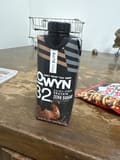 OWYN Pro Elite Dairy-Free Protein Chocolate Flavored OWYN · 330 mL Ultra-processedContains non-nutritive sweetenersContains seed oils Score 63 out of 100 Good
 -
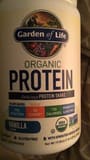 Organic Protein Delicious Protein Shake Garden of Life · 18.0 oz Ultra-processedHigh in saltContains non-nutritive sweetenersContains sugar alcohols Score 54 out of 100 Okay
 -
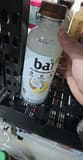 Puna Coconut Pineapple Bai Ultra-processedContains non-nutritive sweetenersContains caffeine Score 69 out of 100 Good
 -
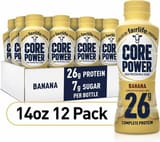 Core power protein shakes banana ready to drink Core Power · 14 fl oz/414 mL Ultra-processedContains non-nutritive sweetenersContains emulsifiers studied for gut effects Score 43 out of 100 Okay
 -
 Munchies Protein Shake Alani · 12 fl oz/355 mL Ultra-processedContains non-nutritive sweetenersContains added sugarsContains artificial flavors Score 27 out of 100 Poor
 -
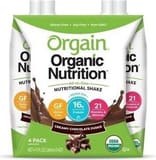 Organic nutritional shake Orgain · 44 oz Ultra-processedContains non-nutritive sweetenersContains added sugarsContains seed oils Score 11 out of 100 Bad
Sources
-
Guideline: sugars intake for adults and children
“In both adults and children, WHO recommends reducing the intake of free sugars to less than 10% of total energy intake”
who.int
-
Dietary Guidelines for Americans, 2025–2030
“Limit foods and beverages that include artificial flavors, petroleum-based dyes, artificial preservatives, and low-calorie non-nutritive sweeteners.”
cdn.realfood.gov
-
Spilling the Beans: How Much Caffeine is Too Much?
“For most adults, the FDA has cited 400 milligrams* a day — that's about two to three 12-fluid-ounce cups of coffee — as an amount not generally associated with negative effects.”
fda.gov
-
Regulation (EU) No 1169/2011, Annex III point 4.1 (beverages with high caffeine content)
“‘High caffeine content. Not recommended for children or pregnant or breast-feeding women’”
eur-lex.europa.eu