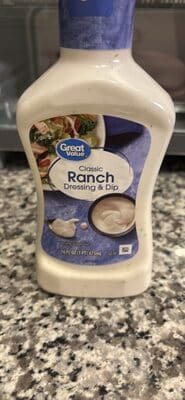
Salad dressings
Great Value Classic Ranch Dressing & Dip
16 fl oz/1 PT/473 mL
Score
- Ultra-processed
- High in salt
- High in saturated fat
- Contains added sugars
- Contains seed oils
Why it scores 25
Great Value Classic Ranch Dressing & Dip scores 25 out of 100 (Poor) under GoodSwap’s published rules. What moved the score most:
- minus 20 points Sugar: An added sugar. Strong
- minus 18 points Ultra-processed (NOVA 4): Classified NOVA 4: made with industrial ingredients and additives. Strong
- minus 7.5 points Sodium benzoate: Benzoates can form small amounts of benzene in drinks that also contain ascorbic acid (vitamin C), especially with heat or light. Strong
Every line of the math is on The Receipt below, with its evidence tier and sources.
Better ranch dressing
-
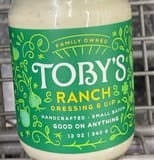 Ranch Dressing & Dip Toby's · 12 oz/340 g Not ultra-processed · Less salt Score 79 out of 100 , 54 points higher
 -
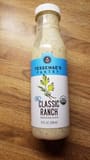 Classic Ranch Dressing & Dip Tessamae's · 10 fl oz/296 mL Not ultra-processed · Less salt Score 77 out of 100 , 52 points higher
 -
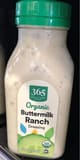 Classic Ranch Dressing & Dip 365 Whole Foods Market · 12 fl oz/355 mL Not ultra-processed · Less saturated fat Score 62 out of 100 , 37 points higher
 -
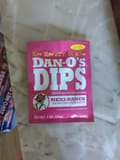 Dips Mexi-Ranch Dan-O's · 1 oz Not ultra-processed · Less saturated fat Score 79 out of 100 , 54 points higher
 -
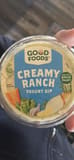 Creamy Ranch Yogurt Dip Good Foods · 12 oz/340 g Less salt · Less saturated fat Score 67 out of 100 , 42 points higher
The same kind of product, at least 10 points higher, sold in the US. Never paid placements.
The Receipt
Classic Ranch Dressing & Dip
Ingredients
- Sugar minus 20 points
- Sodium benzoate minus 7.5 points
- Soybean oil minus 2.5 points
- Natural flavors minus 1.5 points
- Phosphoric acid minus 1.5 points
- Modified starch minus 1.5 points
- Monosodium glutamate (MSG) minus 0.5 points
- Sodium phosphate minus 0.5 points
- Potassium sorbate minus 0.5 points
- Calcium disodium EDTA minus 0.5 points
Processing
- Ultra-processed (NOVA 4) minus 18 points
- 4 kinds of ultra-processing markers minus 4.5 points
Nutrition per 100 g
- Saturated fat 6.7 g / 100 g minus 7 points
- Salt 2.3 g / 100 g minus 7 points
- Energy 433 kcal / 100 g minus 2 points
100 − 75 = 25
Can’t score above 79. Contains sugar, an ingredient of high concern. [1][2][3]
Can’t score above 79. High in fat, saturated fat and salt (above the front-of-pack "high" level). [20]
Nutrition per 100 g
| Energy | 433 kcal |
|---|---|
| Fat | 46.7 g |
| Saturated fat | 6.7 g |
| Trans fat | 0 g |
| Carbohydrates | 3.3 g |
| Sugars | 3.3 g |
| Added sugars | 0.5 g |
| Fiber | 0 g |
| Protein | 3.3 g |
| Salt | 2.3 g |
Serving: 1 serving (30 ml)
Ingredients
- SOYBEAN OIL
- WATER
- SUGAR (high concern)
- EGG YOLK
- SALT
- BUTTERMILK
- CONTAINS LESS THAN 1% NATURAL FLAVORS
- SPICES
- DRIED GARLIC
- DRIED ONION
- DISTILLED VINEGAR
- PHOSPHORIC ACID
- XANTHAN GUM MODIFIED FOOD STARCH
- MONOSODIUM GLUTAMATE
- DISODIUM PHOSPHATE
- WITH POTASSIUM SORBATE
- SODIUM BENZOATE (moderate concern)
- CALCIUM DISODIUM EDTA (AS PRESERVATIVES)
Label text, as published
SOYBEAN OIL, WATER, SUGAR, EGG YOLK, SALT, BUTTERMILK, CONTAINS LESS THAN 1% NATURAL FLAVORS, SPICES, DRIED GARLIC, DRIED ONION, DISTILLED VINEGAR, PHOSPHORIC ACID, XANTHAN GUM MODIFIED FOOD STARCH, MONOSODIUM GLUTAMATE, DISODIUM PHOSPHATE, WITH POTASSIUM SORBATE, SODIUM BENZOATE, AND CALCIUM DISODIUM EDTA (AS PRESERVATIVES).
Allergens and diets
Contains: Milk, Soy, Egg
- Not vegan
- Palm-oil-free
Always check the package: recipes change.
More salad dressings on GoodSwap
-
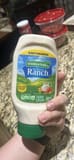 The Original Ranch Condiment & Dressing Hidden Valley · 16 fl oz Ultra-processedHigh in saltHigh in saturated fatContains added sugars Score 27 out of 100 Poor
 -
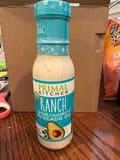 Ranch Dressing & Marinade Primal Kitchen · 8 oz Ultra-processedHigh in saltSeed-oil free Score 70 out of 100 Good
 -
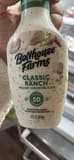 Classic Ranch Yogurt Dressing & Dip Bolthouse Farms · 12 fl oz/355 mL Ultra-processedHigh in saltContains added sugarsContains seed oils Score 34 out of 100 Poor
 -
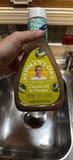 Classic Oil & Vinegar Newman's Own · 30 g High in saturated fatContains seed oilsNo additives Score 78 out of 100 Good
 -
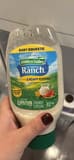 Ranch Light Condiment & Dressing Hidden Valley · 16 fl oz Ultra-processedHigh in saltContains added sugarsContains seed oils Score 28 out of 100 Poor
 -
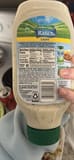 The Original Ranch Light Condiment & Dressing Hidden Valley · 24 fl oz/1.5 PT/709 mL Ultra-processedHigh in saltContains added sugarsContains seed oils Score 28 out of 100 Poor
More from Great Value

Sources
-
Guideline: sugars intake for adults and children
“In both adults and children, WHO recommends reducing the intake of free sugars to less than 10% of total energy intake”
who.int
-
Dietary Guidelines for Americans, 2025–2030
“Limit foods and beverages that include artificial flavors, petroleum-based dyes, artificial preservatives, and low-calorie non-nutritive sweeteners.”
cdn.realfood.gov
-
Added and free sugars should be as low as possible
“Sugar consumption is a known cause of dental caries.”
efsa.europa.eu
-
“Artificial colours or a sodium benzoate preservative (or both) in the diet result in increased hyperactivity in 3-year-old and 8/9-year-old children in the general population.”
doi.org
-
Re-evaluation of benzyl alcohol (E 1519) as food additive (records the 2016 benzoate re-evaluation)
“derived a group ADI of 5 mg/kg bw per day (expressed as benzoic acid) in accordance with the ADI previously derived by SCF and JECFA”
doi.org
-
“replacement of saturated fat in the diet with linoleic acid effectively lowers serum cholesterol but does not support the hypothesis that this translates to a lower risk of death from coronary heart disease or all causes.”
doi.org
-
“These data provide support for current recommendations to replace saturated fat with polyunsaturated fat for primary prevention of CHD.”
doi.org
-
21 CFR 101.22 Foods; labeling of spices, flavorings, colorings and chemical preservatives
“whose significant function in food is flavoring rather than nutritional.”
ecfr.gov
-
EFSA issues new advice on phosphates
“We estimated that dietary exposure to phosphates may exceed the new ADI for infants, toddlers and children with average consumption of phosphates in their diet.”
efsa.europa.eu
-
Questions and Answers on Monosodium glutamate (MSG)
“FDA considers the addition of MSG to foods to be “generally recognized as safe” (GRAS).”
fda.gov
-
EFSA reviews safety of glutamates added to food
“EFSA re-assessed the safety of glutamates used as food additives and derived a group acceptable daily intake (ADI) of 30 mg/kg body weight per day for all six of these additives.”
efsa.europa.eu
-
“By applying a default uncertainty factor of 100, the Panel established a group ADI expressed as 11 mg sorbic acid/kg bw per day for sorbic acid (E 200) and its potassium salt (E 202).”
doi.org
-
21 CFR 182.3640 Potassium sorbate
ecfr.gov
-
Saturated fatty acid and trans-fatty acid intake for adults and children: WHO guideline
“WHO recommends that adults and children reduce saturated fatty acid intake to 10% of total energy intake (strong recommendation).”
who.int
-
“For adults, WHO recommends less than 2000 mg/day of sodium (equivalent to less than 5 g/day salt), or just under a teaspoon.”
who.int
-
“Table 3: Criteria for drinks (per 100ml)”
assets.publishing.service.gov.uk
-
“Greater exposure to ultra-processed food was associated with a higher risk of adverse health outcomes, especially cardiometabolic, common mental disorder, and mortality outcomes.”
doi.org