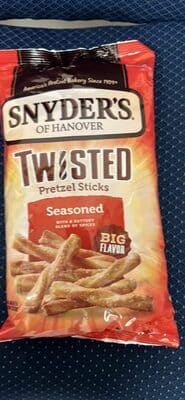
Salty snacks
Snyder's Of Hanover Twisted Pretzel Sticks Seasoned
12 oz
Score
- Ultra-processed
- High in salt
- Contains added sugars
- Contains seed oils
- Contains palm oil
- Contains artificial flavors
Why it scores 19
Snyder's Of Hanover Twisted Pretzel Sticks Seasoned scores 19 out of 100 (Bad) under GoodSwap’s published rules. What moved the score most:
- minus 20 points Malt syrup: An added sugar. Strong
- minus 20 points Corn syrup: An added sugar. Strong
- minus 18 points Ultra-processed (NOVA 4): Classified NOVA 4: made with industrial ingredients and additives. Strong
Every line of the math is on The Receipt below, with its evidence tier and sources.
Better pretzels
-
 Pretzel Sticks Trader Joe's · 150 g Not ultra-processed · Less salt Score 97 out of 100 , 78 points higher
 -
 365 Everyday Value, Organic Crunchy Pretzel Sticks 365 · 8 oz (227 g) Not ultra-processed · No added sugars Score 79 out of 100 , 60 points higher
 -
 Pretzel Sticks The Snack Artist · 28 g Not ultra-processed · No palm oil Score 59 out of 100 , 40 points higher
 -
 Stick Pretzels Pennysticks Brand · 12 oz Not ultra-processed · No seed oils Score 71 out of 100 , 52 points higher
 -
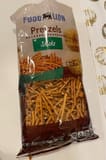 Pretzel Sticks Food Lion · 30 g Not ultra-processed · No palm oil Score 60 out of 100 , 41 points higher
The same kind of product, at least 10 points higher, sold in the US. Never paid placements.
The Receipt
Twisted Pretzel Sticks Seasoned
Ingredients
- Malt syrup minus 20 points
- Corn syrup minus 20 points
- Sugar minus 10 points
Processing
- Ultra-processed (NOVA 4) minus 18 points
- 4 kinds of ultra-processing markers minus 4.5 points
Nutrition per 100 g
- Salt 3 g / 100 g minus 9 points
- Energy 429 kcal / 100 g minus 2 points
- Fiber 3.6 g / 100 g plus 2 points
100 − 81.5 = 18.5 → 19
Can’t score above 79. Contains malt syrup, an ingredient of high concern. [1][2][3]
Can’t score above 79. High in salt (above the front-of-pack "high" level). [6]
Nutrition per 100 g
| Energy | 429 kcal |
|---|---|
| Fat | 12.5 g |
| Saturated fat | 0 g |
| Trans fat | 0 g |
| Carbohydrates | 71.4 g |
| Sugars | 3.6 g |
| Added sugars | 3.6 g |
| Fiber | 3.6 g |
| Protein | 7.1 g |
| Salt | 3 g |
Serving: 15 pretzels (28 g)
Ingredients
- ENRICHED FLOUR (WHEAT FLOUR, NIACIN, REDUCED IRON, THIAMINE MONONITRATE, RIBOFLAVIN, FOLIC ACID)
- VEGETABLE OILS (CANOLA, PALM, SOY, SUNFLOWER)
- SALT
- TAPIOCA MALT SYRUP (TAPIOCA SYRUP, MALT EXTRACT) (high concern)
- CANE SUGAR (high concern)
- BUTTERMILK
- ONION POWDER
- GARLIC POWDER
- MONOSODIUM GLUTAMATE
- COCONUT OIL
- LACTIC ACID
- WHEY PROTEIN CONCENTRATE
- SPICES
- NATURAL AND ARTIFICIAL FLAVOR
- CITRIC ACID
- WHEY
- SODIUM CASEINATE
- BUTTER (CREAM)
- SODA (not recognized)
Label text, as published
INGREDIENTS: ENRICHED FLOUR (WHEAT FLOUR, NIACIN, REDUCED IRON, THIAMINE MONONITRATE, RIBOFLAVIN, FOLIC ACID), VEGETABLE OILS (CANOLA, PALM, SOY, AND/OR SUNFLOWER), SALT, TAPIOCA MALT SYRUP (TAPIOCA SYRUP, MALT EXTRACT), CANE SUGAR, BUTTERMILK, ONION POWDER, GARLIC POWDER, MONOSODIUM GLUTAMATE, COCONUT OIL, LACTIC ACID, WHEY PROTEIN CONCENTRATE, SPICES, NATURAL AND ARTIFICIAL FLAVOR, CITRIC ACID, WHEY, SODIUM CASEINATE, BUTTER (CREAM), SODA. CONTAINS: WHEAT, MILK
Allergens and diets
Contains: Milk, Soy, Wheat, Gluten
- Not vegan
- Not gluten-free
- Not palm-oil-free
Always check the package: recipes change.
More salty snacks on GoodSwap
-
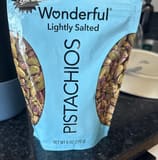 Lightly Salted Pistachios Wonderful · 30 g High in saturated fatNo additives Score 79 out of 100 Good
 -
 Totopos El Milagro · 453 g Contains seed oils Score 79 out of 100 Good
 -
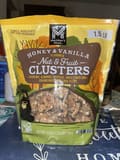 Honey and vanilla, flavored nuts, and fruit clusters Member's Mark · 24 oz Ultra-processedHigh in saturated fatContains added sugarsContains seed oils Score 19 out of 100 Bad
 -
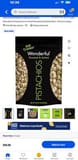 Wonderful Pistachios In-Shell Roasted & Salted Nuts Wonderful · 30 g High in saturated fatNo additives Score 79 out of 100 Good
 - Veggie crisps Off the earth · 17.5 oz/496.1 g Ultra-processedContains seed oils Score 67 out of 100 Good
-
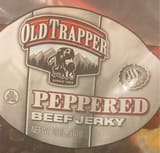 Peppered Beef Jerky Old Trapper · 18 oz Ultra-processedHigh in saltContains nitrites or nitratesContains added sugars Score 19 out of 100 Bad
More from Snyder's Of Hanover
-
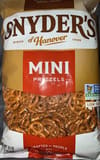 Mini Pretzels Snyder's Of Hanover · 16 oz Score 37 out of 100 Poor
 -
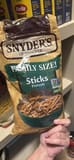 Sticks Pretzels Snyder's Of Hanover · 1 Score 30 out of 100 Poor
 -
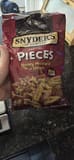 Pretzel Pieces Honey Mustard & Onion flavored Sourdough Hard Pretzels Snyder's Of Hanover · 318 g Score 10 out of 100 Bad
 -
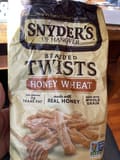 Braided Twists Honey Wheat Pretzels Snyder's Of Hanover · 12 oz Score 31 out of 100 Poor
Sources
-
Guideline: sugars intake for adults and children
“In both adults and children, WHO recommends reducing the intake of free sugars to less than 10% of total energy intake”
who.int
-
Dietary Guidelines for Americans, 2025–2030
“Limit foods and beverages that include artificial flavors, petroleum-based dyes, artificial preservatives, and low-calorie non-nutritive sweeteners.”
cdn.realfood.gov
-
Added and free sugars should be as low as possible
“Sugar consumption is a known cause of dental caries.”
efsa.europa.eu
-
“For adults, WHO recommends less than 2000 mg/day of sodium (equivalent to less than 5 g/day salt), or just under a teaspoon.”
who.int
-
“Table 3: Criteria for drinks (per 100ml)”
assets.publishing.service.gov.uk
-
“Greater exposure to ultra-processed food was associated with a higher risk of adverse health outcomes, especially cardiometabolic, common mental disorder, and mortality outcomes.”
doi.org
-
“replacement of saturated fat in the diet with linoleic acid effectively lowers serum cholesterol but does not support the hypothesis that this translates to a lower risk of death from coronary heart disease or all causes.”
doi.org
-
“These data provide support for current recommendations to replace saturated fat with polyunsaturated fat for primary prevention of CHD.”
doi.org
-
“Glycidyl fatty acid esters, expressed as glycidol”
eur-lex.europa.eu