Pizzas
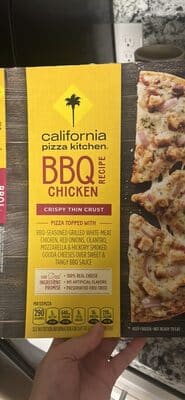
California Pizza Kitchen BBQ Chicken Pizza
14.7 oz
Score
- Ultra-processed
- Contains added sugars
- Contains palm oil
- Seed-oil free
- No synthetic dyes
Why it scores 21
California Pizza Kitchen BBQ Chicken Pizza scores 21 out of 100 (Poor) under GoodSwap’s published rules. What moved the score most:
- minus 20 points Brown sugar: An added sugar. Strong
- minus 20 points Molasses: An added sugar. Strong
- minus 18 points Ultra-processed (NOVA 4): Classified NOVA 4: made with industrial ingredients and additives. Strong
Every line of the math is on The Receipt below, with its evidence tier and sources.
Better pizza
-
 Buffalo-Style Chicken Caulipower · 10.9 oz/310 g Not ultra-processed · No palm oil Score 65 out of 100 , 44 points higher
 -
 Chicken Pesto Mini Calzones Urban Pie Pizza Co. · 8 oz Not ultra-processed · No palm oil Score 69 out of 100 , 48 points higher
 -
 Chicken Tikka Marsala Pizza Taste Of Inspirations · 149 g Not ultra-processed · No palm oil Score 61 out of 100 , 40 points higher
 -
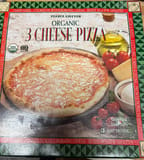 Organic 3 Cheese Pizza Trader Giotto's Not ultra-processed · No added sugars Score 79 out of 100 , 58 points higher
 -
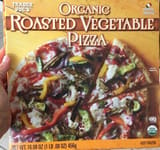 Organic roasted vegetable pizza Trader Joe's · 456 g Not ultra-processed · No added sugars Score 87 out of 100 , 66 points higher
The same kind of product, at least 10 points higher, sold in the US. Never paid placements.
The Receipt
BBQ Chicken Pizza
Ingredients
- Brown sugar minus 20 points
- Molasses minus 20 points
- Sugar minus 10 points
Processing
- Ultra-processed (NOVA 4) minus 18 points
- 3 kinds of ultra-processing markers minus 3 points
Nutrition per 100 g
- Sugars 6.5 g / 100 g minus 3 points
- Saturated fat 3.6 g / 100 g minus 3 points
- Salt 1.2 g / 100 g minus 3 points
- Energy 209 kcal / 100 g minus 1 points
- Protein 11.5 g / 100 g plus 2 points
100 − 79 = 21
Can’t score above 79. Contains brown sugar, an ingredient of high concern. [1][2][3]
Nutrition per 100 g
| Energy | 209 kcal |
|---|---|
| Fat | 7.9 g |
| Saturated fat | 3.6 g |
| Trans fat | 0 g |
| Carbohydrates | 23.7 g |
| Sugars | 6.5 g |
| Added sugars | 5.8 g |
| Fiber | 0.7 g |
| Protein | 11.5 g |
| Salt | 1.2 g |
Serving: 0.333 pizza (139 g)
Ingredients
- ENRICHED WHEAT FLOUR (WHEAT FLOUR, NIACIN [VITAMIN B3], REDUCED IRON, THIAMIN MONONITRATE [VITAMIN B1], RIBOFLAVIN [VITAMIN B2], FOLIC ACID [VITAMIN B9])
- BARBECUE SAUCE (WATER, TOMATO PASTE, BROWN SUGAR, DISTILLED VINEGAR, MOLASSES, SUGAR, SALT, APPLE CIDER VINEGAR, NATURAL FLAVOR, GARLIC POWDER, MUSTARD BRAN, SPICES, GROUND CHILI PEPPER) (not recognized)
- COOKED GRILLED BBQ SEASONED NATURAL WHITE MEAT CHICKEN (WHITE MEAT CHICKEN, WATER, SUGAR, SALT, PAPRIKA, NATURAL FLAVORS, YEAST EXTRACT, RICE CONCENTRATE, POTATO STARCH, ONION POWDER, GARLIC POWDER)
- LOW-MOISTURE PART-SKIM MOZZARELLA CHEESE (PART-SKIM MILK, CHEESE CULTURE, SALT, ENZYMES)
- WATER
- SMOKED GOUDA CHEESE (PART-SKIM MILK, CHEESE CULTURE, SALT, ENZYMES, ANNATTO [COLOR])
- ONIONS
- OLIVE OIL
- SUGAR (high concern)
- PALM OIL
- SALT
- CILANTRO
- BAKING POWDER (SODIUM ACID PYROPHOSPHATE, BAKING SODA, CORN STARCH, MONOCALCIUM PHOSPHATE)
Label text, as published
ENRICHED WHEAT FLOUR (WHEAT FLOUR, NIACIN [VITAMIN B3], REDUCED IRON, THIAMIN MONONITRATE [VITAMIN B1], RIBOFLAVIN [VITAMIN B2], FOLIC ACID [VITAMIN B9]), BARBECUE SAUCE (WATER, TOMATO PASTE, BROWN SUGAR, DISTILLED VINEGAR, MOLASSES, SUGAR, SALT, APPLE CIDER VINEGAR, NATURAL FLAVOR, GARLIC POWDER, MUSTARD BRAN, SPICES, GROUND CHILI PEPPER), COOKED GRILLED BBQ SEASONED NATURAL WHITE MEAT CHICKEN (WHITE MEAT CHICKEN, WATER, SUGAR, 2% OR LESS OF SALT, PAPRIKA, NATURAL FLAVORS, YEAST EXTRACT, RICE CONCENTRATE, POTATO STARCH, ONION POWDER, GARLIC POWDER), LOW-MOISTURE PART-SKIM MOZZARELLA CHEESE (PART-SKIM MILK, CHEESE CULTURE, SALT, ENZYMES), WATER, SMOKED GOUDA CHEESE (PART-SKIM MILK, CHEESE CULTURE, SALT, ENZYMES, ANNATTO [COLOR]), ONIONS, 2% OR LESS OF OLIVE OIL, SUGAR, PALM OIL, SALT, CILANTRO, BAKING POWDER (SODIUM ACID PYROPHOSPHATE, BAKING SODA, CORN STARCH, MONOCALCIUM PHOSPHATE).
Allergens and diets
Contains: Milk, Wheat, Gluten, Mustard
- Not vegan
- Not vegetarian
- Not gluten-free
- Not palm-oil-free
Always check the package: recipes change.
More pizzas on GoodSwap
-
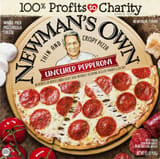 Thin & Crispy Crust Uncured Pepperoni Newman's Own · 15.1 oz Ultra-processedHigh in saltHigh in saturated fatContains nitrites or nitrates Score 20 out of 100 Poor
 - Thin and crispy pizza Newman's Own · 15.4 oz Contains added sugarsContains seed oilsContains whole grains Score 60 out of 100 Good
-
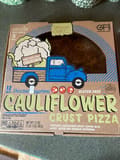 Cauliflower Crust Pizza Mama Cozzi's · 17 oz Ultra-processedHigh in saltHigh in saturated fatContains added sugars Score 47 out of 100 Okay
 -
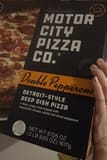 Double Pepperoni Detroit-Style Deep Dish Pizza Motor City Pizza Co. · 1617 g Ultra-processedHigh in saltHigh in saturated fatContains nitrites or nitrates Score 16 out of 100 Bad
 -
 Cheesy Garlic Loaded Breadsticks Screamin' Sicilian · 15.65 oz/444 g High in saturated fatContains added sugarsContains seed oilsNo synthetic dyes Score 33 out of 100 Poor
 -
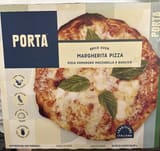 Margherita Pizza Porta Ultra-processedContains added sugarsSeed-oil free Score 47 out of 100 Okay
More from California Pizza Kitchen
Sources
-
Guideline: sugars intake for adults and children
“In both adults and children, WHO recommends reducing the intake of free sugars to less than 10% of total energy intake”
who.int
-
Dietary Guidelines for Americans, 2025–2030
“Limit foods and beverages that include artificial flavors, petroleum-based dyes, artificial preservatives, and low-calorie non-nutritive sweeteners.”
cdn.realfood.gov
-
Added and free sugars should be as low as possible
“Sugar consumption is a known cause of dental caries.”
efsa.europa.eu
-
Saturated fatty acid and trans-fatty acid intake for adults and children: WHO guideline
“WHO recommends that adults and children reduce saturated fatty acid intake to 10% of total energy intake (strong recommendation).”
who.int
-
“For adults, WHO recommends less than 2000 mg/day of sodium (equivalent to less than 5 g/day salt), or just under a teaspoon.”
who.int
-
“Greater exposure to ultra-processed food was associated with a higher risk of adverse health outcomes, especially cardiometabolic, common mental disorder, and mortality outcomes.”
doi.org
-
“Glycidyl fatty acid esters, expressed as glycidol”
eur-lex.europa.eu