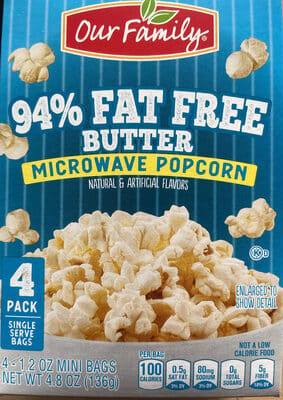
Popcorn
Our Family Butter microwave popping corn, butter
4.8 oz/136 g
Score
- Ultra-processed
- Contains palm oil
- Contains artificial flavors
- Seed-oil free
- No synthetic dyes
Why it scores 79
Our Family Butter microwave popping corn, butter scores 79 out of 100 (Good) under GoodSwap’s published rules. What moved the score most:
- minus 18 points Ultra-processed (NOVA 4): Classified NOVA 4: made with industrial ingredients and additives. Strong
- plus 4 points Fiber 14.7 g / 100 g: A good source of fiber. Strong
- minus 2.5 points Palm oil: About half saturated fat; WHO recommends keeping saturated fat to 10% of energy or less. Strong
Every line of the math is on The Receipt below, with its evidence tier and sources.
Better microwave popcorn and kernels
-
 Whole Grain Popping Corn Conagra Brands · 30 oz (850 g) Not ultra-processed · No palm oil Score 100 out of 100 , 21 points higher
 -
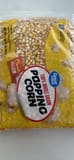 100% Whole Grain Popping Corn Classic Yellow Great Value · 32 oz Not ultra-processed · No palm oil Score 100 out of 100 , 21 points higher
 -
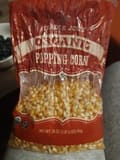 Organic Popping Corn Trader Joe's · 28 oz Not ultra-processed · No palm oil Score 100 out of 100 , 21 points higher
 -
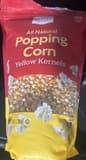 Yellow Kernel Popping Corn Market Pantry · 45 oz/1.28 kg Not ultra-processed · No palm oil Score 100 out of 100 , 21 points higher
 -
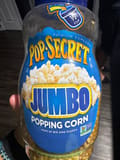 Jumbo Popping Corn Pop-Secret · 33 g Not ultra-processed · No palm oil Score 100 out of 100 , 21 points higher
The same kind of product, at least 10 points higher, sold in the US. Never paid placements.
The Receipt
Butter microwave popping corn, butter
Ingredients
- Palm oil minus 2.5 points
- Natural and artificial flavors minus 2.5 points
Processing
- Ultra-processed (NOVA 4) minus 18 points
- 2 kinds of ultra-processing markers minus 1.5 points
Nutrition per 100 g
- Saturated fat 1.5 g / 100 g minus 1 points
- Salt 0.6 g / 100 g minus 1 points
- Energy 294 kcal / 100 g minus 1 points
- Fiber 14.7 g / 100 g plus 4 points
- Protein 11.8 g / 100 g plus 2 points
100 − 21.5 = 78.5 → 79
Nutrition per 100 g
| Energy | 294 kcal |
|---|---|
| Fat | 5.9 g |
| Saturated fat | 1.5 g |
| Trans fat | 0 g |
| Carbohydrates | 58.8 g |
| Sugars | 0 g |
| Fiber | 14.7 g |
| Protein | 11.8 g |
| Salt | 0.6 g |
Serving: 1 BAG (34 g)
Ingredients
- Popcorn
- palm oil
- salt
- natural and artificial flavor
- color (annatto extract) (not recognized)
Label text, as published
Popcorn, palm oil, salt, natural and artificial flavor, color (annatto extract).
Allergens and diets
- Not palm-oil-free
Always check the package: recipes change.
More popcorn on GoodSwap
-
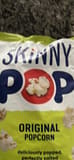 Original Popcorn Skinny Pop · 4.4 oz Contains seed oilsNo additives Score 79 out of 100 Good
 -
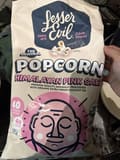 Popcorn Himalayan Pink Salt Lesser Evil · 5 oz High in saltHigh in saturated fatCertified organicNo additives Score 79 out of 100 Good
 -
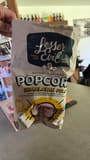 POPcorn HIMALAYAN GOLD Lesser Evil · 4.6 oz/130 g Ultra-processedHigh in saltHigh in saturated fatCertified organic Score 68 out of 100 Good
 -
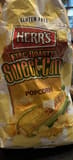 Fire Roasted Sweet Corn Popcorn Herr's Ultra-processedHigh in saltHigh in saturated fatContains added sugars Score 36 out of 100 Poor
 -
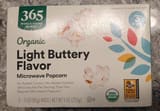 Organic Light Buttery Flavor Microwave Popcorn 365 Whole Foods Market · 255 g Ultra-processedHigh in saltContains palm oilCertified organic Score 73 out of 100 Good
 -
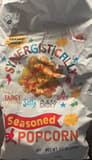 Seasoned Popcorn Trader Joe's Ultra-processedHigh in saltHigh in saturated fatContains added sugars Score 31 out of 100 Poor
More from Our Family
Sources
-
Saturated fatty acid and trans-fatty acid intake for adults and children: WHO guideline
“WHO recommends that adults and children reduce saturated fatty acid intake to 10% of total energy intake (strong recommendation).”
who.int
-
Process contaminants in vegetable oils and foods
“The highest levels of GE, as well as 3-MCPD and 2-MCPD (including esters) were found in palm oils and palm fats, followed by other oils and fats.”
efsa.europa.eu
-
“Glycidyl fatty acid esters, expressed as glycidol”
eur-lex.europa.eu
-
21 CFR 101.22 Foods; labeling of spices, flavorings, colorings and chemical preservatives
“whose significant function in food is flavoring rather than nutritional.”
ecfr.gov
-
Dietary Guidelines for Americans, 2025–2030
“Limit foods and beverages that include artificial flavors, petroleum-based dyes, artificial preservatives, and low-calorie non-nutritive sweeteners.”
cdn.realfood.gov
-
“For adults, WHO recommends less than 2000 mg/day of sodium (equivalent to less than 5 g/day salt), or just under a teaspoon.”
who.int
-
“Greater exposure to ultra-processed food was associated with a higher risk of adverse health outcomes, especially cardiometabolic, common mental disorder, and mortality outcomes.”
doi.org