
Cheddar cheese
Nabisco Easy Cheese Cheddar
8 oz (226 g)
Score
- Ultra-processed
- Contains seed oils
- No synthetic dyes
Why it scores 63
Nabisco Easy Cheese Cheddar scores 63 out of 100 (Good) under GoodSwap’s published rules. What moved the score most:
- minus 18 points Ultra-processed (NOVA 4): Classified NOVA 4: made with industrial ingredients and additives. Strong
- minus 3 points 3 kinds of ultra-processing markers: Industrial additive classes found: color (added), industrial protein and thickener, stabilizer or gelling agent. Emerging
- minus 3 points Salt 1.1 g / 100 g: High in salt. Strong
Every line of the math is on The Receipt below, with its evidence tier and sources.
Better cheese
-
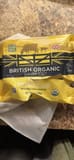 Sharp Cheddar Cheese British Organic Dairy Co. · 7 oz Not ultra-processed · No seed oils Score 97 out of 100 , 34 points higher
 -
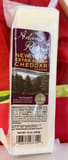 New York Extra Sharp Cheddar Adams Reserve · 10 oz Not ultra-processed · No seed oils Score 97 out of 100 , 34 points higher
 -
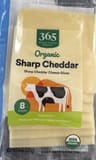 Organic Sharp Cheddar 365 Whole Foods Market · 6 oz Not ultra-processed · No seed oils Score 90 out of 100 , 27 points higher
 -
 Sharp Cheddar Deli-Sliced Cheese Happy Farms by ALDI · 8 oz Not ultra-processed · No seed oils Score 94 out of 100 , 31 points higher
 -
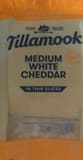 Medium White Cheddar Tillamook · 8 oz Not ultra-processed · No seed oils Score 89 out of 100 , 26 points higher
The same kind of product, at least 10 points higher, sold in the US. Never paid placements.
The Receipt
Easy Cheese Cheddar
Ingredients
- Canola oil minus 2.5 points
- Milk protein concentrate / isolate minus 2.5 points
- Whey protein concentrate / isolate minus 2.5 points
- Sodium phosphate minus 1.5 points
- Calcium phosphate minus 1.5 points
- Sodium alginate minus 1.5 points
- Sorbic acid minus 0.5 points
- Caseinate minus 0.5 points
Processing
- Ultra-processed (NOVA 4) minus 18 points
- 3 kinds of ultra-processing markers minus 3 points
Nutrition per 100 g
- Saturated fat 1.5 g / 100 g minus 0.5 points
- Salt 1.1 g / 100 g minus 3 points
100 − 37.5 = 62.5 → 63
Nutrition per 100 g
| Energy | 80 kcal |
|---|---|
| Fat | 6 g |
| Saturated fat | 1.5 g |
| Trans fat | 0 g |
| Carbohydrates | 3 g |
| Sugars | 2 g |
| Added sugars | 0 g |
| Fiber | 0 g |
| Protein | 4 g |
| Salt | 1.1 g |
Serving: 2 tbsp (32 g)
Ingredients
- Whey
- Canola Oil
- Milk Protein Concentrate
- Cheddar Cheese (Milk, Salt, Cheese Culture, Enzymes)
- Milk
- Whey Protein Concentrate
- Sodium Phosphate
- Sodium Citrate
- Salt
- Calcium Phosphate
- Lactic Acid
- Milkfat
- Sodium Alginate
- Sorbic Acid as a Preservative
- Sodium Caseinate
- Acetic Acid
- Color (Annatto Extract, Apocarotenal) (not recognized)
- Enzymes
- Cheese Culture
Label text, as published
Whey, Canola Oil, Milk Protein Concentrate, Cheddar Cheese ( Milk, Salt, Cheese Culture, Enzymes), Milk, Contains Less than 2% of Whey Protein Concentrate, Sodium Phosphate, Sodium Citrate, Salt, Calcium Phosphate, Lactic Acid, Milkfat, Sodium Alginate, Sorbic Acid as a Preservative, Sodium Caseinate, Acetic Acid, Color ( Annatto Extract, Apocarotenal), Enzymes, Cheese Culture.
Allergens and diets
Contains: Milk
- Not vegan
- Palm-oil-free
Always check the package: recipes change.
Packaging
Plastic, Metal
Context only: no points in v1.
More Cheddar cheese on GoodSwap
-
 Cheddar Cheese Cabot Creamery · 8 oz High in saturated fat Score 79 out of 100 Good
 -
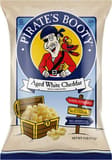 Pirate& booty aged white cheddar puffs Pirate's Booty · 4 oz Ultra-processedContains seed oils Score 66 out of 100 Good
 -
 New York White Cheddar Cheese Emporium Selection · 283 g High in saltHigh in saturated fat Score 79 out of 100 Good
 -
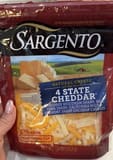 4 State Cheddar Sargento · 212 g Ultra-processedHigh in saturated fatNo synthetic dyes Score 72 out of 100 Good
 -
 Medium Cheddar Tillamook · 2.5 lb/1.13 kg Ultra-processedHigh in saturated fatNo synthetic dyes Score 76 out of 100 Good
 -
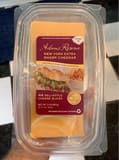 New York Extra Sharp Cheddar Cheese Adams Reserve · 44 slices, 2 lb, 907 g Ultra-processedHigh in saltHigh in saturated fatNo synthetic dyes Score 76 out of 100 Good
More from Nabisco

Sources
-
“replacement of saturated fat in the diet with linoleic acid effectively lowers serum cholesterol but does not support the hypothesis that this translates to a lower risk of death from coronary heart disease or all causes.”
doi.org
-
“These data provide support for current recommendations to replace saturated fat with polyunsaturated fat for primary prevention of CHD.”
doi.org
-
EFSA issues new advice on phosphates
“We estimated that dietary exposure to phosphates may exceed the new ADI for infants, toddlers and children with average consumption of phosphates in their diet.”
efsa.europa.eu
-
“By applying a default uncertainty factor of 100, the Panel established a group ADI expressed as 11 mg sorbic acid/kg bw per day for sorbic acid (E 200) and its potassium salt (E 202).”
doi.org
-
Saturated fatty acid and trans-fatty acid intake for adults and children: WHO guideline
“WHO recommends that adults and children reduce saturated fatty acid intake to 10% of total energy intake (strong recommendation).”
who.int
-
“For adults, WHO recommends less than 2000 mg/day of sodium (equivalent to less than 5 g/day salt), or just under a teaspoon.”
who.int
-
“Greater exposure to ultra-processed food was associated with a higher risk of adverse health outcomes, especially cardiometabolic, common mental disorder, and mortality outcomes.”
doi.org