Creams
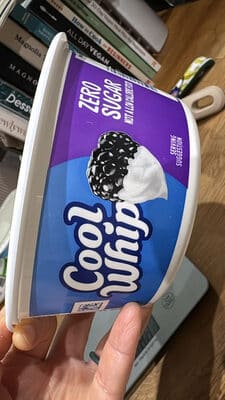
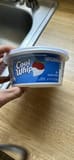
Cool Whip Whipped Topping
8 oz
Score
- Ultra-processed
- High in saturated fat
- Contains non-nutritive sweeteners
- Contains added sugars
- Contains artificial flavors
- May contain traces of 1,4-dioxane
- Seed-oil free
- No synthetic dyes
Why it scores 14
Cool Whip Whipped Topping scores 14 out of 100 (Bad) under GoodSwap’s published rules. What moved the score most:
- minus 20 points Corn syrup: An added sugar. Strong
- minus 20 points Sugar: An added sugar. Strong
- minus 18 points Ultra-processed (NOVA 4): Classified NOVA 4: made with industrial ingredients and additives. Strong
Every line of the math is on The Receipt below, with its evidence tier and sources.
Better whipped topping
-
 Philadelphia Whipped Cream Original No non-nutritive sweeteners · No added sugars Score 54 out of 100 , 40 points higher
 -
 Reddi wip zero sugar Not ultra-processed · Less saturated fat Score 100 out of 100 , 86 points higher
 -
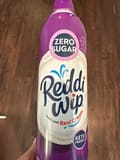 Dairy Whipped Topping Reddi Wip · 13 oz No added sugars · No artificial flavors Score 49 out of 100 , 35 points higher
 -
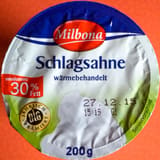 Schlagsahne Milbona · 200 g Less saturated fat · No non-nutritive sweeteners Score 71 out of 100 , 57 points higher
 -
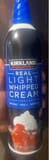 Real light whipped cream Kirkland · 15 oz No non-nutritive sweeteners · No added sugars Score 53 out of 100 , 39 points higher
The same kind of product, at least 10 points higher, sold in the US. Never paid placements.
The Receipt
Whipped Topping
Ingredients
- Corn syrup minus 20 points
- Sugar minus 20 points
- Acesulfame potassium (Ace-K) minus 7.5 points
- Hydrogenated oil minus 1.5 points
- Caseinate minus 1 points
Processing
- Ultra-processed (NOVA 4) minus 18 points
- 10 kinds of ultra-processing markers minus 8 points
Nutrition per 100 g
- Saturated fat 11.1 g / 100 g minus 9 points
- Energy 222 kcal / 100 g minus 1 points
100 − 86 = 14
Can’t score above 79. Contains corn syrup, an ingredient of high concern. [1][2][3]
Can’t score above 79. High in saturated fat (above the front-of-pack "high" level). [9]
Nutrition per 100 g
| Energy | 222 kcal |
|---|---|
| Fat | 11.1 g |
| Saturated fat | 11.1 g |
| Trans fat | 0 g |
| Carbohydrates | 33.3 g |
| Sugars | 0 g |
| Added sugars | 0 g |
| Fiber | 0 g |
| Protein | 0 g |
| Salt | 0 g |
Serving: 2 tbsp (9 g)
Ingredients
- WATER
- CORN SYRUP (high concern)
- HYDROGENATED VEGETABLE OIL (COCONUT AND PALM KERNEL OILS)
- SODIUM CASEINATE (FROM MILK)
- NATURAL AND ARTIFICIAL FLAVOR
- MODIFIED FOOD STARCH
- XANTHAN AND GUAR GUMS
- POLYSORBATE 60
- SORBITAN MONOSTEARATE
- SODIUM POLYPHOSPHATE
- ACESULFAME POTASSIUM AND ASPARTAME (SWEETENERS) (moderate concern)
- BETA CAROTENE (COLOR)
- ADDS A TRIVIAL AMOUNT OF SUGAR (high concern)
Label text, as published
WATER, CORN SYRUP*, HYDROGENATED VEGETABLE OIL (COCONUT AND PALM KERNEL OILS), CONTAINS LESS THAN 2% OF SODIUM CASEINATE (FROM MILK), NATURAL AND ARTIFICIAL FLAVOR, MODIFIED FOOD STARCH, XANTHAN AND GUAR GUMS, POLYSORBATE 60, SORBITAN MONOSTEARATE, SODIUM POLYPHOSPHATE, ACESULFAME POTASSIUM AND ASPARTAME (SWEETENERS), BETA CAROTENE (COLOR), *ADDS A TRIVIAL AMOUNT OF SUGAR, PHENYLKETONURICS: CONTAINS PHENYLALANINE
Allergens and diets
Contains: Milk
- Not vegan
- Vegetarian
- Not palm-oil-free
Always check the package: recipes change.
More creams on GoodSwap
-
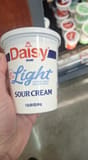 Light Sour Cream Daisy · 453 g No additives Score 100 out of 100 Excellent
 -
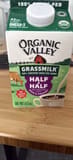 Grassfed Half & Half Organic Valley · 16 oz Certified organicNo additives Score 100 out of 100 Excellent
 -
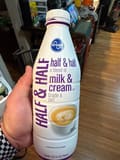 Half & Half A Blend of Milk & Cream Kroger High in saturated fatNo additives Score 79 out of 100 Good
 -
 Heavy Whipping Cream Great Value · 16 fl oz/1 PT/473 mL Ultra-processedHigh in saturated fatContains emulsifiers studied for gut effectsMay contain traces of 1,4-dioxane Score 46 out of 100 Okay
 -
 Reddi Wip Zero Sugar Whipped Topping Reddi Wip Ultra-processedContains non-nutritive sweetenersContains emulsifiers studied for gut effects Score 59 out of 100 Okay
 -
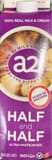 Half and Half A2 No additives Score 100 out of 100 Excellent
More from Cool Whip
Sources
-
Guideline: sugars intake for adults and children
“In both adults and children, WHO recommends reducing the intake of free sugars to less than 10% of total energy intake”
who.int
-
Dietary Guidelines for Americans, 2025–2030
“Limit foods and beverages that include artificial flavors, petroleum-based dyes, artificial preservatives, and low-calorie non-nutritive sweeteners.”
cdn.realfood.gov
-
Added and free sugars should be as low as possible
“Sugar consumption is a known cause of dental caries.”
efsa.europa.eu
-
Artificial sweeteners and cancer risk: Results from the NutriNet-Santé population-based cohort study
“In this large cohort study, artificial sweeteners (especially aspartame and acesulfame-K), which are used in many food and beverage brands worldwide, were associated with increased cancer risk.”
doi.org
-
Re-evaluation of acesulfame K (E 950) as food additive (plain language summary)
“The acceptable daily intake (ADI) considered safe for all population groups was set at 15 mg/kg body weight (bw) per day.”
efsa.europa.eu
-
WHO advises not to use non-sugar sweeteners for weight control in newly released guideline
“The recommendation is based on the findings of a systematic review of the available evidence which suggests that use of NSS does not confer any long-term benefit in reducing body fat in adults or children.”
who.int
-
Saturated fatty acid and trans-fatty acid intake for adults and children: WHO guideline
“WHO recommends that adults and children reduce saturated fatty acid intake to 10% of total energy intake (strong recommendation).”
who.int
-
“Table 3: Criteria for drinks (per 100ml)”
assets.publishing.service.gov.uk
-
“Greater exposure to ultra-processed food was associated with a higher risk of adverse health outcomes, especially cardiometabolic, common mental disorder, and mortality outcomes.”
doi.org
-
1,4-Dioxane in Cosmetics: A Manufacturing Byproduct
“1,4-dioxane forms as a byproduct during the manufacturing process of certain cosmetic ingredients.”
fda.gov
-
Agents Classified by the IARC Monographs, Volumes 1–142 (List of Classifications)
monographs.iarc.who.int