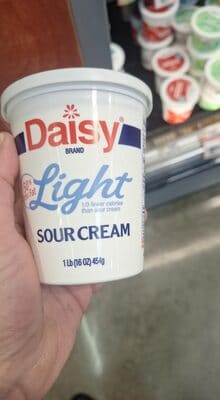
Creams
Daisy Light Sour Cream
453 g
Score
- No additives
Why it scores 100
Daisy Light Sour Cream scores 100 out of 100 (Excellent) under GoodSwap’s published rules. What moved the score most:
- plus 5 points Simple whole food: A few low-concern ingredients, minimally processed. Info
- plus 3 points No additives: No food additives in the ingredient list. Info
- minus 1 points Saturated fat 1.5 g / 100 g: Contains some saturated fat. Strong
Every line of the math is on The Receipt below, with its evidence tier and sources.
The Receipt
Light Sour Cream
START100
Nutrition per 100 g
- Saturated fat 1.5 g / 100 g minus 1 points
subtotal−1
Bonuses
- Simple whole food plus 5 points
- No additives plus 3 points
subtotal+8
TOTAL 100Excellent
100 + 7 = 100
Nutrition per 100 g
| Energy | 35 kcal |
|---|---|
| Fat | 2.5 g |
| Saturated fat | 1.5 g |
| Trans fat | 0 g |
| Carbohydrates | 1 g |
| Sugars | 1 g |
| Added sugars | 0 g |
| Fiber | 0 g |
| Protein | 2 g |
| Salt | 0 g |
Serving: 2 tbsp (30 g)
Ingredients
High Moderate Not recognized Tap an ingredient for its evidence and rules.
Label text, as published
Cultured Cream, Skim Milk.
Allergens and diets
Contains: Milk
- Not vegan
- Vegetarian
- Gluten-free
- Palm-oil-free
Always check the package: recipes change.
More creams on GoodSwap
-
 Grassfed Half & Half Organic Valley · 16 oz Certified organicNo additives Score 100 out of 100 Excellent
 -
 Half & Half A Blend of Milk & Cream Kroger High in saturated fatNo additives Score 79 out of 100 Good
 -
 Media crema Nestlé · 225 mL Ultra-processedContains emulsifiers studied for gut effects Score 67 out of 100 Good
 -
 Coffee mate Zero Sugar Coconut Crème Nestlé · 32 fl oz Ultra-processedContains non-nutritive sweetenersContains emulsifiers studied for gut effectsContains seed oils Score 46 out of 100 Okay
 -
 Rich & Creamy Heavy Whipping Cream Land O Lakes · 15 mL Ultra-processedHigh in saturated fatContains emulsifiers studied for gut effectsMay contain traces of 1,4-dioxane Score 52 out of 100 Okay
 -
 Whipped Cream Reddi Wip · 368 g Ultra-processedContains added sugarsContains emulsifiers studied for gut effects Score 16 out of 100 Bad
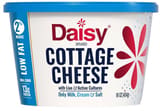
More from Daisy



Sources
-
Saturated fatty acid and trans-fatty acid intake for adults and children: WHO guideline
“WHO recommends that adults and children reduce saturated fatty acid intake to 10% of total energy intake (strong recommendation).”
who.int