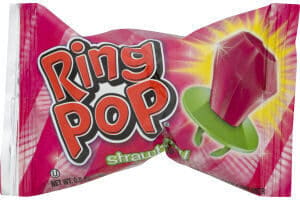
Candies
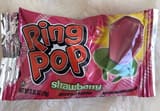
Ring Pop Rng Pop var.
0.5 oz (14 g)
Score
- Not permitted in some countries
- Dye with an EU warning label
- Contains synthetic dyes
- Ultra-processed
- High in sugar
- Contains added sugars
- Contains artificial flavors
Why it scores 12
Ring Pop Rng Pop var. scores 12 out of 100 (Bad) under GoodSwap’s published rules. What moved the score most:
- minus 20 points Sugar: An added sugar. Strong
- minus 20 points Corn syrup: An added sugar. Strong
- minus 18 points Ultra-processed (NOVA 4): Classified NOVA 4: made with industrial ingredients and additives. Strong
Every line of the math is on The Receipt below, with its evidence tier and sources.
The Receipt
Rng Pop var.
Ingredients
- Sugar minus 20 points
- Corn syrup minus 20 points
- Titanium dioxide minus 10 points
Processing
- Ultra-processed (NOVA 4) minus 18 points
- 3 kinds of ultra-processing markers minus 3 points
Nutrition per 100 g
- Sugars 78.6 g / 100 g minus 14 points
- Salt 1 g / 100 g minus 3 points
100 − 88 = 12
Can’t score above 25. Contains titanium dioxide, which is banned in food in the EU. [4][13]
Can’t score above 79. Contains sugar, an ingredient of high concern. [1][2][3][4][5][6][7][8][9][10][14][15][16][17][18][19][13][20][21][22]
Can’t score above 79. High in sugars (above the front-of-pack "high" level). [23]
Nutrition per 100 g
| Energy | 0 kcal |
|---|---|
| Fat | 0 g |
| Saturated fat | 0 g |
| Trans fat | 0 g |
| Carbohydrates | 100 g |
| Sugars | 78.6 g |
| Added sugars | 0 g |
| Protein | 0 g |
| Salt | 1 g |
Serving: 1 PIECE (14 g)
Ingredients
- SUGAR (high concern)
- CORN SYRUP (high concern)
- LACTIC ACID
- SODIUM LACTATE
- NATURAL & ARTIFICIAL FLAVORS
- TITANIUM DIOXIDE (COLOR) (high concern)
- RED 40 LAKE (high concern)
- RED 3 (high concern)
- BLUE 1 (moderate concern)
- BLUE 1 LAKE (moderate concern)
Label text, as published
SUGAR, CORN SYRUP, LACTIC ACID, SODIUM LACTATE, NATURAL & ARTIFICIAL FLAVORS, TITANIUM DIOXIDE (COLOR), RED 40 LAKE, RED 3, BLUE 1, BLUE 1 LAKE.
Allergens and diets
- Palm-oil-free
Always check the package: recipes change.
More candies on GoodSwap
-
 Dark Chocolate Coconut Bar Unreal · 15 g High in saturated fatContains added sugarsNo additivesSeed-oil free Score 27 out of 100 Poor
 -
 Ice Breakers Cool Mint Hershey · 42 gr Ultra-processedContains sugar alcohols Score 72 out of 100 Good
 -
 Dark Chocolate Peanut Butter Cups Trader Joe's · 16 oz Ultra-processedHigh in sugarHigh in saturated fatContains added sugars Score 2 out of 100 Bad
 -
 Vanilla Flavored Mini Vegan Marshmallows Dandies · 283 Ultra-processedHigh in sugarContains added sugarsContains emulsifiers studied for gut effects Score 12 out of 100 Bad
 -
 Original Mix Hi-Chew · 3.53 oz/100 g Ultra-processedHigh in sugarContains added sugarsContains artificial flavors Score 4 out of 100 Bad
 -
 Caramel Hard Candies Werther's Original · 24 oz Ultra-processedHigh in sugarContains added sugarsContains artificial flavors Score 7 out of 100 Bad
More from Ring Pop
Sources
-
Guideline: sugars intake for adults and children
“In both adults and children, WHO recommends reducing the intake of free sugars to less than 10% of total energy intake”
who.int
-
Dietary Guidelines for Americans, 2025–2030
“Limit foods and beverages that include artificial flavors, petroleum-based dyes, artificial preservatives, and low-calorie non-nutritive sweeteners.”
cdn.realfood.gov
-
Added and free sugars should be as low as possible
“Sugar consumption is a known cause of dental caries.”
efsa.europa.eu
-
“titanium dioxide (E 171) can no longer be considered safe when used as a food additive.”
eur-lex.europa.eu
-
Titanium dioxide: E171 no longer considered safe when used as a food additive
“the Panel concluded that titanium dioxide can no longer be considered safe as a food additive.”
efsa.europa.eu
-
“Considering the very low oral absorption of INS 171, and in the absence of any identifiable hazard associated with INS 171 in the diet, the Committee reaffirmed the ADI “not specified” established at the Thirteenth meeting.”
who.int
-
Titanium dioxide (TiO2) as a food additive: Current science report
“In summary, the Food Directorate's position is that there is no conclusive scientific evidence that the food additive TiO2 is a concern for human health.”
canada.ca
-
Statement on the safety of Titanium Dioxide (E171) as a Food Additive (COT/2024/05)
“The Committee concludes that it is unlikely that there would be a risk to health from exposures of E171 TiO2 from the diet in any of the age groups or scenarios assessed.”
cot.food.gov.uk
-
Titanium Dioxide as a Color Additive in Foods
“Other international regulatory bodies including the United Kingdom’s Food Standards Agency (FSA), Health Canada, and Food Standards Australia New Zealand (FSANZ) have not agreed with EFSA’s assessment.”
fda.gov
-
Agents Classified by the IARC Monographs, Volumes 1–142 (List of Classifications)
monographs.iarc.who.int
-
“For adults, WHO recommends less than 2000 mg/day of sodium (equivalent to less than 5 g/day salt), or just under a teaspoon.”
who.int
-
“This order is effective January 15, 2027, except for amendatory instruction 4, which is effective January 18, 2028.”
federalregister.gov
-
Regulation (EC) No 1333/2008 of 16 December 2008 on food additives
“may have an adverse effect on activity and attention in children.”
eur-lex.europa.eu
-
“may have an adverse effect on activity and attention in children.”
legislation.gov.uk
-
“Artificial colours or a sodium benzoate preservative (or both) in the diet result in increased hyperactivity in 3-year-old and 8/9-year-old children in the general population.”
doi.org
-
Tracking Food Industry Pledges to Remove Petroleum Based Food Dyes
“FD&C Green No. 3, FD&C Red No. 40, FD&C Yellow No. 5, FD&C Yellow No. 6, FD&C Blue No. 1, and FD&C Blue No. 2—by the end of 2027.”
fda.gov
-
California AB 2316 (2024), Pupil nutrition: substances: prohibition
“beginning December 31, 2027, would prohibit a school district, county superintendent of schools, or charter school”
leginfo.legislature.ca.gov
-
List of Select Chemicals in the Food Supply Under FDA Review
“The table below includes select food ingredients (including food and color additives), food contact substances, and contaminants under FDA review as of May 12, 2026 .”
fda.gov
-
“Studies in other animals or in humans did not show the same effect and there is no evidence showing FD&C Red No. 3 causes cancer in humans.”
fda.gov
-
“E 127 Erythrosine 200 only cocktail cherries and candied cherries”
eur-lex.europa.eu
-
California AB 418 (2023), the California Food Safety Act (Health and Safety Code §109025)
“Commencing January 1, 2027, a person or entity shall not manufacture, sell, deliver, distribute, hold, or offer for sale, in commerce a food product for human consumption that contains any of the following substances”
leginfo.legislature.ca.gov
-
“Table 3: Criteria for drinks (per 100ml)”
assets.publishing.service.gov.uk
-
Revocation of Authorization for Use of Brominated Vegetable Oil in Food (89 FR 55040)
“This action is being taken because there is no longer a reasonable certainty of no harm from the continued use of BVO in food.”
federalregister.gov
-
Regulation (EC) No 1223/2009 of 30 November 2009 on cosmetic products
“cosmetic products shall not contain any of the following: (a) prohibited substances — prohibited substances listed in Annex II”
eur-lex.europa.eu
-
HHS, FDA to Phase Out Petroleum-Based Synthetic Dyes in Nation’s Food Supply (press release)
“Initiating the process to revoke authorization for two synthetic food colorings—Citrus Red No. 2 and Orange B—within the coming months.”
fda.gov
-
“Greater exposure to ultra-processed food was associated with a higher risk of adverse health outcomes, especially cardiometabolic, common mental disorder, and mortality outcomes.”
doi.org