Food additive · Color
Red 3
- E-number
- E127
- CAS
- 16423-68-0
A synthetic cherry-pink dye (erythrosine) used in candy, frosting and cocktail cherries. The FDA revoked its use in food, effective January 15, 2027.
- Food additive
- Synthetic dye
- Color (added)
- Petroleum-derived dye
- Ultra-processing marker
- Expert review pending
Concern level
A regulatory warning or restriction somewhere, or strong evidence of harm at typical intake. The concern level sets how many points Red 3 costs on a product’s receipt.
What the evidence says
-
Not permitted in food somewhereRegulatory
The FDA revoked its authorization for food in January 2025 under the Delaney Clause because high doses produced tumors in male rats; the FDA says there is no evidence of this effect in humans. Food must comply by January 15, 2027. [1][2]
-
Restricted useRegulatory
In the EU it is allowed only in cocktail cherries and candied cherries. [3]
-
Being phased outRegulatory
California bans it in food sold in the state from January 1, 2027. [4]
Evidence tiers say how sure the evidence is, separately from how much it matters. About evidence tiers.
Rules around the world
| Where | Status | Details | Date | Source |
|---|---|---|---|---|
| United States | Authorization revoked | Authorization for food and ingested drugs revoked on January 15, 2025; effective for food on January 15, 2027 and for ingested drugs on January 18, 2028. | Jan 15, 2025 | [1] |
| European Union | Restricted | Only in cocktail cherries, candied cherries and bigarreaux cherries in syrup. | — | [3] |
| Canada | Permitted | On Health Canada's List of Permitted Food Colours, with conditions of use. | — | [5] |
| California (US) | Banned | Not allowed in food sold in California from January 1, 2027 (AB 418). | From Jan 1, 2027 | [4] |
“Banned” means explicitly prohibited or withdrawn after review; “not permitted” means never authorized there. We use each regulator’s own words.
Popular products that list Red 3
31 of the 17,000 most-scanned products in the US with a GoodSwap page list Red 3. The 12 most scanned:
-
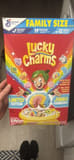 Lucky Charms General Mills · 18.6 oz Score 7 out of 100 Bad
 -
 Strawberry Lowfat Milk Nesquik · 14 fl oz (414 mL) Score 14 out of 100 Bad
 -
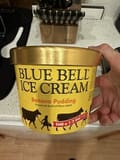 Homemade Vanilla Blue Bell Ice Cream · 1.89 L Score 9 out of 100 Bad
 -
 Little Bites Frosted Snack Cake Muffins Entenmann's · 1.65 oz/47 g Score 2 out of 100 Bad
 -
 Cosmic Brownies Little Debbie · 62 g Score 0 out of 100 Bad
 -
 Little bites Party cakes Entenmann's Score 2 out of 100 Bad
 -
 Ring pop Ring Pop · 0.35 oz/10 g Score 10 out of 100 Bad
 -
 Nutrition Nutrition Nutrition Shake With Of Protein Abbott Score 58 out of 100 Okay
 -
 Saffron Yellow Rice Vigo · 10 oz Score 19 out of 100 Bad
 -
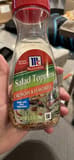 Salad Toppins Mccormick · 3.75 oz/106 g Score 14 out of 100 Bad
 -
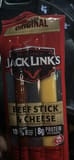 Beef Stick & Cheese Jack Link's · 1.2 oz Score 13 out of 100 Bad
 -
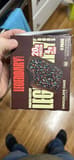 Protein Pastry Legendary Foods Score 42 out of 100 Okay
Diets and allergens
- Vegan
- Yes
- Vegetarian
- Yes
- Gluten-free
- Yes
For the ingredient in general. Always check the package: a product’s own labels win.
Names GoodSwap recognizes on labels (14)
- e127
- red 3
- red no 3
- red dye 3
- erythrosin
- red 3 lake
- color red 3
- colour e127
- erythrosine
- red dye no 3
- erythrosine b
- fd and c red 3
- fd and c red no 3
- colour erythrosine
Sources
-
“This order is effective January 15, 2027, except for amendatory instruction 4, which is effective January 18, 2028.”
federalregister.gov
-
“Studies in other animals or in humans did not show the same effect and there is no evidence showing FD&C Red No. 3 causes cancer in humans.”
fda.gov
-
“E 127 Erythrosine 200 only cocktail cherries and candied cherries”
eur-lex.europa.eu
-
California AB 418 (2023), the California Food Safety Act (Health and Safety Code §109025)
“Commencing January 1, 2027, a person or entity shall not manufacture, sell, deliver, distribute, hold, or offer for sale, in commerce a food product for human consumption that contains any of the following substances”
leginfo.legislature.ca.gov
-
3. List of Permitted Food Colours: Erythrosine (item E.1)
“If used singly, the amount not to exceed 300 ppm. If used in any combination with allura red, amaranth, brilliant blue FCF, fast green FCF, indigotine, sunset yellow FCF or tartrazine, the total combined amount not to exceed 300 ppm”
canada.ca