Food additive · Color
Red 40
- E-number
- E129
- CAS
- 25956-17-6
A synthetic azo dye made from petroleum-derived chemicals, used to color candy, cereals, drinks and snacks.
- Food additive
- Synthetic dye
- Color (added)
- EU warning-label dye
- Petroleum-derived dye
- Ultra-processing marker
- Expert review pending
Concern level
A regulatory warning or restriction somewhere, or strong evidence of harm at typical intake. The concern level sets how many points Red 40 costs on a product’s receipt.
What the evidence says
-
Linked to hyperactivity in childrenRegulatory
In the EU and UK, foods with this color must state that it "may have an adverse effect on activity and attention in children". [1][2][3]
-
Being phased outRegulatory
The FDA is working with industry to remove six petroleum-based dyes from US food by the end of 2027; California bans them in school meals from December 31, 2027. [4][5]
-
Under regulatory reviewInfo
The FDA lists FD&C Red No. 40 under risk-management action for the dye phase-out. [6]
Evidence tiers say how sure the evidence is, separately from how much it matters. About evidence tiers.
Rules around the world
| Where | Status | Details | Date | Source |
|---|---|---|---|---|
| European Union | Warning label required | Permitted; foods must carry the warning on activity and attention in children. | Jul 20, 2010 | [1] |
| United Kingdom | Warning label required | Permitted; foods must carry the same warning (assimilated Regulation 1333/2008, Annex V). | — | [2] |
| United States | Permitted | Listed for use in food. In April 2025 the FDA asked industry to phase petroleum-based dyes out of food; its pledge tracker targets the end of 2027. | — | [7] |
| Canada | Permitted | On Health Canada's List of Permitted Food Colours, with conditions of use. | — | [8] |
| California (US) | Restricted | Not allowed in California school meals or school-sold foods from December 31, 2027 (AB 2316). | From Dec 31, 2027 | [5] |
“Banned” means explicitly prohibited or withdrawn after review; “not permitted” means never authorized there. We use each regulator’s own words.
Red 40 in the news
GoodSwap story about Red 40, every claim with its source.
Popular products that list Red 40
421 of the 17,000 most-scanned products in the US with a GoodSwap page list Red 40. The 12 most scanned:
-
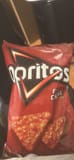 Nacho Cheese Flavored Doritos Doritos · 9.25 oz (262.2 g) Score 15 out of 100 Bad
 -
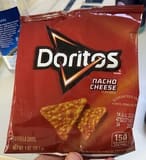 Nacho Cheese Doritos · 1 oz (28.3 g) Score 22 out of 100 Poor
 -
 Trail Mix Kirkland Signature · 57 g (2 oz) Score 19 out of 100 Bad
 -
 Trail Mix Kirkland · 1.81 kg Score 24 out of 100 Poor
 -
 Doritos Cool Ranch Flavored Tortilla Chips Frito Lay · 9.25 oz Score 19 out of 100 Bad
 -
 Nacho Cheese Flavored Tortilla Chips Doritos · 411 g Score 15 out of 100 Bad
 -
 Flamin' Hot Crunchy Cheese Flavored Snacks Cheetos · 8.5 oz (240.9 g) Score 13 out of 100 Bad
 -
 Fruit Snacks Welch's · 4.5 lb (2043 g) Score 10 out of 100 Bad
 -
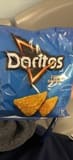 Doritos Cool Ranch flavored Doritos Tortilla Chips · 1 oz (28.3 g) Score 19 out of 100 Bad
 -
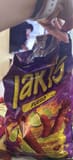 Takis Takis · 280.7 g Score 11 out of 100 Bad
 -
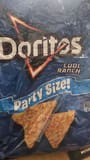 Cool Ranch Flavor Doritos Doritos · 250 g Score 19 out of 100 Bad
 -
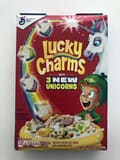 Lucky Charms Lucky Charms · 297 g Score 7 out of 100 Bad
Diets and allergens
- Vegan
- Yes
- Vegetarian
- Yes
- Gluten-free
- Yes
For the ingredient in general. Always check the package: a product’s own labels win.
Names GoodSwap recognizes on labels (35)
- e129
- red40
- red 40
- red no 40
- allura red
- red dye 40
- colour e129
- red 40 lake
- allurarot ac
- color red 40
- colours e129
- red 40 color
- rouge allura
- allura red ac
- colors red 40
- red dye no 40
- fd and c red 40
- rouge allura ac
- allura red color
- allura red colour
- color red 40 lake
- colour allura red
- color added red 40
- fd and c red no 40
- coloring red 40 lake
- colour allura red ac
- fd and c red 40 lake
- red 40 aluminum lake
- color fd and c red 40
- colors fd and c red 40
- artificial color red 40
- color fd and c red no 40
- color fd and c red 40 lake
- color added fd and c red 40
- fd and c red no 40 aluminum lake
Sources
-
Regulation (EC) No 1333/2008 of 16 December 2008 on food additives
“may have an adverse effect on activity and attention in children.”
eur-lex.europa.eu
-
“may have an adverse effect on activity and attention in children.”
legislation.gov.uk
-
“Artificial colours or a sodium benzoate preservative (or both) in the diet result in increased hyperactivity in 3-year-old and 8/9-year-old children in the general population.”
doi.org
-
Tracking Food Industry Pledges to Remove Petroleum Based Food Dyes
“FD&C Green No. 3, FD&C Red No. 40, FD&C Yellow No. 5, FD&C Yellow No. 6, FD&C Blue No. 1, and FD&C Blue No. 2—by the end of 2027.”
fda.gov
-
California AB 2316 (2024), Pupil nutrition: substances: prohibition
“beginning December 31, 2027, would prohibit a school district, county superintendent of schools, or charter school”
leginfo.legislature.ca.gov
-
List of Select Chemicals in the Food Supply Under FDA Review
“The table below includes select food ingredients (including food and color additives), food contact substances, and contaminants under FDA review as of May 12, 2026 .”
fda.gov
-
“The color additive FD&C Red No. 40 is principally the disodium salt of 6-hydroxy-5-[(2-methoxy-5-methyl-4-sulfophenyl)azo]-2-naphthalenesulfonic acid.”
ecfr.gov
-
3. List of Permitted Food Colours: Allura Red (item A.2)
“If used singly, the amount not to exceed 300 ppm. If used in any combination with amaranth, brilliant blue FCF, erythrosine, fast green FCF, indigotine, sunset yellow FCF or tartrazine, the total combined amount not to exceed 300 ppm”
canada.ca