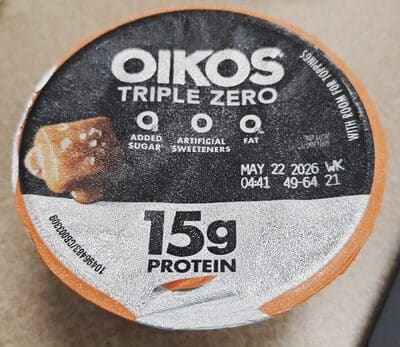
Yogurts
OIKOS TRIPLE ZERO Salted Caramel
Score
- Ultra-processed
- Contains non-nutritive sweeteners
Why it scores 77
OIKOS TRIPLE ZERO Salted Caramel scores 77 out of 100 (Good) under GoodSwap’s published rules. What moved the score most:
- minus 18 points Ultra-processed (NOVA 4): Classified NOVA 4: made with industrial ingredients and additives. Strong
- plus 4 points Fiber 6 g / 100 g: A good source of fiber. Strong
- minus 3 points 3 kinds of ultra-processing markers: Industrial additive classes found: bulking agent, flavoring and non-nutritive sweetener. Emerging
Every line of the math is on The Receipt below, with its evidence tier and sources.
Better yogurt
-
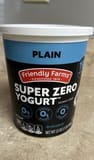 Super Zero Yogurt Nonfat Greek Friendly Farms · 32 oz Not ultra-processed · No non-nutritive sweeteners Score 100 out of 100 , 23 points higher
 -
 Total 0% Milkfat Fage · 32 oz Not ultra-processed · No non-nutritive sweeteners Score 100 out of 100 , 23 points higher
 -
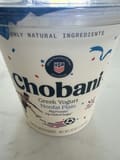 Greek Yogurt Nonfat Plain Chobani · 32 oz Not ultra-processed · No non-nutritive sweeteners Score 100 out of 100 , 23 points higher
 -
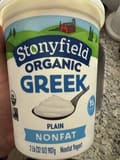 Organic Greek Plain Nonfat Stonyfield Not ultra-processed · No non-nutritive sweeteners Score 100 out of 100 , 23 points higher
 -
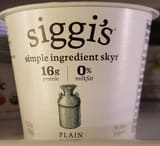 simple ingredient skyr PLAIN Siggi's · 5.3 oz Not ultra-processed · No non-nutritive sweeteners Score 100 out of 100 , 23 points higher
The same kind of product, at least 10 points higher, sold in the US. Never paid placements.
The Receipt
OIKOS TRIPLE ZERO Salted Caramel
Ingredients
- Inulin (chicory root fiber) minus 2.5 points
- Natural flavors minus 2.5 points
- Stevia (steviol glycosides) minus 2.5 points
Processing
- Ultra-processed (NOVA 4) minus 18 points
- 3 kinds of ultra-processing markers minus 3 points
Nutrition per 100 g
- Salt 0.3 g / 100 g minus 1 points
- Fiber 6 g / 100 g plus 4 points
- Protein 15 g / 100 g plus 2 points
100 − 23.5 = 76.5 → 77
Nutrition per 100 g
| Energy | 90 kcal |
|---|---|
| Fat | 0 g |
| Saturated fat | 0 g |
| Trans fat | 0 g |
| Carbohydrates | 14 g |
| Sugars | 6 g |
| Added sugars | 0 g |
| Fiber | 6 g |
| Protein | 15 g |
| Salt | 0.3 g |
Serving: 1 container (150 g)
Ingredients
- Cultured Grade A Non Fat Milk
- Chicory Root Fiber
- Water
- Fruit Juice and Vegetable Juice (for Color)
- Natural Flavors
- Salt
- Stevia Leaf Extract
- Sodium Citrate
- Malic Acid
- Vitamin D3
Label text, as published
Cultured Grade A Non Fat Milk, Chicory Root Fiber, Water, Contains Less than 1% of Fruit Juice and Vegetable Juice (for Color), Natural Flavors, Salt, Stevia Leaf Extract, Sodium Citrate, Malic Acid, Vitamin D3.
Allergens and diets
Contains: Milk
- Not vegan
- Palm-oil-free
Always check the package: recipes change.
More yogurts on GoodSwap
-
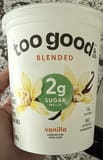 Blended Vanilla Too Good & Co. · 32 oz Ultra-processedContains non-nutritive sweeteners Score 73 out of 100 Good
 -
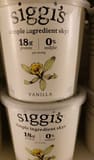 Simple Ingredient Skyr Siggi's · 24 oz Ultra-processedContains added sugars Score 63 out of 100 Good
 -
 Plain Yogurt Dannon · 32 oz No additives Score 100 out of 100 Excellent
 -
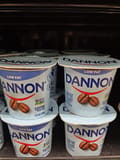 Dannon LF Coffee Yogurt; 5.3 oz Dannon · 5.3 oz Ultra-processedContains added sugars Score 53 out of 100 Okay
 -
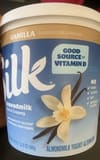 Vanilla Almondmilk Yogurt Alternative Silk · 24 oz Ultra-processedContains added sugars Score 49 out of 100 Okay
 -
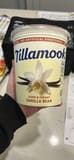 Swiss 9 Farmstyle Slices Tillamook · 32 oz Contains added sugars Score 64 out of 100 Good
More from Oikos
-
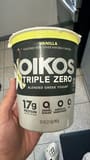 Oikos Triple Zero Blended Greek Yogurt Vanilla Oikos · 32 oz Score 82 out of 100 Excellent
 -
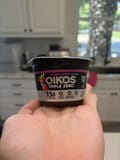 OIKOS TRIPLE ZERO Strawberry Flavored Oikos · 18 - 5.3 oz (150 g) Containers / 5.96 lb (2.7 kg) Score 78 out of 100 Good
 -
 Blended Greek Yogurt Oikos Score 74 out of 100 Good
 -
 Oikos Pro Key Lime Oikos · 5.3 oz Score 72 out of 100 Good
Sources
-
21 CFR 101.22 Foods; labeling of spices, flavorings, colorings and chemical preservatives
“whose significant function in food is flavoring rather than nutritional.”
ecfr.gov
-
WHO advises not to use non-sugar sweeteners for weight control in newly released guideline
“The recommendation is based on the findings of a systematic review of the available evidence which suggests that use of NSS does not confer any long-term benefit in reducing body fat in adults or children.”
who.int
-
Dietary Guidelines for Americans, 2025–2030
“Limit foods and beverages that include artificial flavors, petroleum-based dyes, artificial preservatives, and low-calorie non-nutritive sweeteners.”
cdn.realfood.gov
-
“For adults, WHO recommends less than 2000 mg/day of sodium (equivalent to less than 5 g/day salt), or just under a teaspoon.”
who.int
-
“Greater exposure to ultra-processed food was associated with a higher risk of adverse health outcomes, especially cardiometabolic, common mental disorder, and mortality outcomes.”
doi.org