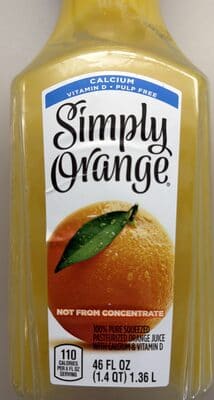
Orange juices
Simply Beverages Simply Orange
46 fl oz
Score
Why it scores 82
Simply Beverages Simply Orange scores 82 out of 100 (Excellent) under GoodSwap’s published rules. What moved the score most:
- minus 14 points Sugars 9.6 g / 100 ml: Very high in sugar. Strong
- plus 5 points Simple whole food: A few low-concern ingredients, minimally processed. Info
- minus 4 points Energy 46 kcal / 100 ml: Energy-dense for its volume. Info
Every line of the math is on The Receipt below, with its evidence tier and sources.
Better juices and juice drinks
-
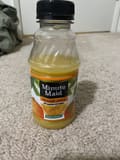 Orange Juice Minute Maid · 6 Pack 10 fl oz (295 mL) No calcium phosphate · No calcium lactate Score 100 out of 100 , 18 points higher
 -
 Orange Juice Langers · 237 mL No calcium phosphate · No calcium lactate Score 100 out of 100 , 18 points higher
 -
 Orange Juice Kroger · 240 mL No calcium phosphate · No calcium lactate Score 100 out of 100 , 18 points higher
 -
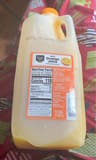 Orange juice Clover Valley · 1/2 Gallon 64 fl oz No calcium phosphate · No calcium lactate Score 100 out of 100 , 18 points higher
 -
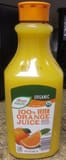 Organic Pulp Free Orange Juice Simply Nature No calcium phosphate · No calcium lactate Score 100 out of 100 , 18 points higher
The same kind of product, at least 10 points higher, sold in the US. Never paid placements.
The Receipt
Simply Orange
Ingredients
- Calcium phosphate minus 2.5 points
- Calcium lactate minus 2.5 points
Nutrition per 100 ml
- Sugars 9.6 g / 100 ml minus 14 points
- Energy 46 kcal / 100 ml minus 4 points
Bonuses
- Simple whole food plus 5 points
100 − 18 = 82
Nutrition per 100 ml
| Energy | 46 kcal |
|---|---|
| Fat | 0 g |
| Saturated fat | 0 g |
| Carbohydrates | 10.8 g |
| Sugars | 9.6 g |
| Added sugars | 0 g |
| Fiber | 0 g |
| Protein | 0.8 g |
| Salt | 0 g |
Serving: 240.0ml
Ingredients
Label text, as published
ORANGE JUICE, CALCIUM PHOSPHATE, CALCIUM LACTATE VITAMIN D3
Allergens and diets
- Vegan
- Vegetarian
- Gluten-free
- Palm-oil-free
Always check the package: recipes change.
More orange juices on GoodSwap
-
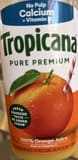 No Calcium OJ Tropicana · 1.36 L Score 82 out of 100 Excellent
 -
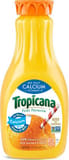 Pure Premium Orange Juice Calcium And Vitamin D No Pulp Tropicana · 52 fl oz (1.53 L) Score 82 out of 100 Excellent
 -
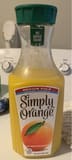 Simply Orange Medium Pulp With Calcium And Vitamin D Simply Orange · 52 fl oz Score 85 out of 100 Excellent
 -
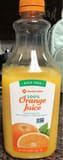 100% Orange Juice Member's Mark · 52 fl oz/1.63 qt/1.54 L No additives Score 90 out of 100 Excellent
 -
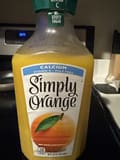 Simply Orange Pulp Free With Calcium And Vitamin D Simply Orange Ultra-processed Score 62 out of 100 Good
 -
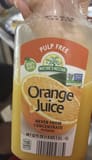 Orange Juice Nature's Nectar · 1537.822 g No additives Score 90 out of 100 Excellent
More from Simply Beverages
-
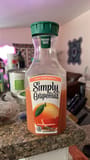 Simply Grapefruit Simply Beverages · 52 oz Score 91 out of 100 Excellent
 -
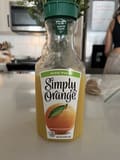 Simply Orange High Pulp Simply Beverages · 52.0 fl oz Score 90 out of 100 Excellent
 -
 Simply Light Orange Juice Pulp Free Simply Beverages · 52.0 fl oz Score 59 out of 100 Okay
 -
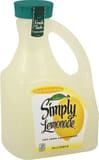 Simply lemonade Simply Beverages · 89 fl oz/2.7 Quart/2.63 L Score 42 out of 100 Okay
Sources
-
EFSA issues new advice on phosphates
“We estimated that dietary exposure to phosphates may exceed the new ADI for infants, toddlers and children with average consumption of phosphates in their diet.”
efsa.europa.eu
-
Guideline: sugars intake for adults and children
“In both adults and children, WHO recommends reducing the intake of free sugars to less than 10% of total energy intake”
who.int
-
Dietary Guidelines for Americans, 2025–2030
“Limit foods and beverages that include artificial flavors, petroleum-based dyes, artificial preservatives, and low-calorie non-nutritive sweeteners.”
cdn.realfood.gov