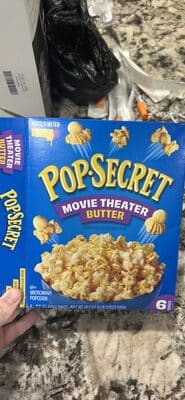
Popcorn
Mondelez International Wheat Thins hint of salt
32 g
Score
- Ultra-processed
- High in salt
- High in saturated fat
- Contains palm oil
- Contains artificial flavors
- Seed-oil free
- No synthetic dyes
Why it scores 58
Mondelez International Wheat Thins hint of salt scores 58 out of 100 (Okay) under GoodSwap’s published rules. What moved the score most:
- minus 18 points Ultra-processed (NOVA 4): Classified NOVA 4: made with industrial ingredients and additives. Strong
- minus 9 points Saturated fat 16 g / 100 g: Very high in saturated fat. Strong
- minus 9 points Salt 2.7 g / 100 g: Very high in salt. Strong
Every line of the math is on The Receipt below, with its evidence tier and sources.
Better crackers
-
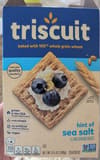 Hint Of Salt Triscuit · 240 g Not ultra-processed · Less salt Score 96 out of 100 , 38 points higher
 -
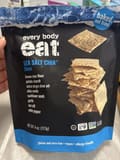 SEA SALT CHIA thins Every Body Eat · 4 oz (113 g) Not ultra-processed · Less salt Score 93 out of 100 , 35 points higher
 -
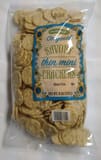 Original Savory Thin Mini Crackers Trader Joe's · 30 g Not ultra-processed · Less salt Score 99 out of 100 , 41 points higher
 -
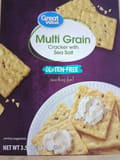 Multi grain Cracker With Sea Salt Great Value Not ultra-processed · Less salt Score 98 out of 100 , 40 points higher
 -
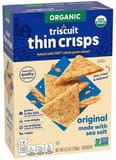 Thin Crisps Organic Original Mondelēz International Inc. · 30 g Not ultra-processed · Less salt Score 97 out of 100 , 39 points higher
The same kind of product, at least 10 points higher, sold in the US. Never paid placements.
The Receipt
Wheat Thins hint of salt
Ingredients
- Palm oil minus 2.5 points
- Natural and artificial flavors minus 2.5 points
- Color added (not named) minus 2.5 points
- TBHQ (tert-butylhydroquinone) minus 1.5 points
Processing
- Ultra-processed (NOVA 4) minus 18 points
- 2 kinds of ultra-processing markers minus 1.5 points
Nutrition per 100 g
- Saturated fat 16 g / 100 g minus 9 points
- Salt 2.7 g / 100 g minus 9 points
- Energy 452 kcal / 100 g minus 2 points
- Fiber 8 g / 100 g plus 4 points
- Protein 8 g / 100 g plus 2 points
100 − 42.5 = 57.5 → 58
Can’t score above 79. High in fat, saturated fat and salt (above the front-of-pack "high" level). [11]
Nutrition per 100 g
| Energy | 452 kcal |
|---|---|
| Fat | 32 g |
| Saturated fat | 16 g |
| Trans fat | 0 g |
| Carbohydrates | 48 g |
| Sugars | 0 g |
| Added sugars | 0 g |
| Fiber | 8 g |
| Protein | 8 g |
| Salt | 2.7 g |
Serving: 1 serving (25 g)
Ingredients
- WHOLE GRAIN POPCORN
- PALM OIL
- SALT
- NATURAL AND ARTIFICIAL FLAVOR [MILK]
- COLOR ADDED
- FRESHNESS PRESERVED BY TBHQ
Label text, as published
WHOLE GRAIN POPCORN, PALM OIL, SALT, NATURAL AND ARTIFICIAL FLAVOR [MILK], COLOR ADDED, FRESHNESS PRESERVED BY TBHQ.
Allergens and diets
Contains: Milk
- Not palm-oil-free
Always check the package: recipes change.
More popcorn on GoodSwap
-
 Original Popcorn Skinny Pop · 4.4 oz Contains seed oilsNo additives Score 79 out of 100 Good
 -
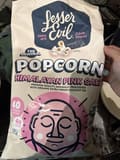 Popcorn Himalayan Pink Salt Lesser Evil · 5 oz High in saltHigh in saturated fatCertified organicNo additives Score 79 out of 100 Good
 -
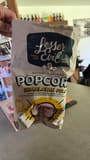 POPcorn HIMALAYAN GOLD Lesser Evil · 4.6 oz/130 g Ultra-processedHigh in saltHigh in saturated fatCertified organic Score 68 out of 100 Good
 -
 Butter Popcorn Skinny Pop · 4.4 oz/125 g Ultra-processedHigh in saltContains seed oilsNo additives Score 72 out of 100 Good
 -
 Flavored Microwave Popcorn Great Value · 24.38 oz/691.32 g Ultra-processedHigh in saltHigh in saturated fatContains palm oil Score 61 out of 100 Good
 -
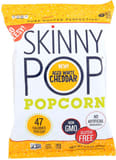 Aged White Cheddar Popcorn Skinny Pop · 4.4 oz/125 g Ultra-processedHigh in saltHigh in saturated fatContains seed oils Score 64 out of 100 Good
More from Mondelez International

Sources
-
Saturated fatty acid and trans-fatty acid intake for adults and children: WHO guideline
“WHO recommends that adults and children reduce saturated fatty acid intake to 10% of total energy intake (strong recommendation).”
who.int
-
Process contaminants in vegetable oils and foods
“The highest levels of GE, as well as 3-MCPD and 2-MCPD (including esters) were found in palm oils and palm fats, followed by other oils and fats.”
efsa.europa.eu
-
“Glycidyl fatty acid esters, expressed as glycidol”
eur-lex.europa.eu
-
21 CFR 101.22 Foods; labeling of spices, flavorings, colorings and chemical preservatives
“whose significant function in food is flavoring rather than nutritional.”
ecfr.gov
-
Dietary Guidelines for Americans, 2025–2030
“Limit foods and beverages that include artificial flavors, petroleum-based dyes, artificial preservatives, and low-calorie non-nutritive sweeteners.”
cdn.realfood.gov
-
21 CFR 101.22(k) Declaring color additives in the ingredient list
“Color additives not subject to certification and not otherwise required by applicable regulations in part 73 of this chapter to be declared by their respective common or usual names may be declared as “Artificial Color,” “Artificial Color Added,” or “Color Added””
ecfr.gov
-
“E 127 Erythrosine 200 only cocktail cherries and candied cherries”
eur-lex.europa.eu
-
11. List of Permitted Preservatives (Lists of Permitted Food Additives)
“B.2 Butylated Hydroxyanisole n/a (a) Active dry yeasts (a) Preservative (a) 1,000 ppm n/a”
canada.ca
-
“For adults, WHO recommends less than 2000 mg/day of sodium (equivalent to less than 5 g/day salt), or just under a teaspoon.”
who.int
-
“Table 3: Criteria for drinks (per 100ml)”
assets.publishing.service.gov.uk
-
“Greater exposure to ultra-processed food was associated with a higher risk of adverse health outcomes, especially cardiometabolic, common mental disorder, and mortality outcomes.”
doi.org