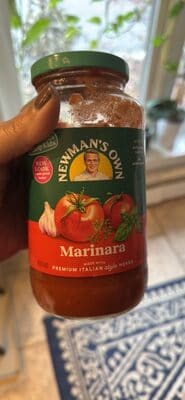
Tomato sauces
Newman's Own Marinara
24 oz
Score
- Seed-oil free
Why it scores 86
Newman's Own Marinara scores 86 out of 100 (Excellent) under GoodSwap’s published rules. What moved the score most:
- minus 8 points Processed (NOVA 3): Classified NOVA 3: processed with added salt, sugar or oil. Emerging
- minus 3 points Sugars 5.7 g / 100 g: Contains some sugar. Strong
- minus 3 points Salt 1 g / 100 g: High in salt. Strong
Every line of the math is on The Receipt below, with its evidence tier and sources.
Better pasta sauces
-
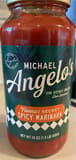 Spicy marinara Michael Angelo's · 24 oz Scores +14 Score 100 out of 100 , 14 points higher
 -
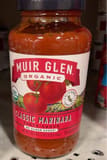 Organic Classic Marinara Pasta Sauce Muir Glen · 23.5 oz Scores +14 Score 100 out of 100 , 14 points higher
 -
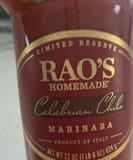 Calabrian Chili Marinara Rao's Homemade · 22 oz Scores +14 Score 100 out of 100 , 14 points higher
 -
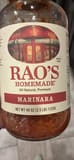 Marinara Rao's Homemade · 1133 g Scores +14 Score 100 out of 100 , 14 points higher
 -
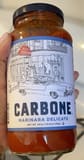 Marinara Delicato Carbone · 24 oz Scores +14 Score 100 out of 100 , 14 points higher
The same kind of product, at least 10 points higher, sold in the US. Never paid placements.
The Receipt
Marinara
Processing
- Processed (NOVA 3) minus 8 points
Nutrition per 100 g
- Sugars 5.7 g / 100 g minus 3 points
- Salt 1 g / 100 g minus 3 points
100 − 14 = 86
Nutrition per 100 g
| Energy | 56 kcal |
|---|---|
| Fat | 0.8 g |
| Saturated fat | 0 g |
| Trans fat | 0 g |
| Carbohydrates | 9.7 g |
| Sugars | 5.7 g |
| Added sugars | 0 g |
| Fiber | 2.4 g |
| Protein | 2.4 g |
| Salt | 1 g |
Serving: 0.5 cup (124 g)
Ingredients
- TOMATO PUREE (WATER, TOMATO PASTE, CITRIC ACID)
- DICED TOMATOES IN TOMATO JUICE
- SALT
- CARROT PUREE
- EXTRA VIRGIN OLIVE OIL
- ONION
- BASIL
- GARLIC
- BLACK PEPPER
- FENNEL SEED
Label text, as published
TOMATO PUREE (WATER, TOMATO PASTE, CITRIC ACID), DICED TOMATOES IN TOMATO JUICE, SALT, CARROT PUREE, EXTRA VIRGIN OLIVE OIL, ONION*, BASIL*, GARLIC*, BLACK PEPPER, FENNEL SEED*.
Allergens and diets
- Vegan
- Vegetarian
- Gluten-free
- Palm-oil-free
Always check the package: recipes change.
Packaging
Glass
Context only: no points in v1.
More tomato sauces on GoodSwap
-
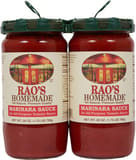 Marinara Rao's Homemade · 56 oz No additivesSeed-oil free Score 92 out of 100 Excellent
 -
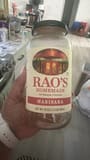 Marinara Rao's Homemade · 24 oz No additivesSeed-oil free Score 92 out of 100 Excellent
 -
 Marinara Pasta Sauce Simply Nature Certified organicNo additives Score 91 out of 100 Excellent
 -
 Tomato Sauce Happy Harvest Ultra-processed Score 77 out of 100 Good
 -
 Traditional Marinara Bertolli · 24 oz Contains added sugarsSeed-oil free Score 64 out of 100 Good
 -
 Tomato Sauce Great Value · 15 oz/425 g Ultra-processed Score 74 out of 100 Good
More from Newman's Own
Sources
-
Guideline: sugars intake for adults and children
“In both adults and children, WHO recommends reducing the intake of free sugars to less than 10% of total energy intake”
who.int
-
“For adults, WHO recommends less than 2000 mg/day of sodium (equivalent to less than 5 g/day salt), or just under a teaspoon.”
who.int