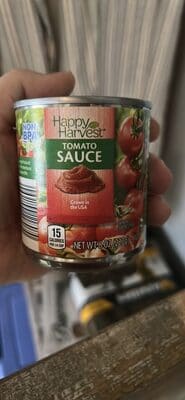
Tomato sauces
Happy Harvest Tomato Sauce
Score
- Ultra-processed
Why it scores 77
Happy Harvest Tomato Sauce scores 77 out of 100 (Good) under GoodSwap’s published rules. What moved the score most:
- minus 18 points Ultra-processed (NOVA 4): Classified NOVA 4: made with industrial ingredients and additives. Strong
- minus 3 points Salt 1.2 g / 100 g: High in salt. Strong
- minus 2.5 points Natural flavors: "Natural flavor" is a legal category (21 CFR 101.22(a)(3)): flavor substances from spices, fruits, vegetables, meat, dairy or fermentation. Info
Every line of the math is on The Receipt below, with its evidence tier and sources.
Better canned tomatoes and tomato sauce
-
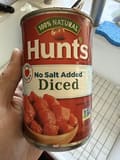 No Salt Added Diced Hunt's · 14.5 oz Not ultra-processed Score 100 out of 100 , 23 points higher
 -
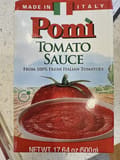 Tomato sauce Consorzio Casalasco Del Pomodoro S.A.C. · 500 g Not ultra-processed Score 100 out of 100 , 23 points higher
 -
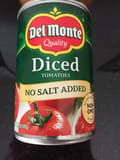 Diced Tomatoes Del Monte · 126 g Not ultra-processed Score 100 out of 100 , 23 points higher
 -
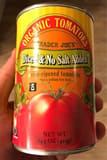 Diced & No Salt Added Vine-Ripened Tomatoes Trader Joe's Not ultra-processed Score 100 out of 100 , 23 points higher
 -
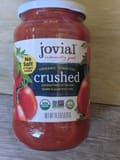 Tomatoes, Crushed Organic Jovial · 520 g Not ultra-processed Score 100 out of 100 , 23 points higher
The same kind of product, at least 10 points higher, sold in the US. Never paid placements.
The Receipt
Tomato Sauce
Ingredients
- Natural flavors minus 2.5 points
Processing
- Ultra-processed (NOVA 4) minus 18 points
Nutrition per 100 g
- Salt 1.2 g / 100 g minus 3 points
100 − 23.5 = 76.5 → 77
Nutrition per 100 g
| Energy | 25 kcal |
|---|---|
| Fat | 0 g |
| Saturated fat | 0 g |
| Trans fat | 0 g |
| Carbohydrates | 4.9 g |
| Sugars | 3.3 g |
| Added sugars | 0 g |
| Fiber | 1.6 g |
| Protein | 1.6 g |
| Salt | 1.2 g |
Serving: 1/4 cup (61 g)
Ingredients
- Tomato Puree (Water, Tomato Paste)
- Water
- Salt
- Onion Powder
- Garlic Powder
- Citric Acid
- Natural Flavors
- Dehydrated Bell Peppers
Label text, as published
Tomato Puree (Water, Tomato Paste), Water, Less Than 2% Of: Salt, Onion Powder, Garlic Powder, Citric Acid, Natural Flavors, Dehydrated Bell Peppers.
Allergens and diets
- Palm-oil-free
Always check the package: recipes change.
More tomato sauces on GoodSwap
-
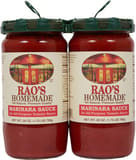 Marinara Rao's Homemade · 56 oz No additivesSeed-oil free Score 92 out of 100 Excellent
 -
 Marinara Rao's Homemade · 24 oz No additivesSeed-oil free Score 92 out of 100 Excellent
 -
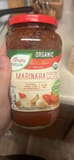 Marinara Pasta Sauce Simply Nature Certified organicNo additives Score 91 out of 100 Excellent
 -
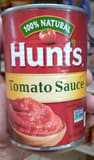 Tomato Sauce Hunt's · 425 g Score 87 out of 100 Excellent
 -
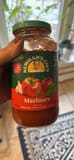 Marinara Newman's Own · 24 oz Seed-oil free Score 86 out of 100 Excellent
 -
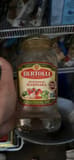 Traditional Marinara Bertolli · 24 oz Contains added sugarsSeed-oil free Score 64 out of 100 Good
More from Happy Harvest
Sources
-
21 CFR 101.22 Foods; labeling of spices, flavorings, colorings and chemical preservatives
“whose significant function in food is flavoring rather than nutritional.”
ecfr.gov
-
“For adults, WHO recommends less than 2000 mg/day of sodium (equivalent to less than 5 g/day salt), or just under a teaspoon.”
who.int
-
“Greater exposure to ultra-processed food was associated with a higher risk of adverse health outcomes, especially cardiometabolic, common mental disorder, and mortality outcomes.”
doi.org