
Rices
Minute Basmati Rice
8.8 oz/250 g
Score
- Ultra-processed
- Contains emulsifiers studied for gut effects
- Contains seed oils
Why it scores 74
Minute Basmati Rice scores 74 out of 100 (Good) under GoodSwap’s published rules. What moved the score most:
- minus 18 points Ultra-processed (NOVA 4): Classified NOVA 4: made with industrial ingredients and additives. Strong
- minus 2.5 points Sunflower oil: High in omega-6 linoleic acid. Emerging
- minus 2.5 points Soy lecithin: An additive class typical of ultra-processed foods (NOVA group 4). Info
Every line of the math is on The Receipt below, with its evidence tier and sources.
Better rice
-
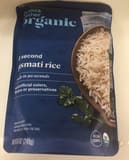 Basmati rice Good & Gather · 8.8 oz/249 g Not ultra-processed · No gut-studied emulsifiers Score 100 out of 100 , 26 points higher
 -
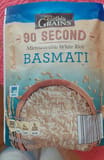 Microwavable White Rice Basmati Earthly Grains · 8.8 oz Not ultra-processed · No gut-studied emulsifiers Score 100 out of 100 , 26 points higher
 -
 Basmati Rice Carolina · 5 lb Not ultra-processed · No gut-studied emulsifiers Score 100 out of 100 , 26 points higher
 -
 Basmati Rice Royal · 9.7 kg Not ultra-processed · No gut-studied emulsifiers Score 100 out of 100 , 26 points higher
 -
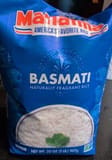 Basmati Naturally Fragrant Rice Mahatma · 32 oz Not ultra-processed · No gut-studied emulsifiers Score 100 out of 100 , 26 points higher
The same kind of product, at least 10 points higher, sold in the US. Never paid placements.
The Receipt
Basmati Rice
Ingredients
- Sunflower oil minus 2.5 points
- Soy lecithin minus 2.5 points
- Mono- and diglycerides minus 2.5 points
Processing
- Ultra-processed (NOVA 4) minus 18 points
Nutrition per 100 g
- Salt 0.4 g / 100 g minus 1 points
100 − 26.5 = 73.5 → 74
Nutrition per 100 g
| Energy | 168 kcal |
|---|---|
| Fat | 2.4 g |
| Saturated fat | 0.4 g |
| Trans fat | 0 g |
| Carbohydrates | 32.8 g |
| Sugars | 0.1 g |
| Added sugars | 0 g |
| Fiber | 2.4 g |
| Protein | 4 g |
| Salt | 0.4 g |
Serving: 1 serving (125 g)
Ingredients
- Water
- basmati rice
- sunflower oil
- rice flour
- salt
- soy lecithin (emulsifier)
- distilled monoglycerides (emulsifier)
- glucono delta lactone
Label text, as published
Water, basmati rice, sunflower oil, rice flour, salt, soy lecithin (emulsifier), distilled monoglycerides (emulsifier), glucono delta lactone.
Allergens and diets
Contains: Soy
- Vegan
- Vegetarian
- Palm-oil-free
Always check the package: recipes change.
More rices on GoodSwap
-
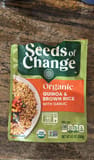 Organic Quinoa & Brown Rice with Garlic Seeds of Change · 2 Contains seed oilsCertified organicNo additivesContains whole grains Score 95 out of 100 Excellent
 -
 Ready Rice Whole Grain Brown Ben's Original · 8.8 oz Contains seed oilsNo additivesContains whole grains Score 98 out of 100 Excellent
 -
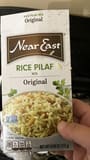 Rice Pilaf Mix Original Near East · 6.09 Ultra-processedHigh in saltNo synthetic dyes Score 71 out of 100 Good
 -
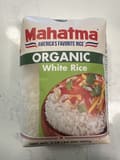 Organic white rice Mahatma · 2 lb Certified organicNo additives Score 100 out of 100 Excellent
 -
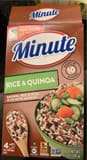 Rice & Quinoa Brown, Red & Wild Rice With Quinoa Minute · 12 oz No additivesContains whole grains Score 100 out of 100 Excellent
 - Organic Brown Basmati Della · 10 lb/4.5 kg Certified organicNo additivesContains whole grains Score 100 out of 100 Excellent
More from Minute

Sources
-
“replacement of saturated fat in the diet with linoleic acid effectively lowers serum cholesterol but does not support the hypothesis that this translates to a lower risk of death from coronary heart disease or all causes.”
doi.org
-
“These data provide support for current recommendations to replace saturated fat with polyunsaturated fat for primary prevention of CHD.”
doi.org
-
“This study found positive associations between risk of CVD and intake of five individual and two groups of food additive emulsifiers widely used in industrial foods.”
doi.org
-
Re-evaluation of mono- and di-glycerides of fatty acids (E 471) as food additives
“The available studies did not raise any concern with regard to genotoxicity.”
doi.org
-
“For adults, WHO recommends less than 2000 mg/day of sodium (equivalent to less than 5 g/day salt), or just under a teaspoon.”
who.int
-
“Greater exposure to ultra-processed food was associated with a higher risk of adverse health outcomes, especially cardiometabolic, common mental disorder, and mortality outcomes.”
doi.org
-
Dietary emulsifiers impact the mouse gut microbiota promoting colitis and metabolic syndrome
“carboxymethylcellulose and polysorbate-80, induced low-grade inflammation and obesity/metabolic syndrome in wild-type hosts and promoted robust colitis in mice predisposed to this disorder.”
doi.org
-
“Relative to control subjects, CMC consumption modestly increased postprandial abdominal discomfort and perturbed gut microbiota composition in a way that reduced its diversity.”
doi.org