Snacks
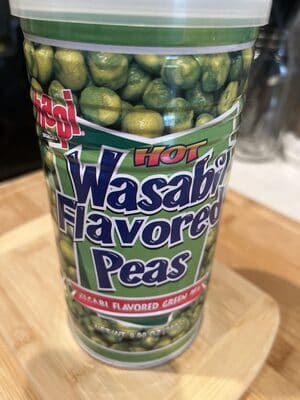
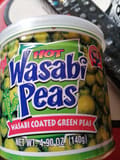
Hapi Snacks Hot Wasabi Flavored Peas
4.9 oz
Score
- Dye with an EU warning label
- Contains synthetic dyes
- Ultra-processed
- Contains added sugars
- Contains seed oils
- Contains palm oil
Why it scores 31
Hapi Snacks Hot Wasabi Flavored Peas scores 31 out of 100 (Poor) under GoodSwap’s published rules. What moved the score most:
- minus 20 points Sugar: An added sugar. Strong
- minus 20 points Yellow 5: In the EU and UK, foods with this color must state that it "may have an adverse effect on activity and attention in children". Regulatory
- minus 18 points Ultra-processed (NOVA 4): Classified NOVA 4: made with industrial ingredients and additives. Strong
Every line of the math is on The Receipt below, with its evidence tier and sources.
The Receipt
Hot Wasabi Flavored Peas
Ingredients
- Sugar minus 20 points
- Yellow 5 minus 20 points
- Palm oil minus 2.5 points
- Sunflower oil minus 1.5 points
Processing
- Ultra-processed (NOVA 4) minus 18 points
Nutrition per 100 g
- Sugars 6.7 g / 100 g minus 3 points
- Saturated fat 5 g / 100 g minus 5 points
- Salt 1 g / 100 g minus 3 points
- Energy 389 kcal / 100 g minus 2 points
- Fiber 3.6 g / 100 g plus 2 points
- Protein 16.7 g / 100 g plus 4 points
100 − 69 = 31
Can’t score above 79. Contains sugar, an ingredient of high concern. [1][2][3][4][5][6][7][8][9]
Nutrition per 100 g
| Energy | 389 kcal |
|---|---|
| Fat | 15 g |
| Saturated fat | 5 g |
| Trans fat | 0 g |
| Carbohydrates | 63.3 g |
| Sugars | 6.7 g |
| Added sugars | 5.6 g |
| Fiber | 3.6 g |
| Protein | 16.7 g |
| Salt | 1 g |
Serving: 0.333 cup (30 g)
Ingredients
- GREEN PEAS
- GLUTINOUS RICE FLOUR
- WHEAT FLOUR
- PALM OIL
- SUNFLOWER OIL
- SUGAR (high concern)
- HORSERADISH
- SALT
- FD&C YELLOW #5 AND FD&C BLUE #1 (high concern)
Label text, as published
GREEN PEAS, GLUTINOUS RICE FLOUR, WHEAT FLOUR, PALM OIL, SUNFLOWER OIL, SUGAR, HORSERADISH, SALT, FD&C YELLOW #5 AND FD&C BLUE #1.
Allergens and diets
Contains: Wheat, Gluten, Mustard
- Vegan
- Vegetarian
- Not gluten-free
- Not palm-oil-free
Always check the package: recipes change.
More snacks on GoodSwap
-
 Yoggies Natures Garden Probiotic Strawberry Yoggies · (20 g) 0.7 oz Ultra-processedContains added sugarsContains seed oilsContains palm oil Score 47 out of 100 Okay
 -
 Crispy Coconut Rolls Organic · 312 g High in sugarHigh in saturated fatContains added sugarsCertified organic Score 27 out of 100 Poor
 -
 Protein Peanut butter Dark Chocolate chewy bar Nature Valley Protein · 40 g Ultra-processedHigh in saturated fatContains added sugarsContains seed oils Score 9 out of 100 Bad
 -
 Teriyaki Roasted Seaweed Snacks Gimme · .17 oz/5 g Ultra-processedContains added sugarsContains seed oilsCertified organic Score 42 out of 100 Okay
 -
 Layered Fruit Bar Pure Organic · 0.63 oz (18 g) Ultra-processedHigh in sugarContains added sugarsCertified organic Score 41 out of 100 Okay
 -
 Original Turkey Turkey Stick Applegate · 1 oz High in saltHigh in saturated fatContains nitrites or nitrates Score 71 out of 100 Good
More from Hapi Snacks
Sources
-
Guideline: sugars intake for adults and children
“In both adults and children, WHO recommends reducing the intake of free sugars to less than 10% of total energy intake”
who.int
-
Dietary Guidelines for Americans, 2025–2030
“Limit foods and beverages that include artificial flavors, petroleum-based dyes, artificial preservatives, and low-calorie non-nutritive sweeteners.”
cdn.realfood.gov
-
Added and free sugars should be as low as possible
“Sugar consumption is a known cause of dental caries.”
efsa.europa.eu
-
Regulation (EC) No 1333/2008 of 16 December 2008 on food additives
“may have an adverse effect on activity and attention in children.”
eur-lex.europa.eu
-
“may have an adverse effect on activity and attention in children.”
legislation.gov.uk
-
“Artificial colours or a sodium benzoate preservative (or both) in the diet result in increased hyperactivity in 3-year-old and 8/9-year-old children in the general population.”
doi.org
-
Tracking Food Industry Pledges to Remove Petroleum Based Food Dyes
“FD&C Green No. 3, FD&C Red No. 40, FD&C Yellow No. 5, FD&C Yellow No. 6, FD&C Blue No. 1, and FD&C Blue No. 2—by the end of 2027.”
fda.gov
-
California AB 2316 (2024), Pupil nutrition: substances: prohibition
“beginning December 31, 2027, would prohibit a school district, county superintendent of schools, or charter school”
leginfo.legislature.ca.gov
-
21 CFR 74.705 FD&C Yellow No. 5
“shall specifically declare the presence of FD&C Yellow No. 5 by listing the color additive as FD&C Yellow No. 5 among the list of ingredients.”
ecfr.gov
-
Saturated fatty acid and trans-fatty acid intake for adults and children: WHO guideline
“WHO recommends that adults and children reduce saturated fatty acid intake to 10% of total energy intake (strong recommendation).”
who.int
-
Process contaminants in vegetable oils and foods
“The highest levels of GE, as well as 3-MCPD and 2-MCPD (including esters) were found in palm oils and palm fats, followed by other oils and fats.”
efsa.europa.eu
-
“Glycidyl fatty acid esters, expressed as glycidol”
eur-lex.europa.eu
-
“replacement of saturated fat in the diet with linoleic acid effectively lowers serum cholesterol but does not support the hypothesis that this translates to a lower risk of death from coronary heart disease or all causes.”
doi.org
-
“These data provide support for current recommendations to replace saturated fat with polyunsaturated fat for primary prevention of CHD.”
doi.org
-
“For adults, WHO recommends less than 2000 mg/day of sodium (equivalent to less than 5 g/day salt), or just under a teaspoon.”
who.int
-
HHS, FDA to Phase Out Petroleum-Based Synthetic Dyes in Nation’s Food Supply (press release)
“Initiating the process to revoke authorization for two synthetic food colorings—Citrus Red No. 2 and Orange B—within the coming months.”
fda.gov
-
“Greater exposure to ultra-processed food was associated with a higher risk of adverse health outcomes, especially cardiometabolic, common mental disorder, and mortality outcomes.”
doi.org