Confectioneries
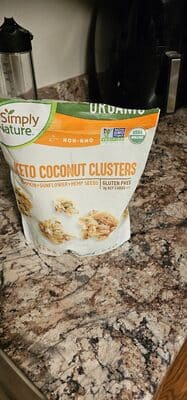
Simply Nature Keto Coconut Clusters
Score
- Ultra-processed
- High in saturated fat
- Contains non-nutritive sweeteners
- Contains added sugars
- Contains sugar alcohols
- Certified organic
Why it scores 28
Simply Nature Keto Coconut Clusters scores 28 out of 100 (Poor) under GoodSwap’s published rules. What moved the score most:
- minus 20 points Corn syrup: An added sugar. Strong
- minus 18 points Ultra-processed (NOVA 4): Classified NOVA 4: made with industrial ingredients and additives. Strong
- minus 9 points Saturated fat 28.6 g / 100 g: Very high in saturated fat. Strong
Every line of the math is on The Receipt below, with its evidence tier and sources.
The Receipt
Keto Coconut Clusters
Ingredients
- Corn syrup minus 20 points
- Erythritol minus 7.5 points
- Inulin (chicory root fiber) minus 2.5 points
- Natural flavors minus 1.5 points
- Xanthan gum minus 1.5 points
- Stevia (steviol glycosides) minus 1.5 points
Processing
- Ultra-processed (NOVA 4) minus 18 points
- 6 kinds of ultra-processing markers minus 7.5 points
Nutrition per 100 g
- Sugars 7.1 g / 100 g minus 3 points
- Saturated fat 28.6 g / 100 g minus 9 points
- Salt 0.7 g / 100 g minus 3 points
- Energy 536 kcal / 100 g minus 3 points
- Fiber 10.7 g / 100 g plus 4 points
- Protein 10.7 g / 100 g plus 2 points
100 − 72 = 28
Can’t score above 79. Contains corn syrup, an ingredient of high concern. [1][2][3]
Can’t score above 79. High in fat and saturated fat (above the front-of-pack "high" level). [11]
Nutrition per 100 g
| Energy | 536 kcal |
|---|---|
| Fat | 46.4 g |
| Saturated fat | 28.6 g |
| Trans fat | 0 g |
| Carbohydrates | 25 g |
| Sugars | 7.1 g |
| Fiber | 10.7 g |
| Protein | 10.7 g |
| Salt | 0.7 g |
Serving: 1 portion (28 g)
Ingredients
- (organic*) coconut
- pumpkin seeds“
- sunflower seeds
- tapioca syrup (high concern)
- erythritol (moderate concern)
- hemp seeds
- inulin
- sea salt
- natural flavor
- xanthan gum
- stevia extract
Label text, as published
(organic*) coconut*, pumpkin seeds“, sunflower seeds*, tapioca syrup*, erythritol*, hemp seeds*, inulin*, sea salt, natural flavor, xanthan gum, stevia extract*, contains: coconuts,
Allergens and diets
Contains: Tree nuts
- Palm-oil-free
Always check the package: recipes change.
More confectioneries on GoodSwap
-
 Gummies Mott's · 72 oz Ultra-processedHigh in sugarContains added sugarsContains seed oils Score 9 out of 100 Bad
 -
 Fine Hazel Nut Chocolates Ferrero Rocher · 38 g Ultra-processedHigh in sugarHigh in saturated fatContains added sugars Score 22 out of 100 Poor
 -
 Altoids Wintergreen Altoids · 1.76 oz Contains synthetic dyesUltra-processedHigh in sugarContains added sugars Score 30 out of 100 Poor
 -
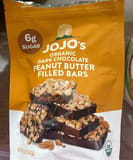 Organic Peanut Butter Filled Jojo's Ultra-processedHigh in saturated fatContains added sugarsCertified organic Score 45 out of 100 Okay
 -
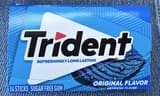 Trident Original Flavor Trident · 26.6 g Ultra-processedContains non-nutritive sweetenersContains sugar alcoholsContains artificial flavors Score 32 out of 100 Poor
 -
 Protein Balls Chocolate Chip Cookie Dough simplyFUEL Ultra-processedHigh in sugarContains added sugarsSeed-oil free Score 14 out of 100 Bad
More from Simply Nature

Sources
-
Guideline: sugars intake for adults and children
“In both adults and children, WHO recommends reducing the intake of free sugars to less than 10% of total energy intake”
who.int
-
Dietary Guidelines for Americans, 2025–2030
“Limit foods and beverages that include artificial flavors, petroleum-based dyes, artificial preservatives, and low-calorie non-nutritive sweeteners.”
cdn.realfood.gov
-
Added and free sugars should be as low as possible
“Sugar consumption is a known cause of dental caries.”
efsa.europa.eu
-
The artificial sweetener erythritol and cardiovascular event risk
“Our findings reveal that erythritol is both associated with incident MACE risk and fosters enhanced thrombosis. Studies assessing the long-term safety of erythritol are warranted.”
doi.org
-
Re-evaluation of erythritol (E 968) as a food additive (plain language summary)
“In all groups of people, both acute and chronic exposure to erythritol is above the newly set ADI.”
efsa.europa.eu
-
21 CFR 101.22 Foods; labeling of spices, flavorings, colorings and chemical preservatives
“whose significant function in food is flavoring rather than nutritional.”
ecfr.gov
-
WHO advises not to use non-sugar sweeteners for weight control in newly released guideline
“The recommendation is based on the findings of a systematic review of the available evidence which suggests that use of NSS does not confer any long-term benefit in reducing body fat in adults or children.”
who.int
-
Saturated fatty acid and trans-fatty acid intake for adults and children: WHO guideline
“WHO recommends that adults and children reduce saturated fatty acid intake to 10% of total energy intake (strong recommendation).”
who.int
-
“For adults, WHO recommends less than 2000 mg/day of sodium (equivalent to less than 5 g/day salt), or just under a teaspoon.”
who.int
-
“Table 3: Criteria for drinks (per 100ml)”
assets.publishing.service.gov.uk
-
“Greater exposure to ultra-processed food was associated with a higher risk of adverse health outcomes, especially cardiometabolic, common mental disorder, and mortality outcomes.”
doi.org
-
Regulation (EU) No 1169/2011, Annex III point 2.4 (foods with more than 10 % added polyols)
“‘excessive consumption may produce laxative effects’.”
eur-lex.europa.eu