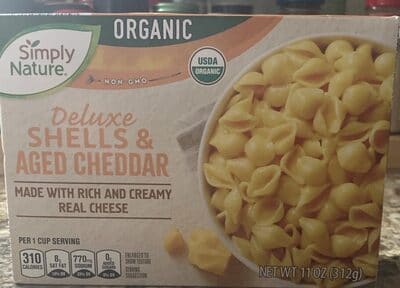
Macaroni and cheese
Simply Nature Deluxe Shells & Aged Cheddar
Score
- Ultra-processed
- High in salt
- Certified organic
- Seed-oil free
- No synthetic dyes
Why it scores 61
Simply Nature Deluxe Shells & Aged Cheddar scores 61 out of 100 (Good) under GoodSwap’s published rules. What moved the score most:
- minus 18 points Ultra-processed (NOVA 4): Classified NOVA 4: made with industrial ingredients and additives. Strong
- minus 7 points Salt 1.9 g / 100 g: Very high in salt. Strong
- minus 5 points Saturated fat 4.5 g / 100 g: High in saturated fat. Strong
Every line of the math is on The Receipt below, with its evidence tier and sources.
Better macaroni and cheese
-
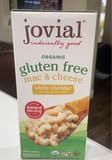 Gluten Free White Cheddar Mac & Cheese Jovial · 6 oz Not ultra-processed · Less salt Score 87 out of 100 , 26 points higher
 -
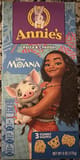 Pasta And Cheddar Annie's · 6 oz Not ultra-processed · Less salt Score 86 out of 100 , 25 points higher
 -
 Shells & Real Aged Cheddar Macaroni & Cheese Annie's · 24 oz Not ultra-processed · No sodium alginate Score 79 out of 100 , 18 points higher
 -
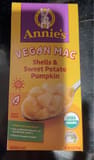 Vegan Mac Shells and Sweet Potato Pumpkin Annie's Homegrown · 8 oz Less salt · No sodium phosphate Score 80 out of 100 , 19 points higher
 -
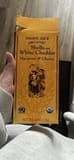 Organic Shells and White Cheddar Macaroni & Cheese Trader Joe's · 6 oz Less salt · No sodium alginate Score 78 out of 100 , 17 points higher
The same kind of product, at least 10 points higher, sold in the US. Never paid placements.
The Receipt
Deluxe Shells & Aged Cheddar
Ingredients
- Sodium phosphate minus 2.5 points
- Natural flavors minus 2.5 points
- Sodium alginate minus 2.5 points
- Xanthan gum minus 1.5 points
Processing
- Ultra-processed (NOVA 4) minus 18 points
- 3 kinds of ultra-processing markers minus 3 points
Nutrition per 100 g
- Saturated fat 4.5 g / 100 g minus 5 points
- Salt 1.9 g / 100 g minus 7 points
- Energy 310 kcal / 100 g minus 1 points
- Fiber 4 g / 100 g plus 2 points
- Protein 12 g / 100 g plus 2 points
100 − 39 = 61
Can’t score above 79. High in salt (above the front-of-pack "high" level). [7]
Nutrition per 100 g
| Energy | 310 kcal |
|---|---|
| Fat | 8 g |
| Saturated fat | 4.5 g |
| Trans fat | 0 g |
| Carbohydrates | 49 g |
| Sugars | 0 g |
| Added sugars | 0 g |
| Fiber | 4 g |
| Protein | 12 g |
| Salt | 1.9 g |
Serving: 1 cup prepared (100 g)
Ingredients
- ORGANIC PASTA
- (ORGANIC DURUM WHEAT SEMOLINA)
- WATER
- ORGANIC CHEDDAR CHEESE (PASTEURIZED ORGANIC MILK, CHEESE CULTURE, SALT, ENZYMES)
- ORGANIC BUTTER
- ORGANIC WHEY
- ORGANIC NON-FAT DRY MILK
- SODIUM PHOSPHATE
- SALT
- ORGANIC NATURAL FLAVORS
- SODIUM ALGINATE
- LACTIC ACID
- ORGANIC ANNATTO EXTRACT (ADDED FOR COLOR)
- XANTHAN GUM
Label text, as published
ORGANIC PASTA, (ORGANIC DURUM WHEAT SEMOLINA), WATER, ORGANIC CHEDDAR CHEESE (PASTEURIZED ORGANIC MILK, CHEESE CULTURE, SALT, ENZYMES), ORGANIC BUTTER, ORGANIC WHEY, ORGANIC NON-FAT DRY MILK, SODIUM PHOSPHATE, CONTAINS 2% OR LESS OF: SALT, ORGANIC NATURAL FLAVORS, SODIUM ALGINATE, LACTIC ACID, ORGANIC ANNATTO EXTRACT (ADDED FOR COLOR), XANTHAN GUM
Allergens and diets
Contains: Milk, Wheat, Gluten
- Not vegan
- Not gluten-free
- Palm-oil-free
Always check the package: recipes change.
More macaroni and cheese on GoodSwap
-
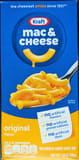 Mac & Cheese Kraft · 7.25 oz Ultra-processedHigh in saltSeed-oil freeNo synthetic dyes Score 59 out of 100 Okay
 -
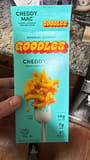 Cheddy Mac Creamy Cheddar And Macaroni Goodles · 6 oz Ultra-processedContains added sugarsSeed-oil freeNo synthetic dyes Score 52 out of 100 Okay
 -
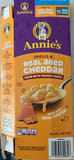 Shells & Real Aged Cheddar Annie's · 71 g Ultra-processedHigh in saltCertified organicNo synthetic dyes Score 65 out of 100 Good
 -
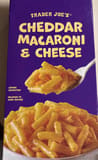 Cheddar Macaroni & Cheese Trader Joe's Ultra-processedContains seed oilsNo synthetic dyes Score 56 out of 100 Okay
 -
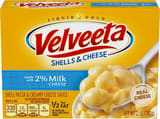 Shells & Cheese Velveeta · 12 oz Ultra-processedHigh in saltContains seed oilsNo synthetic dyes Score 56 out of 100 Okay
 -
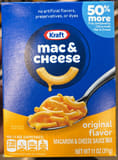 Macaroni & Cheese Sauce Mix Kraft · 11 oz Ultra-processedSeed-oil freeNo synthetic dyes Score 63 out of 100 Good
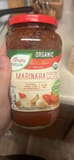
More from Simply Nature
Sources
-
EFSA issues new advice on phosphates
“We estimated that dietary exposure to phosphates may exceed the new ADI for infants, toddlers and children with average consumption of phosphates in their diet.”
efsa.europa.eu
-
21 CFR 101.22 Foods; labeling of spices, flavorings, colorings and chemical preservatives
“whose significant function in food is flavoring rather than nutritional.”
ecfr.gov
-
Saturated fatty acid and trans-fatty acid intake for adults and children: WHO guideline
“WHO recommends that adults and children reduce saturated fatty acid intake to 10% of total energy intake (strong recommendation).”
who.int
-
“For adults, WHO recommends less than 2000 mg/day of sodium (equivalent to less than 5 g/day salt), or just under a teaspoon.”
who.int
-
Dietary Guidelines for Americans, 2025–2030
“Limit foods and beverages that include artificial flavors, petroleum-based dyes, artificial preservatives, and low-calorie non-nutritive sweeteners.”
cdn.realfood.gov
-
“Table 3: Criteria for drinks (per 100ml)”
assets.publishing.service.gov.uk
-
“Greater exposure to ultra-processed food was associated with a higher risk of adverse health outcomes, especially cardiometabolic, common mental disorder, and mortality outcomes.”
doi.org