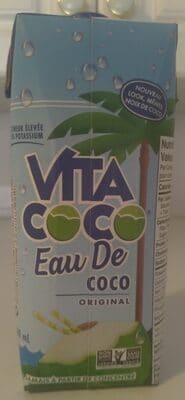
Coconut waters
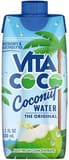
Vita Coco Coconut Water
500 mL
Score
- Ultra-processed
- Contains added sugars
Why it scores 60
Vita Coco Coconut Water scores 60 out of 100 (Good) under GoodSwap’s published rules. What moved the score most:
- minus 20 points Fructose: An added sugar. Strong
- minus 18 points Ultra-processed (NOVA 4): Classified NOVA 4: made with industrial ingredients and additives. Strong
- minus 2 points Energy 19 kcal / 100 ml: Energy-dense for its volume. Info
Every line of the math is on The Receipt below, with its evidence tier and sources.
Better coconut water
-
 Organic Coconut Water 365 · 33.8 fl oz/1.05 qt/1 L Not ultra-processed · No added sugars Score 100 out of 100 , 40 points higher
 -
 Chaokoh coconut water Chaokoh · 1 L Not ultra-processed · No added sugars Score 100 out of 100 , 40 points higher
 -
 Organic Coconut Water Kirkland Signature Not ultra-processed · No added sugars Score 100 out of 100 , 40 points higher
 -
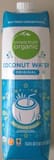 Coconut water original The Kroger Co. · 33.8 fl oz/1 L Not ultra-processed · No added sugars Score 99 out of 100 , 39 points higher
 -
 Coconut water Simple Truth Organic · 330 mL Not ultra-processed · No added sugars Score 100 out of 100 , 40 points higher
The same kind of product, at least 10 points higher, sold in the US. Never paid placements.
The Receipt
Coconut Water
Ingredients
- Fructose minus 20 points
Processing
- Ultra-processed (NOVA 4) minus 18 points
Nutrition per 100 ml
- Energy 19 kcal / 100 ml minus 2 points
100 − 40 = 60
Can’t score above 79. Contains fructose, an ingredient of high concern. [1][2][3]
Nutrition per 100 ml
| Energy | 19 kcal |
|---|---|
| Fat | 0 g |
| Saturated fat | 0 g |
| Trans fat | 0 g |
| Carbohydrates | 4.6 g |
| Sugars | 4.6 g |
| Added sugars | 0.4 g |
| Fiber | 0 g |
| Protein | 0 g |
| Salt | 0.1 g |
Serving: 1 bottle (480 ml)
Ingredients
Label text, as published
Coconut Water (99%), Fructose (<1%), Vitamin C.
Allergens and diets
- Vegan
- Vegetarian
- Gluten-free
- Palm-oil-free
Always check the package: recipes change.
Packaging
Unknown
Context only: no points in v1.
More coconut waters on GoodSwap
-
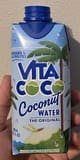 Coconut Water Vita Coco · 330 mL Contains added sugars Score 61 out of 100 Good
 -
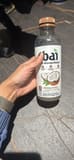 Molokai Coconut Bai · 18 fl oz Ultra-processedContains non-nutritive sweetenersContains caffeine Score 69 out of 100 Good
 -
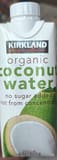 Organic Coconut Water Kirkland Signature · 330 mL No additives Score 100 out of 100 Excellent
 -
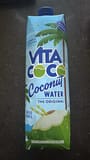 Coconut Water Vita Coco · 1 L Contains added sugars Score 76 out of 100 Good
 -
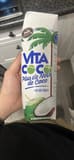 Coconut Water Bamboo Tree · 1 L Ultra-processedContains added sugars Score 56 out of 100 Okay
 -
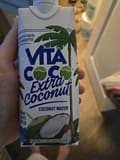 Coconut Water With Pressed Coconut The Vita Coco Company Inc. · 500 mL Ultra-processedContains added sugars Score 56 out of 100 Okay
More from Vita Coco
Sources
-
Guideline: sugars intake for adults and children
“In both adults and children, WHO recommends reducing the intake of free sugars to less than 10% of total energy intake”
who.int
-
Dietary Guidelines for Americans, 2025–2030
“Limit foods and beverages that include artificial flavors, petroleum-based dyes, artificial preservatives, and low-calorie non-nutritive sweeteners.”
cdn.realfood.gov
-
Added and free sugars should be as low as possible
“Sugar consumption is a known cause of dental caries.”
efsa.europa.eu
-
“Greater exposure to ultra-processed food was associated with a higher risk of adverse health outcomes, especially cardiometabolic, common mental disorder, and mortality outcomes.”
doi.org