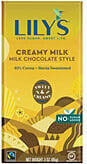
Milk chocolates
Lily's Creamy Milk Milk Chocolate Style Bar
3 oz/85 g
Score
- Ultra-processed
- High in saturated fat
- Contains non-nutritive sweeteners
- Contains sugar alcohols
- Seed-oil free
Why it scores 54
Lily's Creamy Milk Milk Chocolate Style Bar scores 54 out of 100 (Okay) under GoodSwap’s published rules. What moved the score most:
- minus 18 points Ultra-processed (NOVA 4): Classified NOVA 4: made with industrial ingredients and additives. Strong
- minus 9 points Saturated fat 20 g / 100 g: Very high in saturated fat. Strong
- minus 7.5 points Erythritol: A 2023 study linked higher blood erythritol to cardiovascular events and found it increased clotting activity; long-term safety studies are warranted. Strong
Every line of the math is on The Receipt below, with its evidence tier and sources.
Better chocolate candy
-
 Kisses Milk Chocolate Hershey's Less saturated fat · No non-nutritive sweeteners Score 79 out of 100 , 25 points higher
 -
 Energy Bar Minis Chocolate Almond Butter Sea Salt Thunderbird · 7 oz Not ultra-processed · No non-nutritive sweeteners Score 77 out of 100 , 23 points higher
 -
 Kids Snack Bar Chocolate Peanut Butter Skout Organic Not ultra-processed · No non-nutritive sweeteners Score 78 out of 100 , 24 points higher
 -
 Caramel Cocoa Nutrition Bar CMWL Not ultra-processed · Less saturated fat Score 78 out of 100 , 24 points higher
 -
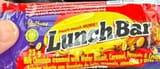 Lunch bar Cadbury Not ultra-processed · Less saturated fat Score 76 out of 100 , 22 points higher
The same kind of product, at least 10 points higher, sold in the US. Never paid placements.
The Receipt
Creamy Milk Milk Chocolate Style Bar
Ingredients
- Erythritol minus 7.5 points
- Dextrin minus 2.5 points
- Inulin (chicory root fiber) minus 2.5 points
- Sunflower lecithin minus 1.5 points
- Stevia (steviol glycosides) minus 1.5 points
Processing
- Ultra-processed (NOVA 4) minus 18 points
- 5 kinds of ultra-processing markers minus 6 points
Nutrition per 100 g
- Saturated fat 20 g / 100 g minus 9 points
- Energy 433 kcal / 100 g minus 2 points
- Fiber 33.3 g / 100 g plus 4 points
100 − 46.5 = 53.5 → 54
Can’t score above 79. High in fat and saturated fat (above the front-of-pack "high" level). [7]
Nutrition per 100 g
| Energy | 433 kcal |
|---|---|
| Fat | 33.3 g |
| Saturated fat | 20 g |
| Trans fat | 0 g |
| Carbohydrates | 56.7 g |
| Sugars | 3.3 g |
| Added sugars | 0 g |
| Fiber | 33.3 g |
| Protein | 6.7 g |
| Salt | 0.1 g |
Serving: 1 serving (30 g)
Ingredients
- UNSWEETENED CHOCOLATE
- DEXTRIN
- COCOA BUTTER
- ERYTHRITOL+ (moderate concern)
- WHOLE MILK POWDER (RBST FREE)
- CHICORY ROOT FIBER
- MILK FAT (RBST FREE)
- SUNFLOWER LECITHIN
- STEVIA EXTRACT
- VANILLA EXTRACT
Label text, as published
UNSWEETENED CHOCOLATE, DEXTRIN, COCOA BUTTER, ERYTHRITOL+, WHOLE MILK POWDER (RBST FREE), CHICORY ROOT FIBER, MILK FAT (RBST FREE), SUNFLOWER LECITHIN, STEVIA EXTRACT, VANILLA EXTRACT.
Allergens and diets
Contains: Milk, Soy
- Not vegan
- Vegetarian
- Palm-oil-free
Always check the package: recipes change.
More milk chocolates on GoodSwap
-
 Milk Chocolate Hershey's · 1.55 oz (43 g) Ultra-processedHigh in sugarHigh in saturated fatContains added sugars Score 22 out of 100 Poor
 -
 Milk Chocolate with Honey & Almond Nougat Toblerone · 1 × 100 g Ultra-processedHigh in sugarHigh in saturated fatContains added sugars Score 5 out of 100 Bad
 -
 Milk Chocolate Tony's Chocolonely · 180 g Ultra-processedHigh in sugarHigh in saturated fatContains added sugars Score 28 out of 100 Poor
 -
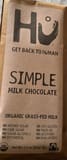 Simple Milk Chocolate Hu · 60 g High in sugarHigh in saturated fatContains added sugarsCertified organic Score 50 out of 100 Okay
 -
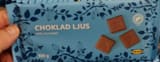 Milk Chocolate IKEA Ultra-processedHigh in sugarHigh in saturated fatContains added sugars Score 9 out of 100 Bad
 -
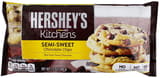 Semi-Sweet Chocolate Chip Cookies Hershey's · 12 oz Ultra-processedHigh in sugarHigh in saturated fatContains added sugars Score 28 out of 100 Poor
More from Lily's
-
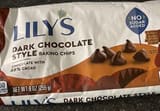 Dark Chocolate Style Baking Chips Lily's · 255 g Score 52 out of 100 Okay
 -
 Semi-Sweet Chocolate Style Baking Chips Lily's · 9 oz Score 57 out of 100 Okay
 -
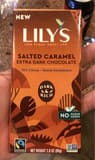 Salted Caramel Extra Dark Chocolate Style Bar Lily's · 2.8 oz Score 55 out of 100 Okay
 -
 Milk Chocolate Style Baking Chips Lily's · 9 oz Score 51 out of 100 Okay
Sources
-
The artificial sweetener erythritol and cardiovascular event risk
“Our findings reveal that erythritol is both associated with incident MACE risk and fosters enhanced thrombosis. Studies assessing the long-term safety of erythritol are warranted.”
doi.org
-
Re-evaluation of erythritol (E 968) as a food additive (plain language summary)
“In all groups of people, both acute and chronic exposure to erythritol is above the newly set ADI.”
efsa.europa.eu
-
WHO advises not to use non-sugar sweeteners for weight control in newly released guideline
“The recommendation is based on the findings of a systematic review of the available evidence which suggests that use of NSS does not confer any long-term benefit in reducing body fat in adults or children.”
who.int
-
Dietary Guidelines for Americans, 2025–2030
“Limit foods and beverages that include artificial flavors, petroleum-based dyes, artificial preservatives, and low-calorie non-nutritive sweeteners.”
cdn.realfood.gov
-
Saturated fatty acid and trans-fatty acid intake for adults and children: WHO guideline
“WHO recommends that adults and children reduce saturated fatty acid intake to 10% of total energy intake (strong recommendation).”
who.int
-
“Table 3: Criteria for drinks (per 100ml)”
assets.publishing.service.gov.uk
-
“Greater exposure to ultra-processed food was associated with a higher risk of adverse health outcomes, especially cardiometabolic, common mental disorder, and mortality outcomes.”
doi.org
-
Regulation (EU) No 1169/2011, Annex III point 2.4 (foods with more than 10 % added polyols)
“‘excessive consumption may produce laxative effects’.”
eur-lex.europa.eu