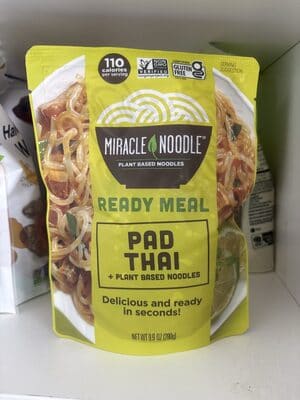
Meals
Miracle Noodle Ready-To-Eat Meal Pad Thai
280 g
Score
- Ultra-processed
- Contains added sugars
- Seed-oil free
- No synthetic dyes
Why it scores 32
Miracle Noodle Ready-To-Eat Meal Pad Thai scores 32 out of 100 (Poor) under GoodSwap’s published rules. What moved the score most:
- minus 20 points Coconut sugar: An added sugar. Strong
- minus 20 points Caramel color: The FDA says classes III and IV, which can contain 4-MEI, are the most commonly used food color additives by volume. Regulatory
- minus 18 points Ultra-processed (NOVA 4): Classified NOVA 4: made with industrial ingredients and additives. Strong
Every line of the math is on The Receipt below, with its evidence tier and sources.
Better frozen meals
-
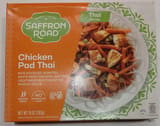 Chicken Pad Thai Saffron Road · 10 oz (283 g) Not ultra-processed · No coconut sugar Score 69 out of 100 , 37 points higher
 -
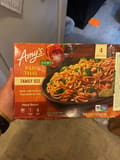 Pad Thai Family Size Amy's · 28.2 oz/800 g Not ultra-processed · No coconut sugar Score 68 out of 100 , 36 points higher
 -
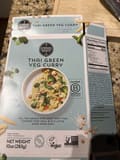 Thai green veg curry Strong Roots · 10 oz Not ultra-processed · No coconut sugar Score 76 out of 100 , 44 points higher
 -
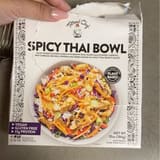 Spicy thai bowl Tattooed Chef · 10 oz Not ultra-processed · No coconut sugar Score 72 out of 100 , 40 points higher
 -
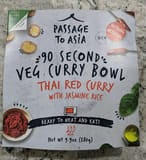 Thai Red Curry With Jasmine Rice Passage Foods · 9.9 oz/280 g Not ultra-processed · No coconut sugar Score 66 out of 100 , 34 points higher
The same kind of product, at least 10 points higher, sold in the US. Never paid placements.
The Receipt
Ready-To-Eat Meal Pad Thai
Ingredients
- Coconut sugar minus 20 points
- Caramel color minus 20 points
- Konjac minus 2.5 points
Processing
- Ultra-processed (NOVA 4) minus 18 points
- 2 kinds of ultra-processing markers minus 1.5 points
Nutrition per 100 g
- Sugars 5 g / 100 g minus 3 points
- Salt 0.6 g / 100 g minus 3 points
100 − 68 = 32
Can’t score above 79. Contains coconut sugar, an ingredient of high concern. [1][2][3][4][5][6][7]
Nutrition per 100 g
| Energy | 79 kcal |
|---|---|
| Fat | 2.5 g |
| Saturated fat | 0.4 g |
| Trans fat | 0 g |
| Carbohydrates | 11.4 g |
| Sugars | 5 g |
| Added sugars | 4.3 g |
| Fiber | 2.1 g |
| Protein | 2.9 g |
| Salt | 0.6 g |
Serving: 0.5 pack (140 g)
Ingredients
- konjac shirataki noodles
- tofu
- water
- coconut sugar (high concern)
- garlic chives
- shallot
- peanut
- coconut oil
- garlic
- tamarind paste
- light soy sauce
- salt
- citric acid
- caramel color (high concern)
- chilli powder
- paprika color
Label text, as published
konjac shirataki noodles, tofu, water, coconut sugar, garlic chives, shallot, peanut, coconut oil, garlic, tamarind paste, light soy sauce, salt, citric acid, caramel color, chilli powder, paprika color
Allergens and diets
Contains: Peanuts, Soy
- Vegan
- Vegetarian
- Palm-oil-free
Always check the package: recipes change.
More meals on GoodSwap
-
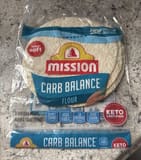 Carb Balance Flour Tortilla Wraps Mission · 340 g Ultra-processedHigh in saltContains non-nutritive sweetenersContains emulsifiers studied for gut effects Score 46 out of 100 Okay
 -
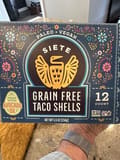 Grain Free Taco Shells Siete · 5.5 oz/156 g Ultra-processedNo additivesSeed-oil free Score 72 out of 100 Good
 -
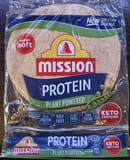 Tortilla Wraps Mission · 9 oz Ultra-processedHigh in saltContains non-nutritive sweetenersContains emulsifiers studied for gut effects Score 30 out of 100 Poor
 -
 Croissant Egg White, Turkey Sausage & Cheese Sandwich Jimmy Dean · 19.2 oz/1.2 lb/544 g Ultra-processedContains added sugarsContains emulsifiers studied for gut effectsContains seed oils Score 17 out of 100 Bad
 -
 Thin Crust Pizza Meat Lover's Quest · 13.2 oz/373 g Ultra-processedHigh in saturated fatContains nitrites or nitratesContains added sugars Score 19 out of 100 Bad
 -
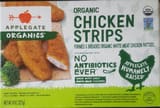 Organic Chicken Strips Applegate Organics · 84 g Ultra-processedContains added sugarsContains seed oilsCertified organic Score 66 out of 100 Good
More from Miracle Noodle
Sources
-
Guideline: sugars intake for adults and children
“In both adults and children, WHO recommends reducing the intake of free sugars to less than 10% of total energy intake”
who.int
-
Dietary Guidelines for Americans, 2025–2030
“Limit foods and beverages that include artificial flavors, petroleum-based dyes, artificial preservatives, and low-calorie non-nutritive sweeteners.”
cdn.realfood.gov
-
Added and free sugars should be as low as possible
“Sugar consumption is a known cause of dental caries.”
efsa.europa.eu
-
Questions & Answers About 4-MEI
“Based on current science, the FDA has no reason to believe that there are any immediate or short-term health risks presented by 4-MEI at the levels expected in food.”
fda.gov
-
Agents Classified by the IARC Monographs, Volumes 1–142 (List of Classifications)
monographs.iarc.who.int
-
Proposition 65 List of Chemicals Known to the State to Cause Cancer or Reproductive Toxicity
“The date refers to the initial appearance of the chemical on the list.”
oehha.ca.gov
-
“For adults, WHO recommends less than 2000 mg/day of sodium (equivalent to less than 5 g/day salt), or just under a teaspoon.”
who.int
-
“Greater exposure to ultra-processed food was associated with a higher risk of adverse health outcomes, especially cardiometabolic, common mental disorder, and mortality outcomes.”
doi.org