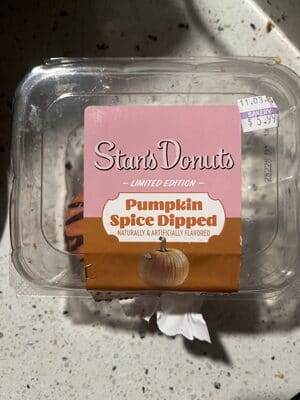
Breads
Stan’s Artisan Breads San Francisco Sourdough Sliced Loaf
Score
- High in sugar
- High in saturated fat
- Contains emulsifiers studied for gut effects
Why it scores 62
Stan’s Artisan Breads San Francisco Sourdough Sliced Loaf scores 62 out of 100 (Good) under GoodSwap’s published rules. What moved the score most:
- minus 14 points Sugars 34.8 g / 100 g: Very high in sugar. Strong
- minus 9 points Saturated fat 19.6 g / 100 g: Very high in saturated fat. Strong
- minus 8 points Processed (NOVA 3): Classified NOVA 3: processed with added salt, sugar or oil. Emerging
Every line of the math is on The Receipt below, with its evidence tier and sources.
Better sliced bread
-
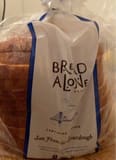 San Francisco Sourdough Bread Alone Bakery Less sugar · Less saturated fat Score 100 out of 100 , 38 points higher
 -
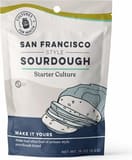 San francisco sourdough style starter culture Less sugar · Less saturated fat Score 98 out of 100 , 36 points higher
 -
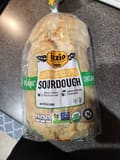 San Francisco Style Sourdough Izzio Artisan Bakery · 24 oz/680 g Less sugar · Less saturated fat Score 99 out of 100 , 37 points higher
 -
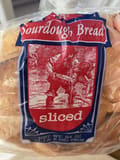 San Francisco Style Sourdough Bread Trader Joe's · 24 oz Less sugar · Less saturated fat Score 94 out of 100 , 32 points higher
 -
 San Francisco Style Sourdough Izzio · 14 oz/397 g Less sugar · Less saturated fat Score 94 out of 100 , 32 points higher
The same kind of product, at least 10 points higher, sold in the US. Never paid placements.
The Receipt
San Francisco Sourdough Sliced Loaf
Ingredients
- Mono- and diglycerides minus 2.5 points
Processing
- Processed (NOVA 3) minus 8 points
Nutrition per 100 g
- Sugars 34.8 g / 100 g minus 14 points
- Saturated fat 19.6 g / 100 g minus 9 points
- Salt 0.8 g / 100 g minus 3 points
- Energy 464 kcal / 100 g minus 2 points
100 − 38.5 = 61.5 → 62
Can’t score above 79. High in fat, saturated fat and sugars (above the front-of-pack "high" level). [8]
Nutrition per 100 g
| Energy | 464 kcal |
|---|---|
| Fat | 30.4 g |
| Saturated fat | 19.6 g |
| Trans fat | 0 g |
| Carbohydrates | 52.2 g |
| Sugars | 34.8 g |
| Added sugars | 0 g |
| Fiber | 0 g |
| Protein | 4.3 g |
| Salt | 0.8 g |
Serving: 1 Donut (23 g)
Ingredients
- enriched wheat flour
- water
- sourdough starter
- sea salt
- malted barley flour
- corn meal
- cultured wheat flour
- mono (not recognized)
- diglycerides
- enzymes
- deactivated wheat flour
Label text, as published
enriched wheat flour, water, sourdough starter, contains 2% or less of the following: sea salt, malted barley flour, corn meal, cultured wheat flour, mono , diglycerides, enzymes, deactivated wheat flour
Allergens and diets
Contains: Wheat, Gluten
- Not gluten-free
- Palm-oil-free
Always check the package: recipes change.
More breads on GoodSwap
-
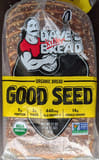 Organic Bread Good Seed Dave's Killer Bread · 27 oz Ultra-processedContains added sugarsCertified organicContains whole grains Score 42 out of 100 Okay
 -
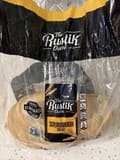 Sourdough Bread The Rustik Oven · 1 lb/454 g Ultra-processedSeed-oil free Score 73 out of 100 Good
 -
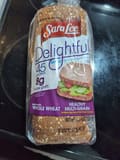 Delightful Bread Sara Lee · 567 g Ultra-processedContains non-nutritive sweetenersContains added sugarsContains emulsifiers studied for gut effects Score 23 out of 100 Poor
 -
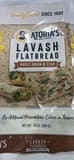 Lavash Flatbread Whole Grain & Flax Atoria's Family Bakery · 10 oz Ultra-processedContains added sugarsContains whole grains Score 64 out of 100 Good
 -
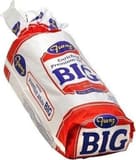 BIG WHITE Premium Bread Franz · 22.5 oz/638 g Ultra-processedContains added sugarsContains emulsifiers studied for gut effectsContains seed oils Score 28 out of 100 Poor
 -
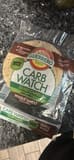 Carb Watch Whole Wheat Tortilla Wraps Guerrero Ultra-processedHigh in saltContains emulsifiers studied for gut effectsSeed-oil free Score 36 out of 100 Poor
Sources
-
“This study found positive associations between risk of CVD and intake of five individual and two groups of food additive emulsifiers widely used in industrial foods.”
doi.org
-
Re-evaluation of mono- and di-glycerides of fatty acids (E 471) as food additives
“The available studies did not raise any concern with regard to genotoxicity.”
doi.org
-
Guideline: sugars intake for adults and children
“In both adults and children, WHO recommends reducing the intake of free sugars to less than 10% of total energy intake”
who.int
-
Saturated fatty acid and trans-fatty acid intake for adults and children: WHO guideline
“WHO recommends that adults and children reduce saturated fatty acid intake to 10% of total energy intake (strong recommendation).”
who.int
-
“For adults, WHO recommends less than 2000 mg/day of sodium (equivalent to less than 5 g/day salt), or just under a teaspoon.”
who.int
-
Dietary Guidelines for Americans, 2025–2030
“Limit foods and beverages that include artificial flavors, petroleum-based dyes, artificial preservatives, and low-calorie non-nutritive sweeteners.”
cdn.realfood.gov
-
“Table 3: Criteria for drinks (per 100ml)”
assets.publishing.service.gov.uk
-
Dietary emulsifiers impact the mouse gut microbiota promoting colitis and metabolic syndrome
“carboxymethylcellulose and polysorbate-80, induced low-grade inflammation and obesity/metabolic syndrome in wild-type hosts and promoted robust colitis in mice predisposed to this disorder.”
doi.org
-
“Relative to control subjects, CMC consumption modestly increased postprandial abdominal discomfort and perturbed gut microbiota composition in a way that reduced its diversity.”
doi.org