Weight-loss milkshakes
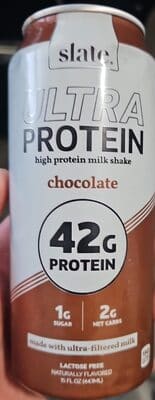
Slate Ultra Protein
15 fl oz
Score
- Ultra-processed
- High in salt
- Contains non-nutritive sweeteners
- Contains emulsifiers studied for gut effects
Why it scores 52
Slate Ultra Protein scores 52 out of 100 (Okay) under GoodSwap’s published rules. What moved the score most:
- minus 18 points Ultra-processed (NOVA 4): Classified NOVA 4: made with industrial ingredients and additives. Strong
- minus 7.5 points Sucralose: In a 2022 randomized study, sucralose and saccharin altered the gut microbiome and impaired glucose responses in some people; a 2023 lab study raised questions about its by-product sucralose-6-acetate. Strong
- minus 7.5 points Cellulose gum (carboxymethylcellulose): In a small randomized feeding trial, carboxymethylcellulose modestly increased abdominal discomfort and reduced gut microbiota diversity; in mice it promoted low-grade inflammation. Strong
Every line of the math is on The Receipt below, with its evidence tier and sources.
Better protein shakes
-
 Marine Collagen Wild-caught Orgain Not ultra-processed · Less salt Score 100 out of 100 , 48 points higher
 -
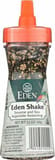 Eden Shake Sesame & Sea Vegetable Seasoning Eden Not ultra-processed · Less salt Score 79 out of 100 , 27 points higher
 -
 Organic Cocoa Cashew Coconut Dairy-free Shake Forager Project Less salt · No non-nutritive sweeteners Score 79 out of 100 , 27 points higher
 -
 The MealBetix Lifestyle MealBetix · 15 oz Not ultra-processed · Less salt Score 79 out of 100 , 27 points higher
 -
 Ultra filtered Protein Milkshake Orgain Less salt · No gut-studied emulsifiers Score 72 out of 100 , 20 points higher
The same kind of product, at least 10 points higher, sold in the US. Never paid placements.
The Receipt
Ultra Protein
Ingredients
- Sucralose minus 7.5 points
- Cellulose gum (carboxymethylcellulose) minus 7.5 points
- Milk protein concentrate / isolate minus 2.5 points
- Natural flavors minus 1.5 points
- Pectin minus 1.5 points
- Microcrystalline cellulose minus 1.5 points
- Stevia (steviol glycosides) minus 0.5 points
Processing
- Ultra-processed (NOVA 4) minus 18 points
- 4 kinds of ultra-processing markers minus 4.5 points
Nutrition per 100 ml
- Salt 1 g / 100 ml minus 3 points
- Energy 190 kcal / 100 ml minus 4 points
- Protein 42 g / 100 ml plus 4 points
100 − 48 = 52
Can’t score above 79. High in salt (above the front-of-pack "high" level). [13]
Nutrition per 100 ml
| Energy | 190 kcal |
|---|---|
| Fat | 1 g |
| Saturated fat | 0.5 g |
| Carbohydrates | 4 g |
| Sugars | 1 g |
| Added sugars | 0 g |
| Fiber | 2 g |
| Protein | 42 g |
| Salt | 1 g |
Serving: 1 serving (15 fl oz)
Ingredients
- Ultrafiltered Skim Milk Blend (Ultrafiltered Milk, Water)
- Natural Flavors
- Cocoa (Processed with Alkali)
- Salt
- Pectin
- Tripotassium Citrate
- Sucralose (moderate concern)
- Cellulose Gel
- Cellulose Gum (moderate concern)
- Lactase Enzyme
- Vitamin A Palmitate
- Stevia Leaf (Reb M)
- Vitamin D3
Label text, as published
Ultrafiltered Skim Milk Blend (Ultrafiltered Milk, Water), Natural Flavors, Cocoa (Processed with Alkali), Salt, Pectin, Tripotassium Citrate, Sucralose, Cellulose Gel, Cellulose Gum, Lactase Enzyme, Vitamin A Palmitate, Stevia Leaf (Reb M), Vitamin D3. CONTAINS: MILK
Allergens and diets
Contains: Milk
- Not vegan
- Palm-oil-free
Always check the package: recipes change.
More weight-loss milkshakes on GoodSwap
More from Slate
-
 Classic Chocolate High Protein Milk Shake Slate · 11 fl oz/325 mL Score 55 out of 100 Okay
 -
 French Vanilla High Protein Milk Shake Slate · 11 fl oz Score 49 out of 100 Okay
 -
 Dark Chocolate High Protein Milk Shake Slate · 11 fl oz/325 mL Score 61 out of 100 Good
 -
 Vanilla Latte High Protein Iced Coffee Slate · 11 fl oz Score 56 out of 100 Okay
Sources
-
Personalized microbiome-driven effects of non-nutritive sweeteners on human glucose tolerance
“As groups, each administered NNS distinctly altered stool and oral microbiome and plasma metabolome, whereas saccharin and sucralose significantly impaired glycemic responses.”
doi.org
-
“Sucralose-6-acetate significantly increased the expression of genes associated with inflammation, oxidative stress, and cancer”
doi.org
-
“EFSA’s experts concluded that the sweetener sucralose (E 955) continues to be safe for consumers for its currently authorised uses as a food additive.”
efsa.europa.eu
-
WHO advises not to use non-sugar sweeteners for weight control in newly released guideline
“The recommendation is based on the findings of a systematic review of the available evidence which suggests that use of NSS does not confer any long-term benefit in reducing body fat in adults or children.”
who.int
-
Dietary Guidelines for Americans, 2025–2030
“Limit foods and beverages that include artificial flavors, petroleum-based dyes, artificial preservatives, and low-calorie non-nutritive sweeteners.”
cdn.realfood.gov
-
“Relative to control subjects, CMC consumption modestly increased postprandial abdominal discomfort and perturbed gut microbiota composition in a way that reduced its diversity.”
doi.org
-
Dietary emulsifiers impact the mouse gut microbiota promoting colitis and metabolic syndrome
“carboxymethylcellulose and polysorbate-80, induced low-grade inflammation and obesity/metabolic syndrome in wild-type hosts and promoted robust colitis in mice predisposed to this disorder.”
doi.org
-
“This study found positive associations between risk of CVD and intake of five individual and two groups of food additive emulsifiers widely used in industrial foods.”
doi.org
-
“The Panel concluded that there was no need for a numerical ADI and that there would be no safety concern at the reported uses and use levels for the unmodified and modified celluloses”
doi.org
-
21 CFR 101.22 Foods; labeling of spices, flavorings, colorings and chemical preservatives
“whose significant function in food is flavoring rather than nutritional.”
ecfr.gov
-
“For adults, WHO recommends less than 2000 mg/day of sodium (equivalent to less than 5 g/day salt), or just under a teaspoon.”
who.int
-
“Table 3: Criteria for drinks (per 100ml)”
assets.publishing.service.gov.uk
-
“Greater exposure to ultra-processed food was associated with a higher risk of adverse health outcomes, especially cardiometabolic, common mental disorder, and mortality outcomes.”
doi.org