Food additive · Thickener / stabilizer
Cellulose gum (carboxymethylcellulose)
- E-number
- E466
A thickener made from plant cellulose, used in ice cream, sauces, dressings, baked goods and drinks.
- Food additive
- Emulsifier studied for gut effects
- Thickener, stabilizer or gelling agent
- Ultra-processing marker
- Expert review pending
Concern level
Strong evidence of harm at high intake, emerging evidence of harm, or a common allergen or irritant. The concern level sets how many points cellulose gum (carboxymethylcellulose) costs on a product’s receipt.
What the evidence says
-
Gut microbiome (emerging)Emerging evidence
In a small randomized feeding trial, carboxymethylcellulose modestly increased abdominal discomfort and reduced gut microbiota diversity; in mice it promoted low-grade inflammation. [1][2]
-
Heart or metabolic health (emerging)Emerging evidence
In the NutriNet-Santé cohort, higher intake was associated with a higher risk of cardiovascular disease. [3]
-
Low concernStrong evidence
EFSA (2018) saw no safety concern for celluloses at reported uses. [4]
Evidence tiers say how sure the evidence is, separately from how much it matters. About evidence tiers.
Rules around the world
| Where | Status | Details | Date | Source |
|---|---|---|---|---|
| United States | Permitted | Generally recognized as safe (21 CFR 182.1745). | — | [5] |
| European Union | Permitted | Permitted (E 466). | — | [6] |
“Banned” means explicitly prohibited or withdrawn after review; “not permitted” means never authorized there. We use each regulator’s own words.
Popular products that list cellulose gum (carboxymethylcellulose)
408 of the 17,000 most-scanned products in the US with a GoodSwap page list cellulose gum (carboxymethylcellulose). The 12 most scanned:
-
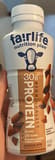 High Quality Protein Fairlife · 11.5 fl oz (340 mL) Score 84 out of 100 Excellent
 -
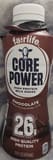 Core Power High Protein Milk Shake Chocolate Fairlife · 14 oz Score 46 out of 100 Okay
 -
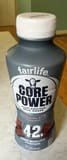 CORE POWER High Protein Milk Shake Chocolate Rlife · 414 mL Score 51 out of 100 Okay
 -
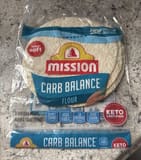 Carb Balance Flour Tortilla Wraps Mission · 340 g Score 46 out of 100 Okay
 -
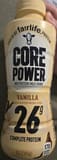 High Protein Milkshake Vanilla Core Power · 14 oz Score 81 out of 100 Excellent
 -
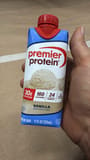 Premier Protein Vanilla Shake Premier Protein · 11 oz Score 40 out of 100 Okay
 -
 Honey Wheat Bread Sara Lee · 567 g Score 21 out of 100 Poor
 -
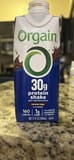 Protein Shake Orgain · 11 fl oz Score 90 out of 100 Excellent
 -
 Original Seasoned Pretzel Twists Dot's Homestyle Pretzels · 35 oz Score 30 out of 100 Poor
 -
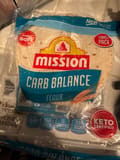 Carb Balance Flour Tortilla Wraps Mission · 24 oz Score 43 out of 100 Okay
 -
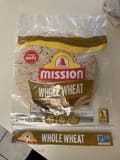 Whole Wheat Original Mission · 10 Tortilla Wraps (16 oz) (453 g) Score 58 out of 100 Okay
 -
 Seasoned Pretzel Twists Dot's Homestyle Pretzels · 454 g Score 28 out of 100 Poor
Diets and allergens
- Vegan
- Yes
- Vegetarian
- Yes
- Gluten-free
- Yes
For the ingredient in general. Always check the package: a product’s own labels win.
Names GoodSwap recognizes on labels (30)
- cmc
- e466
- sodium cmc
- cellulose gum
- thickener e466
- emulsifier e466
- stabiliser e466
- gelling agent e466
- gomme de cellulose
- carboxymethylcellulose
- modified cellulose gum
- carboxymethyl cellulose
- cellulose gum thickener
- thickener cellulose gum
- stabiliser cellulose gum
- carboxymethylcellulose sodium
- cellulose gum and carrageenan
- sodium carboxymethylcellulose
- sodium carboxymethyl cellulose
- carboxymethylcellulose de sodium
- thickener carboxymethylcellulose
- stabiliser carboxymethylcellulose
- thickener carboxymethyl cellulose
- stabiliser carboxymethyl cellulose
- thickeners carboxymethyl cellulose
- stabilisers carboxymethyl cellulose
- cellulose gum carboxymethylcellulose
- thickener sodium carboxymethylcellulose
- stabiliser sodium carboxymethylcellulose
- stabiliser sodium carboxymethyl cellulose
Sources
-
“Relative to control subjects, CMC consumption modestly increased postprandial abdominal discomfort and perturbed gut microbiota composition in a way that reduced its diversity.”
doi.org
-
Dietary emulsifiers impact the mouse gut microbiota promoting colitis and metabolic syndrome
“carboxymethylcellulose and polysorbate-80, induced low-grade inflammation and obesity/metabolic syndrome in wild-type hosts and promoted robust colitis in mice predisposed to this disorder.”
doi.org
-
“This study found positive associations between risk of CVD and intake of five individual and two groups of food additive emulsifiers widely used in industrial foods.”
doi.org
-
“The Panel concluded that there was no need for a numerical ADI and that there would be no safety concern at the reported uses and use levels for the unmodified and modified celluloses”
doi.org
-
“E 127 Erythrosine 200 only cocktail cherries and candied cherries”
eur-lex.europa.eu