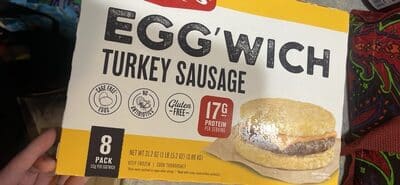
Turkey sausages
Red's Egg'Wich Turkey Sausage
Score
- Ultra-processed
- No synthetic dyes
Why it scores 51
Red's Egg'Wich Turkey Sausage scores 51 out of 100 (Okay) under GoodSwap’s published rules. What moved the score most:
- minus 20 points Sausage and cured meats: IARC classifies processed meat (cured, salted, smoked or fermented) as Group 1, based on colorectal cancer; each 50 g eaten daily is linked to an 18% higher risk. Regulatory
- minus 18 points Ultra-processed (NOVA 4): Classified NOVA 4: made with industrial ingredients and additives. Strong
- minus 5 points Saturated fat 4.5 g / 100 g: High in saturated fat. Strong
Every line of the math is on The Receipt below, with its evidence tier and sources.
Better sausages
-
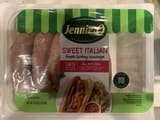 Sweet Lean Italian Turkey Sausage Jennie-O · 109 g Not ultra-processed · No sausage and cured meats Score 98 out of 100 , 47 points higher
 -
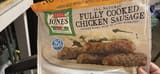 Fully Cooked Chicken Sausage Jones Dairy Farm · 48 oz/3 lb/1.36 kg Not ultra-processed · No sausage and cured meats Score 93 out of 100 , 42 points higher
 -
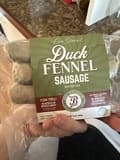 Duck Fennel sausage Brooklyn Cured · 10 oz/283 g Not ultra-processed · No sausage and cured meats Score 93 out of 100 , 42 points higher
 -
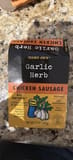 Garlic Herb Sausage Trader Joe's · 12 oz Not ultra-processed · No sausage and cured meats Score 91 out of 100 , 40 points higher
 -
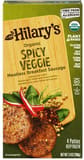 Organic spicy veggie meatless breakfast sausage Hilary's · 7.3 oz/208 g Not ultra-processed · No sausage and cured meats Score 91 out of 100 , 40 points higher
The same kind of product, at least 10 points higher, sold in the US. Never paid placements.
The Receipt
Egg'Wich Turkey Sausage
Ingredients
- Sausage and cured meats minus 20 points
- Sodium phosphate minus 2.5 points
Processing
- Ultra-processed (NOVA 4) minus 18 points
Nutrition per 100 g
- Saturated fat 4.5 g / 100 g minus 5 points
- Salt 1.3 g / 100 g minus 5 points
- Energy 171 kcal / 100 g minus 1 points
- Protein 15.3 g / 100 g plus 2 points
100 − 49.5 = 50.5 → 51
Can’t score above 79. Contains sausage and cured meats, an ingredient of high concern. [1][2]
Nutrition per 100 g
| Energy | 171 kcal |
|---|---|
| Fat | 10.8 g |
| Saturated fat | 4.5 g |
| Trans fat | 0 g |
| Carbohydrates | 2.7 g |
| Sugars | 0.9 g |
| Added sugars | 0 g |
| Fiber | 0 g |
| Protein | 15.3 g |
| Salt | 1.3 g |
Serving: 1 serving (111 g)
Ingredients
- Lutrition Facts Egg Patty (Whole Egg, Whole Milk, Corn Starch, Sea Salt, White Pepper) (not recognized)
- Turkey Sausage Patty (Turkey Meat, Water, Potato Starch, Salt, servings per container ving size 1 Egg'Wich (111g) % Daily Value* 15% 25% al Fat 12g aturated Fat 5g Trans Fat Og lesterol 265mg in D 1mcg 88% 26% 1% 0% ium 590mg 1 Carbohydrate 3g etary Fiber Og tal Sugars 1g cludes Og Added Sugars 0% ein 17g 34% 6% Sugar, Spices) (high concern)
- American Cheese (Cultured Milk, Salt, Enzymes, Water, Cream, Sodium Phosphate, Salt, Apo-Carotenal and Beta-Carotene (Color))
Label text, as published
Lutrition Facts Egg Patty (Whole Egg, Whole Milk, Corn Starch, Sea Salt, White Pepper). Turkey Sausage Patty (Turkey Meat, Water, ount per serving alories 190 Contains less than 2% of Potato Starch, Salt, servings per container ving size 1 Egg'Wich (111g) % Daily Value* 15% 25% al Fat 12g aturated Fat 5g Trans Fat Og lesterol 265mg in D 1mcg 88% 26% 1% 0% ium 590mg 1 Carbohydrate 3g etary Fiber Og tal Sugars 1g cludes Og Added Sugars 0% ein 17g 34% 6% Sugar, Spices), American Cheese [(Cultured Milk, Salt, Enzymes), Water, Cream, Sodium Phosphate, Salt, Apo-Carotenal and Beta-Carotene (Color)]. CONTAINS: EGG, MILK TH S Aft Pa Re ar b h a
Allergens and diets
Contains: Milk, Egg
- Not vegan
- Not vegetarian
- Palm-oil-free
Always check the package: recipes change.
More turkey sausages on GoodSwap
-
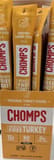 Original All Natural Chomps Antibiotic Free Turkey Chomps · 32 g High in saltContains nitrites or nitrates Score 74 out of 100 Good
 -
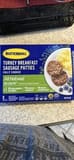 Turkey Breakfast Sausage Patties Butterball · 8 oz High in saltContains added sugars Score 67 out of 100 Good
 -
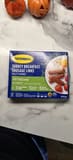 Turkey Breakfast Sausage Links Butterball · 57 g Ultra-processedHigh in saltContains added sugars Score 56 out of 100 Okay
 -
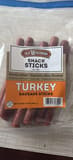 Turkey Sticks Smoked Sausage Old Wisconsin · 28 oz Ultra-processedHigh in saltHigh in saturated fatContains nitrites or nitrates Score 21 out of 100 Poor
 -
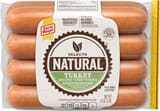 Natural Turkey Uncured Turkey Franks Oscar Mayer · 16 oz (1 lb) Ultra-processedHigh in saltContains nitrites or nitratesContains added sugars Score 41 out of 100 Okay
 -
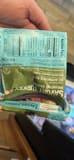 Savory Turkey Breakfast Sausage Applegate Naturals · 59 g High in saltContains added sugars Score 66 out of 100 Good
More from Red's
Sources
-
IARC Monographs evaluate consumption of red meat and processed meat (Press Release No. 240)
“Processed meat was classified as carcinogenic to humans (Group 1), based on sufficient evidence in humans that the consumption of processed meat causes colorectal cancer.”
iarc.who.int
-
EFSA issues new advice on phosphates
“We estimated that dietary exposure to phosphates may exceed the new ADI for infants, toddlers and children with average consumption of phosphates in their diet.”
efsa.europa.eu
-
Saturated fatty acid and trans-fatty acid intake for adults and children: WHO guideline
“WHO recommends that adults and children reduce saturated fatty acid intake to 10% of total energy intake (strong recommendation).”
who.int
-
“For adults, WHO recommends less than 2000 mg/day of sodium (equivalent to less than 5 g/day salt), or just under a teaspoon.”
who.int
-
Dietary Guidelines for Americans, 2025–2030
“Limit foods and beverages that include artificial flavors, petroleum-based dyes, artificial preservatives, and low-calorie non-nutritive sweeteners.”
cdn.realfood.gov
-
“Greater exposure to ultra-processed food was associated with a higher risk of adverse health outcomes, especially cardiometabolic, common mental disorder, and mortality outcomes.”
doi.org