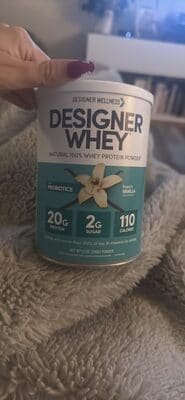
Protein powders
Designer Whey Natural 100% Whey Protein Powder
12 oz
Score
- Ultra-processed
- High in salt
- Contains non-nutritive sweeteners
- No synthetic dyes
Why it scores 55
Designer Whey Natural 100% Whey Protein Powder scores 55 out of 100 (Okay) under GoodSwap’s published rules. What moved the score most:
- minus 18 points Ultra-processed (NOVA 4): Classified NOVA 4: made with industrial ingredients and additives. Strong
- minus 7.5 points 6 kinds of ultra-processing markers: Industrial additive classes found: color (added), emulsifier, flavoring, industrial protein, non-nutritive sweetener and thickener, stabilizer or gelling agent. Emerging
- minus 5 points Salt 1.5 g / 100 g: High in salt. Strong
Every line of the math is on The Receipt below, with its evidence tier and sources.
Better protein powders
-
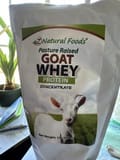 Pasture Raised Goat Whey Protein Concentrate Z Natural Foods Not ultra-processed · Less salt Score 100 out of 100 , 45 points higher
 -
 Whey Protein True Nutrition Not ultra-processed · Less salt Score 100 out of 100 , 45 points higher
 -
 Whey protein Jarrow Formulas · 32 oz Less salt · No non-nutritive sweeteners Score 81 out of 100 , 26 points higher
 -
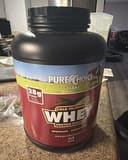 Whey Protein Chocolate Pure Choice Farma Not ultra-processed · Less salt Score 96 out of 100 , 41 points higher
 -
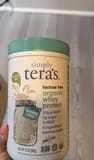 Organic whey protein bourbon vanilla Simply Tera's · 12 oz Less salt · No calcium phosphate Score 81 out of 100 , 26 points higher
The same kind of product, at least 10 points higher, sold in the US. Never paid placements.
The Receipt
Natural 100% Whey Protein Powder
Ingredients
- Whey protein concentrate / isolate minus 2.5 points
- Natural flavors minus 2.5 points
- Sunflower lecithin minus 2.5 points
- Calcium phosphate minus 1.5 points
- Xanthan gum minus 1.5 points
- Sodium alginate minus 1.5 points
- Stevia (steviol glycosides) minus 0.5 points
- Monk fruit extract minus 0.5 points
Processing
- Ultra-processed (NOVA 4) minus 18 points
- 6 kinds of ultra-processing markers minus 7.5 points
Nutrition per 100 g
- Sugars 6.5 g / 100 g minus 3 points
- Saturated fat 3.2 g / 100 g minus 3 points
- Salt 1.5 g / 100 g minus 5 points
- Energy 355 kcal / 100 g minus 2 points
- Fiber 9.7 g / 100 g plus 4 points
- Protein 64.5 g / 100 g plus 2 points
100 − 45.5 = 54.5 → 55
Can’t score above 79. High in salt (above the front-of-pack "high" level). [9]
Nutrition per 100 g
| Energy | 355 kcal |
|---|---|
| Fat | 4.8 g |
| Saturated fat | 3.2 g |
| Trans fat | 0 g |
| Carbohydrates | 19.4 g |
| Sugars | 6.5 g |
| Added sugars | 3.2 g |
| Fiber | 9.7 g |
| Protein | 64.5 g |
| Salt | 1.5 g |
Serving: 2 scoops (31 g)
Ingredients
- Designer whey full spectrum peptides: (gmo-free & rbgh-free whey protein concentrate, gmo-free & rbgh-free whey protein isolate, l-glutamine, l-leucine, taurine, l-phenylalanine)
- digestive health blend: (gmo-free prebiotic vegetable fiber, probiotics:, vegetarian protease enzymes) (not recognized)
- natural vanilla flavor
- sunflower lecithin
- electrolyte blend: (calcium phosphate, magnesium oxide)
- b-vitamin blend: (calcium pantothenate, pyridoxine hydrochloride, thiamin mononitrate, riboflavin)
- zinc gluconate
- xanthan gum
- sodium alginate
- stevia leaf extract
- cinnamon
- annatto
- monk fruit
- mixed tocopherols
- vitamin d3 (cholecalciferol)
Label text, as published
Designer whey full spectrum peptides: (gmo-free & rbgh-free whey protein concentrate, gmo-free & rbgh-free whey protein isolate, l-glutamine, l-leucine, taurine, l-phenylalanine), digestive health blend: [gmo-free prebiotic vegetable fiber*, probiotics: (lactobacillus acidophilus, b. longum, l. plantarum), vegetarian protease enzymes], natural vanilla flavor, sunflower lecithin, electrolyte blend: (calcium phosphate, magnesium oxide), b-vitamin blend: (calcium pantothenate, pyridoxine hydrochloride, thiamin mononitrate, riboflavin), zinc gluconate, xanthan gum, sodium alginate, stevia leaf extract, cinnamon, annatto, monk fruit, mixed tocopherols, vitamin d3 (cholecalciferol).
Allergens and diets
Contains: Milk
- Not vegan
- Palm-oil-free
Always check the package: recipes change.
More protein powders on GoodSwap
-
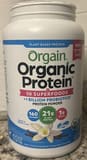 Organic Protein Orgain · 43.2 oz (2.7 lb) 1.22 kg Contains non-nutritive sweetenersContains sugar alcoholsContains seed oilsCertified organic Score 89 out of 100 Excellent
 -
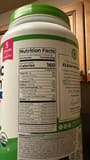 Organic Protein Orgain · 1.2 kg Contains non-nutritive sweetenersContains sugar alcoholsContains seed oilsCertified organic Score 89 out of 100 Excellent
 -
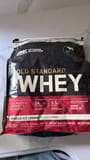 Protein powder Optimum Nutrition · 80 × 31 g Contains non-nutritive sweetenersContains emulsifiers studied for gut effectsContains artificial flavors Score 83 out of 100 Excellent
 -
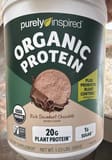 Organic Protein Plant-Based Protein Powder - Rich Decadent Chocolate Purely Inspired · 1.5 lb/680 g Contains non-nutritive sweetenersContains added sugarsCertified organic Score 84 out of 100 Excellent
 -
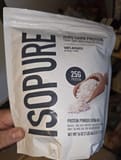 Protein Powder Drink Mix Isopure · 16 oz Ultra-processed Score 73 out of 100 Good
 -
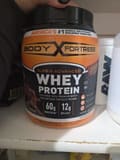 Super Advanced Whey Protein Body X Fortress Contains non-nutritive sweetenersContains emulsifiers studied for gut effects Score 83 out of 100 Excellent
Sources
-
21 CFR 101.22 Foods; labeling of spices, flavorings, colorings and chemical preservatives
“whose significant function in food is flavoring rather than nutritional.”
ecfr.gov
-
EFSA issues new advice on phosphates
“We estimated that dietary exposure to phosphates may exceed the new ADI for infants, toddlers and children with average consumption of phosphates in their diet.”
efsa.europa.eu
-
WHO advises not to use non-sugar sweeteners for weight control in newly released guideline
“The recommendation is based on the findings of a systematic review of the available evidence which suggests that use of NSS does not confer any long-term benefit in reducing body fat in adults or children.”
who.int
-
Dietary Guidelines for Americans, 2025–2030
“Limit foods and beverages that include artificial flavors, petroleum-based dyes, artificial preservatives, and low-calorie non-nutritive sweeteners.”
cdn.realfood.gov
-
Guideline: sugars intake for adults and children
“In both adults and children, WHO recommends reducing the intake of free sugars to less than 10% of total energy intake”
who.int
-
Saturated fatty acid and trans-fatty acid intake for adults and children: WHO guideline
“WHO recommends that adults and children reduce saturated fatty acid intake to 10% of total energy intake (strong recommendation).”
who.int
-
“For adults, WHO recommends less than 2000 mg/day of sodium (equivalent to less than 5 g/day salt), or just under a teaspoon.”
who.int
-
“Table 3: Criteria for drinks (per 100ml)”
assets.publishing.service.gov.uk
-
“Greater exposure to ultra-processed food was associated with a higher risk of adverse health outcomes, especially cardiometabolic, common mental disorder, and mortality outcomes.”
doi.org