Creamer
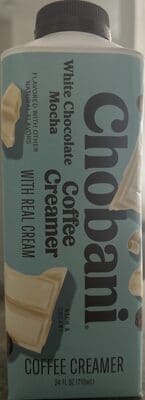
Chobani White Chocolate Mocha Coffee Creamer
Score
- High in sugar
- High in saturated fat
- No additives
Why it scores 76
Chobani White Chocolate Mocha Coffee Creamer scores 76 out of 100 (Good) under GoodSwap’s published rules. What moved the score most:
- minus 14 points Sugars 33.3 g / 100 g: Very high in sugar. Strong
- minus 7 points Saturated fat 6.7 g / 100 g: Very high in saturated fat. Strong
- minus 2.5 points Natural flavors: "Natural flavor" is a legal category (21 CFR 101.22(a)(3)): flavor substances from spices, fruits, vegetables, meat, dairy or fermentation. Info
Every line of the math is on The Receipt below, with its evidence tier and sources.
Better coffee creamers and half and half
-
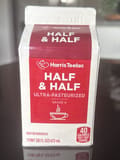 Half & Half Ultra-Pasteurized Grade A Coffee Creamer Harris Teeter · 16 oz Less sugar · Less saturated fat Score 98 out of 100 , 22 points higher
 -
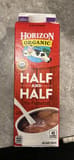 Half and Half Ultra-Pasteurized Horizon Organic · 32 oz Less sugar · Less saturated fat Score 100 out of 100 , 24 points higher
 -
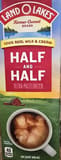 Half And Half Creamer Land O Lake · 30 mL Less sugar · Less saturated fat Score 100 out of 100 , 24 points higher
 -
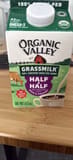 Grassfed Half & Half Organic Valley · 16 oz Less sugar · Less saturated fat Score 100 out of 100 , 24 points higher
 -
 Half and Half A2 Less sugar · Less saturated fat Score 100 out of 100 , 24 points higher
The same kind of product, at least 10 points higher, sold in the US. Never paid placements.
The Receipt
White Chocolate Mocha Coffee Creamer
Ingredients
- Natural flavors minus 2.5 points
Nutrition per 100 g
- Sugars 33.3 g / 100 g minus 14 points
- Saturated fat 6.7 g / 100 g minus 7 points
- Energy 233 kcal / 100 g minus 1 points
100 − 24.5 = 75.5 → 76
Can’t score above 79. High in saturated fat and sugars (above the front-of-pack "high" level). [6]
Nutrition per 100 g
| Energy | 233 kcal |
|---|---|
| Fat | 10 g |
| Saturated fat | 6.7 g |
| Carbohydrates | 33.3 g |
| Sugars | 33.3 g |
| Added sugars | 26.7 g |
| Protein | 0 g |
| Salt | 0.2 g |
Serving: 1 tbsp (15 g)
Ingredients
Label text, as published
Natural flavor negative
Allergens and diets
- Palm-oil-free
Always check the package: recipes change.
More creamer on GoodSwap
-
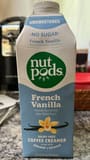 French Vanilla Coffee Creamer Nut Pods · 750 g Ultra-processed Score 69 out of 100 Good
 -
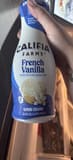 French Vanilla Almond Creamer Califia Farms Ultra-processedContains added sugarsContains seed oils Score 52 out of 100 Okay
 -
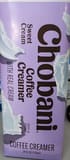 Coffee Creamer Chobani Ultra-processedHigh in saturated fatContains added sugarsNo additives Score 50 out of 100 Okay
 -
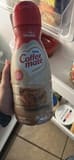 Coffee mate The Original Nestlé · 32 fl oz Ultra-processedContains added sugarsContains emulsifiers studied for gut effectsContains seed oils Score 38 out of 100 Poor
 -
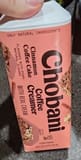 Coffee Creamer Chobani · 24 oz Ultra-processedHigh in sugarHigh in saturated fatContains added sugars Score 38 out of 100 Poor
 -
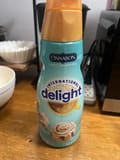 Classic Cinnamon Roll International Delight · 32 fl oz Ultra-processedHigh in sugarContains added sugarsContains emulsifiers studied for gut effects Score 24 out of 100 Poor
More from Chobani
Sources
-
21 CFR 101.22 Foods; labeling of spices, flavorings, colorings and chemical preservatives
“whose significant function in food is flavoring rather than nutritional.”
ecfr.gov
-
Guideline: sugars intake for adults and children
“In both adults and children, WHO recommends reducing the intake of free sugars to less than 10% of total energy intake”
who.int
-
Saturated fatty acid and trans-fatty acid intake for adults and children: WHO guideline
“WHO recommends that adults and children reduce saturated fatty acid intake to 10% of total energy intake (strong recommendation).”
who.int
-
Dietary Guidelines for Americans, 2025–2030
“Limit foods and beverages that include artificial flavors, petroleum-based dyes, artificial preservatives, and low-calorie non-nutritive sweeteners.”
cdn.realfood.gov
-
“Table 3: Criteria for drinks (per 100ml)”
assets.publishing.service.gov.uk