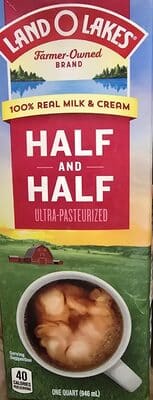
Half milk and half cream
Land O Lake Half And Half Creamer
30 mL
Score
- No additives
Why it scores 100
Land O Lake Half And Half Creamer scores 100 out of 100 (Excellent) under GoodSwap’s published rules. What moved the score most:
- plus 5 points Simple whole food: A few low-concern ingredients, minimally processed. Info
- plus 3 points No additives: No food additives in the ingredient list. Info
- minus 1 points Saturated fat 2 g / 100 g: Contains some saturated fat. Strong
Every line of the math is on The Receipt below, with its evidence tier and sources.
The Receipt
Half And Half Creamer
START100
Nutrition per 100 g
- Saturated fat 2 g / 100 g minus 1 points
subtotal−1
Bonuses
- Simple whole food plus 5 points
- No additives plus 3 points
subtotal+8
TOTAL 100Excellent
100 + 7 = 100
Nutrition per 100 g
| Energy | 40 kcal |
|---|---|
| Fat | 3 g |
| Saturated fat | 2 g |
| Trans fat | 0 g |
| Carbohydrates | 1 g |
| Sugars | 1 g |
| Added sugars | 0 g |
| Fiber | 0 g |
| Protein | 1 g |
| Salt | 0 g |
Serving: 1 portion (30 ml)
More half milk and half cream on GoodSwap
-
 Half & Half Organic Valley · 32 oz High in saturated fatNo additives Score 79 out of 100 Good
 -
 Half and Half Ultra-Pasteurized Horizon Organic · 32 oz No additives Score 100 out of 100 Excellent
 -
 Organic Half and Half Simply Nature · 32 fl oz High in saturated fatCertified organicNo additives Score 79 out of 100 Good
 -
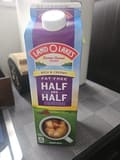 Fat-Free Half and Half Land O Lakes Ultra-processedContains added sugarsContains emulsifiers studied for gut effectsNo synthetic dyes Score 45 out of 100 Okay
 -
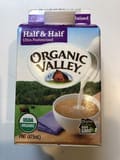 Half & half ultra pasteurized Cooperative Regions Of Organic Producer Pools · 16 oz High in saturated fatCertified organicNo additives Score 79 out of 100 Good
 -
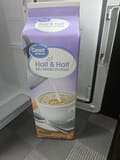 Half & Half Great Value · 946 mL High in saturated fat Score 79 out of 100 Good
Sources
-
Saturated fatty acid and trans-fatty acid intake for adults and children: WHO guideline
“WHO recommends that adults and children reduce saturated fatty acid intake to 10% of total energy intake (strong recommendation).”
who.int