Fruit smoothies
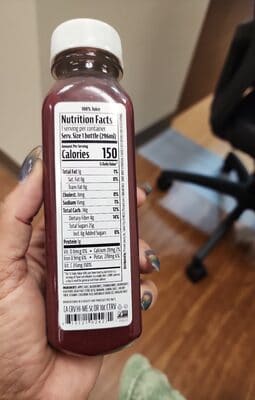
Pressed Juicery Açai Berry wellness smoothie
10 fl oz
Score
- Ultra-processed
Why it scores 62
Pressed Juicery Açai Berry wellness smoothie scores 62 out of 100 (Good) under GoodSwap’s published rules. What moved the score most:
- minus 18 points Ultra-processed (NOVA 4): Classified NOVA 4: made with industrial ingredients and additives. Strong
- minus 14 points Sugars 8.4 g / 100 ml: Very high in sugar. Strong
- minus 4 points Energy 51 kcal / 100 ml: Energy-dense for its volume. Info
Every line of the math is on The Receipt below, with its evidence tier and sources.
Better juices and juice drinks
-
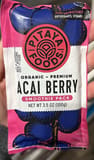 Acai Berry Smoothie Pack Pitaya Foods · 14 oz Not ultra-processed Score 100 out of 100 , 38 points higher
 -
 Fruity Dream Smoothie Solevita · 750 mL Not ultra-processed Score 99 out of 100 , 37 points higher
 -
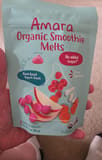 Organic Smoothie Melts, Carrot Raspberry 1 oz Not ultra-processed Score 100 out of 100 , 38 points higher
 -
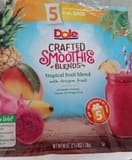 Crafted smoothie blends Dole · 40 oz Not ultra-processed Score 100 out of 100 , 38 points higher
 -
 Organic Coconut Smoothie Trader Joe's Not ultra-processed Score 94 out of 100 , 32 points higher
The same kind of product, at least 10 points higher, sold in the US. Never paid placements.
The Receipt
Açai Berry wellness smoothie
Ingredients
- Inulin (chicory root fiber) minus 2.5 points
Processing
- Ultra-processed (NOVA 4) minus 18 points
Nutrition per 100 ml
- Sugars 8.4 g / 100 ml minus 14 points
- Energy 51 kcal / 100 ml minus 4 points
100 − 38.5 = 61.5 → 62
Nutrition per 100 ml
| Energy | 51 kcal |
|---|---|
| Fat | 0.3 g |
| Saturated fat | 0 g |
| Trans fat | 0 g |
| Carbohydrates | 11.5 g |
| Sugars | 8.4 g |
| Added sugars | 0 g |
| Fiber | 1.4 g |
| Protein | 0.3 g |
| Salt | 0 g |
Serving: 296ml
Ingredients
- Apple juice
- blueberries
- strawberries
- raspberries
- acai puree (acai pulp, citric acid)
- banana
- lemon juice
- chicory fiber
- vitamin C (ascorbic acid, naturally sourced)
- dragon fruit
Label text, as published
Apple juice, blueberries, strawberries, raspberries, acai puree (acai pulp, citric acid), banana, lemon juice, chicory fiber, vitamin C (ascorbic acid, naturally sourced), dragon fruit.
Allergens and diets
- Palm-oil-free
Always check the package: recipes change.
More fruit smoothies on GoodSwap
-
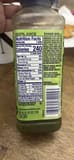 Boosted Smoothie Green Machine Naked · 15.2 fl oz (450 mL) Ultra-processedNo additivesContains whole grains Score 62 out of 100 Good
 -
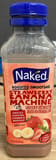 Strawberry Banana Machine Naked · 450 mL Ultra-processedContains added sugarsNo additives Score 43 out of 100 Okay
 -
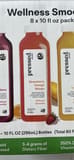 Wellness Smoothie Acai Berry Pressed Juicery · 8 × 10 fl oz Ultra-processedNo synthetic dyesContains whole grains Score 60 out of 100 Good
 -
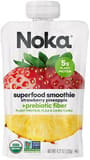 Organic Superfood Smoothies Strawberry Pineapple Noka · 1.4 kg Ultra-processedCertified organicNo additives Score 68 out of 100 Good
 -
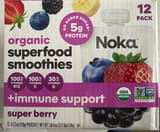 Superfood Smoothie - Super Berry Noka Ultra-processedHigh in sugar Score 58 out of 100 Okay
Sources
-
Guideline: sugars intake for adults and children
“In both adults and children, WHO recommends reducing the intake of free sugars to less than 10% of total energy intake”
who.int
-
Dietary Guidelines for Americans, 2025–2030
“Limit foods and beverages that include artificial flavors, petroleum-based dyes, artificial preservatives, and low-calorie non-nutritive sweeteners.”
cdn.realfood.gov
-
“Greater exposure to ultra-processed food was associated with a higher risk of adverse health outcomes, especially cardiometabolic, common mental disorder, and mortality outcomes.”
doi.org