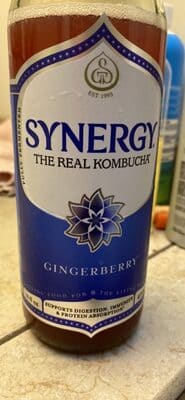
Kombuchas
Synergy Gingerberry
473 mL
Score
- High in sugar
- Contains added sugars
- Contains caffeine
- Certified organic
- No additives
Why it scores 61
Synergy Gingerberry scores 61 out of 100 (Good) under GoodSwap’s published rules. What moved the score most:
- minus 20 points Sugar: An added sugar. Strong
- minus 14 points Sugars 50 g / 100 ml: Very high in sugar. Strong
- minus 4 points Energy 438 kcal / 100 ml: Energy-dense for its volume. Info
Every line of the math is on The Receipt below, with its evidence tier and sources.
Better kombucha
-
 Watermelon Wonder Kombucha GT's Less sugar · No added sugars Score 94 out of 100 , 33 points higher
 -
 Peach Paradise Synergy · 16 oz Less sugar · No added sugars Score 98 out of 100 , 37 points higher
 -
 Organic Raw Kombucha Millennium Products Less sugar · No added sugars Score 100 out of 100 , 39 points higher
 -
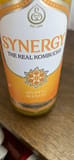 Mystic Mango Synergy · 16 fl oz 473 mL Less sugar · No added sugars Score 97 out of 100 , 36 points higher
 -
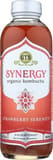 T s enlightened strawberry synergy organic vegan raw kombucha GT's · 8 fl oz (240 mL) Less sugar · No added sugars Score 97 out of 100 , 36 points higher
The same kind of product, at least 10 points higher, sold in the US. Never paid placements.
The Receipt
Gingerberry
Ingredients
- Sugar minus 20 points
Nutrition per 100 ml
- Sugars 50 g / 100 ml minus 14 points
- Salt 0.3 g / 100 ml minus 1 points
- Energy 438 kcal / 100 ml minus 4 points
100 − 39 = 61
Can’t score above 79. Contains sugar, an ingredient of high concern. [1][2][3]
Can’t score above 79. High in sugars (above the front-of-pack "high" level). [5]
Nutrition per 100 ml
| Energy | 438 kcal |
|---|---|
| Fat | 0 g |
| Carbohydrates | 100 g |
| Sugars | 50 g |
| Added sugars | 0.6 g |
| Protein | 0 g |
| Salt | 0.3 g |
Serving: 1 bottle (473 g)
Ingredients
- GT's Organic Raw Kombucha blueberry juice and cold pressed ginger juice. 30-day ferment of Kombucha culture
- black tea green tea
- kiwi juice"
- cane sugar** Do not shake (high concern)
- Swirl gently (not recognized)
- Store upright (not recognized)
- Used for fermentation (not recognized)
- not as an added sweetener MADE WITH 100% PURE LOVE "Organically produced (not recognized)
Label text, as published
GT's Organic Raw Kombucha blueberry juice and cold pressed ginger juice. 30-day ferment of Kombucha culture*, black tea green tea, kiwi juice", and cane sugar** Do not shake. Swirl gently, Store upright. Used for fermentation, not as an added sweetener MADE WITH 100% PURE LOVE "Organically produced. Please note: Kombucha is a fermented tea that has naturally occurring alcohol. Do not consume If you are avoiding alcohol due to pregnancy, allergies, sensitivities, or religious beliefs. 22430 60016 1 P101858-10525 Perishable Keep Refrigerated May leak or gush if unrefrigerated VEGAY ATTEN FREE X CA LIVING Ꮎ SMALL BATCH HEIR M AMILI WALL 30 Ta Thiry the beli Delmen Deiations Sices and me prese
Allergens and diets
- Vegan
- Vegetarian
Always check the package: recipes change.
More kombuchas on GoodSwap
-
 KOMBUCHA Passion Fruit Tangerine Health-Ade · 16 oz Ultra-processedContains added sugarsContains caffeineCertified organic Score 56 out of 100 Okay
 -
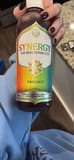 Trilogy Synergy the Real Kombucha · 1 × 16 fl oz High in sugarContains added sugarsContains caffeineCertified organic Score 53 out of 100 Okay
 -
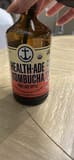 Kombucha Pink Lady Apple Health-Ade · 16 fl oz Ultra-processedContains added sugarsContains caffeineCertified organic Score 47 out of 100 Okay
 -
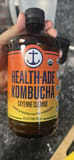 Kombucha Cayenne Cleanse Health-Ade · 16 fl oz/1 PT/473 mL Contains added sugarsContains caffeineCertified organicNo additives Score 72 out of 100 Good
 -
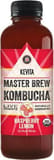 Organic Master Brew Kombucha Raspberry Lemon Kevita Inc. · 450 mL Ultra-processedContains non-nutritive sweetenersContains added sugarsContains caffeine Score 48 out of 100 Okay
More from Synergy
Sources
-
Guideline: sugars intake for adults and children
“In both adults and children, WHO recommends reducing the intake of free sugars to less than 10% of total energy intake”
who.int
-
Dietary Guidelines for Americans, 2025–2030
“Limit foods and beverages that include artificial flavors, petroleum-based dyes, artificial preservatives, and low-calorie non-nutritive sweeteners.”
cdn.realfood.gov
-
Added and free sugars should be as low as possible
“Sugar consumption is a known cause of dental caries.”
efsa.europa.eu
-
“For adults, WHO recommends less than 2000 mg/day of sodium (equivalent to less than 5 g/day salt), or just under a teaspoon.”
who.int
-
“Table 3: Criteria for drinks (per 100ml)”
assets.publishing.service.gov.uk
-
Spilling the Beans: How Much Caffeine is Too Much?
“For most adults, the FDA has cited 400 milligrams* a day — that's about two to three 12-fluid-ounce cups of coffee — as an amount not generally associated with negative effects.”
fda.gov
-
Regulation (EU) No 1169/2011, Annex III point 4.1 (beverages with high caffeine content)
“‘High caffeine content. Not recommended for children or pregnant or breast-feeding women’”
eur-lex.europa.eu