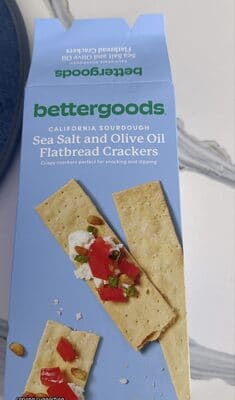
Food
Bettergoods Sea Salt and Olive Oil Flatbread Crackers
Score
- High in salt
- Contains added sugars
- Seed-oil free
Why it scores 70
Bettergoods Sea Salt and Olive Oil Flatbread Crackers scores 70 out of 100 (Good) under GoodSwap’s published rules. What moved the score most:
- minus 20 points Sugar: An added sugar. Strong
- minus 9 points Salt 2.7 g / 100 g: Very high in salt. Strong
- minus 1 points Energy 286 kcal / 100 g: Energy-dense for its weight. Info
Every line of the math is on The Receipt below, with its evidence tier and sources.
Better crackers
-
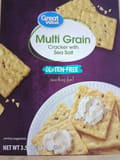 Multi grain Cracker With Sea Salt Great Value Less salt · No added sugars Score 98 out of 100 , 28 points higher
 -
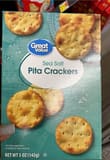 Sea Salt Pita Crackers Great Value · 5 oz Less salt · No added sugars Score 95 out of 100 , 25 points higher
 -
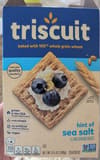 Hint Of Salt Triscuit · 240 g Less salt · No added sugars Score 96 out of 100 , 26 points higher
 -
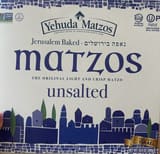 Jerusalem Baked Unsalted Matzo Thins Yehuda · 10.5 oz Less salt · No added sugars Score 100 out of 100 , 30 points higher
 -
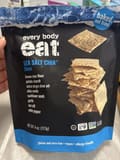 SEA SALT CHIA thins Every Body Eat · 4 oz (113 g) Less salt · No added sugars Score 93 out of 100 , 23 points higher
The same kind of product, at least 10 points higher, sold in the US. Never paid placements.
The Receipt
Sea Salt and Olive Oil Flatbread Crackers
Ingredients
- Sugar minus 20 points
Nutrition per 100 g
- Salt 2.7 g / 100 g minus 9 points
- Energy 286 kcal / 100 g minus 1 points
100 − 30 = 70
Can’t score above 79. Contains sugar, an ingredient of high concern. [1][2][3]
Can’t score above 79. High in salt (above the front-of-pack "high" level). [5]
Nutrition per 100 g
| Energy | 286 kcal |
|---|---|
| Fat | 3.6 g |
| Saturated fat | 0 g |
| Trans fat | 0 g |
| Carbohydrates | 53.6 g |
| Sugars | 3.6 g |
| Added sugars | 3.6 g |
| Fiber | 0 g |
| Protein | 7.1 g |
| Salt | 2.7 g |
Serving: 1 portion (28 g)
Ingredients
- unbleached enriched wheat flour
- niacin
- reduced iron
- thiamine mononitrate
- riboflavin
- folic acid
- enzyme
- organic cane sugar (high concern)
- extra virgin olive oil
- organic sourdough starter
- sea salt
- kosher topping salt
Label text, as published
unbleached enriched wheat flour, niacin, reduced iron, thiamine mononitrate, riboflavin, folic acid, enzyme, organic cane sugar, extra virgin olive oil, organic sourdough starter, sea salt, kosher topping salt
Allergens and diets
Contains: Wheat, Gluten
- Vegan
- Vegetarian
- Not gluten-free
- Palm-oil-free
Always check the package: recipes change.
More from Bettergoods
Sources
-
Guideline: sugars intake for adults and children
“In both adults and children, WHO recommends reducing the intake of free sugars to less than 10% of total energy intake”
who.int
-
Dietary Guidelines for Americans, 2025–2030
“Limit foods and beverages that include artificial flavors, petroleum-based dyes, artificial preservatives, and low-calorie non-nutritive sweeteners.”
cdn.realfood.gov
-
Added and free sugars should be as low as possible
“Sugar consumption is a known cause of dental caries.”
efsa.europa.eu
-
“For adults, WHO recommends less than 2000 mg/day of sodium (equivalent to less than 5 g/day salt), or just under a teaspoon.”
who.int
-
“Table 3: Criteria for drinks (per 100ml)”
assets.publishing.service.gov.uk