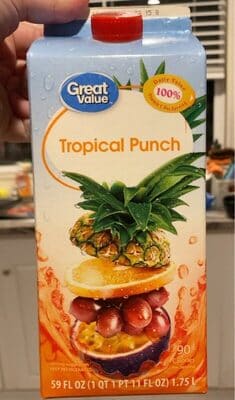
Juices and nectars
Great Value Tropical punch
59 fl oz/1.75 L
Score
- Ultra-processed
- Contains non-nutritive sweeteners
- Contains added sugars
- No synthetic dyes
Why it scores 12
Great Value Tropical punch scores 12 out of 100 (Bad) under GoodSwap’s published rules. What moved the score most:
- minus 20 points Corn syrup: An added sugar. Strong
- minus 20 points Fruit juice concentrate (sweetener): An added sugar. Strong
- minus 18 points Ultra-processed (NOVA 4): Classified NOVA 4: made with industrial ingredients and additives. Strong
Every line of the math is on The Receipt below, with its evidence tier and sources.
Better juices and juice drinks
-
 Tropical Punch Ocean Spray · 8 oz No added sugars · No corn syrup Score 75 out of 100 , 63 points higher
 -
 Tropical Punch Welch's · 64 fl oz No added sugars · No corn syrup Score 58 out of 100 , 46 points higher
 -
 Organic Fruit Punch Juice Drink Bettergoods No non-nutritive sweeteners · No corn syrup Score 55 out of 100 , 43 points higher
 -
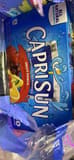 Fruit Punch Caprisun · 60 fl oz No corn syrup · No fruit juice concentrate (sweetener) Score 53 out of 100 , 41 points higher
 -
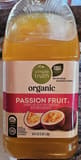 Tropical passion fruit juice blend Simple Truth Organic · 64 fl oz/2 Quart/1.89 L No non-nutritive sweeteners · No corn syrup Score 53 out of 100 , 41 points higher
The same kind of product, at least 10 points higher, sold in the US. Never paid placements.
The Receipt
Tropical punch
Ingredients
- Corn syrup minus 20 points
- Fruit juice concentrate (sweetener) minus 20 points
- Sucralose minus 7.5 points
- Natural flavors minus 1.5 points
Processing
- Ultra-processed (NOVA 4) minus 18 points
- 4 kinds of ultra-processing markers minus 4.5 points
Nutrition per 100 ml
- Sugars 9.6 g / 100 ml minus 14 points
- Energy 38 kcal / 100 ml minus 3 points
100 − 88.5 = 11.5 → 12
Can’t score above 79. Contains corn syrup, an ingredient of high concern. [1][2][3]
Nutrition per 100 ml
| Energy | 38 kcal |
|---|---|
| Fat | 0 g |
| Saturated fat | 0 g |
| Trans fat | 0 g |
| Carbohydrates | 10 g |
| Sugars | 9.6 g |
| Added sugars | 8.8 g |
| Fiber | 0 g |
| Protein | 0 g |
| Salt | 0 g |
Serving: 8 OZA (240 ml)
Ingredients
- water
- high acts fructose corn syrup (high concern)
- concentrated orange juice
- concentrated grape juice (high concern)
- ainer 240ml) concentrated pineapple juice (high concern)
- citric acid
- natural flavor
- ascorbic acid (vitamin c)
- concentrated passion fruit juice
- fruit and vegetable juice for color
- sucralose. 06 daily value (moderate concern)
Label text, as published
water, high acts fructose corn syrup, concentrated orange juice, concentrated grape juice, ainer 240ml) concentrated pineapple juice, citric acid, natural flavor, ascorbic acid (vitamin c), concentrated passion fruit juice, fruit and vegetable juice for color, sucralose. 06 daily value*
Allergens and diets
- Palm-oil-free
Always check the package: recipes change.
More juices and nectars on GoodSwap
-
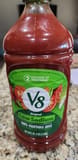 Low Sodium Vegetable Juice V8 · 64 fl oz Ultra-processedNo synthetic dyes Score 70 out of 100 Good
 -
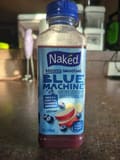 Blue Machine Naked · 450 mL Ultra-processedHigh in sugarContains added sugars Score 36 out of 100 Poor
 -
 100% Juice Cranberry Ocean Spray · 64 fl oz/1.89 L Ultra-processedContains added sugars Score 53 out of 100 Okay
 -
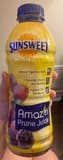 Amazin prune juice Sunsweet · 32 fl oz No additives Score 85 out of 100 Excellent
 -
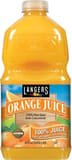 Orange Juice Langers · 237 mL No additives Score 100 out of 100 Excellent
 -
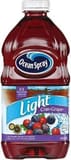 Light Cranberry & Concord Grape Juice Ocean Spray Cranberries Inc. · 245 g Ultra-processedContains non-nutritive sweetenersContains added sugars Score 46 out of 100 Okay
More from Great Value
-
 Purified Drinking Water Great Value · 16.9 fl oz (500 mL) Score 100 out of 100 Excellent
 -
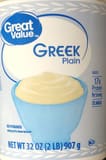 Greek Plain Great Value · 907 g Score 100 out of 100 Excellent
 -
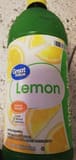 Lemon 100% Juice Great Value · 32 fl oz/1 Quart/946 mL Score 77 out of 100 Good
 -
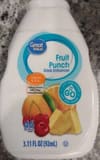 Fruit Punch Drink Enhancer Great Value · 3.11 fl oz/92 mL Score 36 out of 100 Poor
Sources
-
Guideline: sugars intake for adults and children
“In both adults and children, WHO recommends reducing the intake of free sugars to less than 10% of total energy intake”
who.int
-
Dietary Guidelines for Americans, 2025–2030
“Limit foods and beverages that include artificial flavors, petroleum-based dyes, artificial preservatives, and low-calorie non-nutritive sweeteners.”
cdn.realfood.gov
-
Added and free sugars should be as low as possible
“Sugar consumption is a known cause of dental caries.”
efsa.europa.eu
-
Personalized microbiome-driven effects of non-nutritive sweeteners on human glucose tolerance
“As groups, each administered NNS distinctly altered stool and oral microbiome and plasma metabolome, whereas saccharin and sucralose significantly impaired glycemic responses.”
doi.org
-
“Sucralose-6-acetate significantly increased the expression of genes associated with inflammation, oxidative stress, and cancer”
doi.org
-
“EFSA’s experts concluded that the sweetener sucralose (E 955) continues to be safe for consumers for its currently authorised uses as a food additive.”
efsa.europa.eu
-
WHO advises not to use non-sugar sweeteners for weight control in newly released guideline
“The recommendation is based on the findings of a systematic review of the available evidence which suggests that use of NSS does not confer any long-term benefit in reducing body fat in adults or children.”
who.int
-
21 CFR 101.22 Foods; labeling of spices, flavorings, colorings and chemical preservatives
“whose significant function in food is flavoring rather than nutritional.”
ecfr.gov
-
“Greater exposure to ultra-processed food was associated with a higher risk of adverse health outcomes, especially cardiometabolic, common mental disorder, and mortality outcomes.”
doi.org