Non-alcoholic beverages
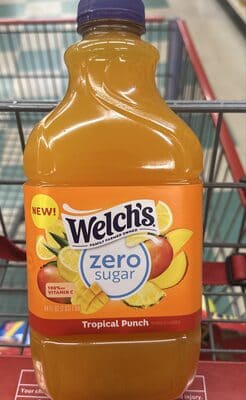
Welch's Tropical Punch
64 fl oz
Score
- Ultra-processed
- Contains non-nutritive sweeteners
- No synthetic dyes
Why it scores 58
Welch's Tropical Punch scores 58 out of 100 (Okay) under GoodSwap’s published rules. What moved the score most:
- minus 18 points Ultra-processed (NOVA 4): Classified NOVA 4: made with industrial ingredients and additives. Strong
- minus 7.5 points Sucralose: In a 2022 randomized study, sucralose and saccharin altered the gut microbiome and impaired glucose responses in some people; a 2023 lab study raised questions about its by-product sucralose-6-acetate. Strong
- minus 7.5 points Acesulfame potassium (Ace-K): In the NutriNet-Santé cohort, acesulfame-K intake was associated with higher cancer risk; cause and effect is not established. Strong
Every line of the math is on The Receipt below, with its evidence tier and sources.
Better juices and juice drinks
-
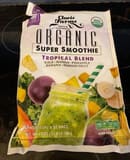 Organic super smoothie tropical blend 48 oz Not ultra-processed · No non-nutritive sweeteners Score 100 out of 100 , 42 points higher
 -
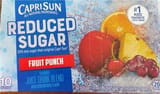 Reduced sugar fruit punch Caprisun Not ultra-processed · No non-nutritive sweeteners Score 96 out of 100 , 38 points higher
 -
 Tropical Passion Evolution Fresh · 15.2 fl oz/450 mL Not ultra-processed · No non-nutritive sweeteners Score 90 out of 100 , 32 points higher
 -
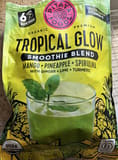 Tropical glow Pitaya Foods · 8 oz Not ultra-processed · No non-nutritive sweeteners Score 100 out of 100 , 42 points higher
 -
 Tropical Medley Antioxidant Blend Juice Good 2 Grow · 6 fl oz Not ultra-processed · No non-nutritive sweeteners Score 85 out of 100 , 27 points higher
The same kind of product, at least 10 points higher, sold in the US. Never paid placements.
The Receipt
Tropical Punch
Ingredients
- Sucralose minus 7.5 points
- Acesulfame potassium (Ace-K) minus 7.5 points
- Natural flavors minus 2.5 points
- Pectin minus 1.5 points
Processing
- Ultra-processed (NOVA 4) minus 18 points
- 4 kinds of ultra-processing markers minus 4.5 points
Nutrition per 100 ml
- Energy 2 kcal / 100 ml minus 1 points
100 − 42.5 = 57.5 → 58
Nutrition per 100 ml
| Energy | 2 kcal |
|---|---|
| Fat | 0 g |
| Saturated fat | 0 g |
| Trans fat | 0 g |
| Carbohydrates | 0.4 g |
| Sugars | 0 g |
| Added sugars | 0 g |
| Fiber | 0 g |
| Protein | 0 g |
| Salt | 0 g |
Serving: 1 serving (8 fl oz)
Ingredients
- FILTERED WATER
- NATURAL FLAVOR
- CITRIC ACID (FOR TARTNESS)
- LEMON JUICE CONCENTRATE
- ASCORBIC ACID (VITAMIN C)
- SODIUM CITRATE
- SUCRALOSE (moderate concern)
- BETA CAROTENE (FOR COLOR)
- PECTIN
- ACESULFAME POTASSIUM **ADDS NEGLIGIBLE AMOUNT OF SUGARs (moderate concern)
Label text, as published
FILTERED WATER, NATURAL FLAVOR, CITRIC ACID (FOR TARTNESS), LEMON JUICE CONCENTRATE**, ASCORBIC ACID (VITAMIN C),SODIUM CITRATE, SUCRALOSE, BETA CAROTENE (FOR COLOR), PECTIN, ACESULFAME POTASSIUM **ADDS NEGLIGIBLE AMOUNT OF SUGARs
Allergens and diets
- Palm-oil-free
Always check the package: recipes change.
More non-alcoholic beverages on GoodSwap
-
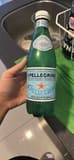 S.PELLEGRINO Sparkling Natural Mineral Water S.pellegrino · 500 mL No additives Score 100 out of 100 Excellent
 -
 SmartWater Glaceau · 20 oz No additives Score 100 out of 100 Excellent
 -
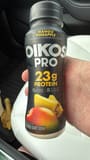 Oikos Pro Strawberry Banana Flavored with Other Natural Flavors Oikos Pro · 7 fl oz (207 mL) Ultra-processedContains non-nutritive sweetenersNo synthetic dyes Score 69 out of 100 Good
 -
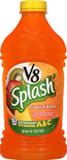 V splash tropical blend juice V8 · 64 fl oz Ultra-processedContains non-nutritive sweetenersContains added sugars Score 38 out of 100 Poor
 -
 Danimals Danimals · 37.2 fl oz Ultra-processedContains added sugarsNo synthetic dyes Score 36 out of 100 Poor
 -
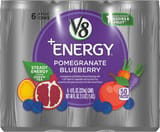 V v-fusion +energy pomegranate blueberry vegetable V8 · 48 fl oz Ultra-processedContains non-nutritive sweetenersContains caffeine Score 71 out of 100 Good
More from Welch's
Sources
-
Personalized microbiome-driven effects of non-nutritive sweeteners on human glucose tolerance
“As groups, each administered NNS distinctly altered stool and oral microbiome and plasma metabolome, whereas saccharin and sucralose significantly impaired glycemic responses.”
doi.org
-
“Sucralose-6-acetate significantly increased the expression of genes associated with inflammation, oxidative stress, and cancer”
doi.org
-
“EFSA’s experts concluded that the sweetener sucralose (E 955) continues to be safe for consumers for its currently authorised uses as a food additive.”
efsa.europa.eu
-
WHO advises not to use non-sugar sweeteners for weight control in newly released guideline
“The recommendation is based on the findings of a systematic review of the available evidence which suggests that use of NSS does not confer any long-term benefit in reducing body fat in adults or children.”
who.int
-
Dietary Guidelines for Americans, 2025–2030
“Limit foods and beverages that include artificial flavors, petroleum-based dyes, artificial preservatives, and low-calorie non-nutritive sweeteners.”
cdn.realfood.gov
-
Artificial sweeteners and cancer risk: Results from the NutriNet-Santé population-based cohort study
“In this large cohort study, artificial sweeteners (especially aspartame and acesulfame-K), which are used in many food and beverage brands worldwide, were associated with increased cancer risk.”
doi.org
-
Re-evaluation of acesulfame K (E 950) as food additive (plain language summary)
“The acceptable daily intake (ADI) considered safe for all population groups was set at 15 mg/kg body weight (bw) per day.”
efsa.europa.eu
-
21 CFR 101.22 Foods; labeling of spices, flavorings, colorings and chemical preservatives
“whose significant function in food is flavoring rather than nutritional.”
ecfr.gov
-
“Greater exposure to ultra-processed food was associated with a higher risk of adverse health outcomes, especially cardiometabolic, common mental disorder, and mortality outcomes.”
doi.org