Extruded cereals
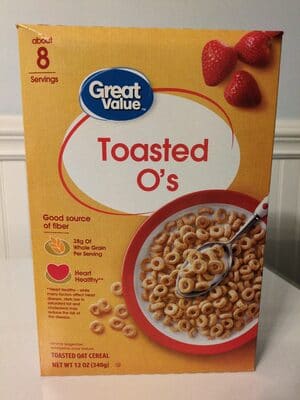
Great Value Toasted O’s
12 oz
Score
- Contains added sugars
- No additives
Why it scores 78
Great Value Toasted O’s scores 78 out of 100 (Good) under GoodSwap’s published rules. What moved the score most:
- minus 20 points Sugar: An added sugar. Strong
- minus 5 points Salt 1.2 g / 100 g: High in salt. Strong
- plus 4 points Fiber 7.3 g / 100 g: A good source of fiber. Strong
Every line of the math is on The Receipt below, with its evidence tier and sources.
Better breakfast cereals
-
 Toasted Wheat-Fuls Cereal Mom's Best Cereals · 16.4 oz (1 lb .4 oz) 465 g No added sugars · No sugar Score 100 out of 100 , 22 points higher
 -
 Toasted Wheat Cereal Wheatena · 20 oz No added sugars · No sugar Score 100 out of 100 , 22 points higher
 -
 Farmers Market Mix Seven Sundays · 12 oz No added sugars · No sugar Score 100 out of 100 , 22 points higher
 -
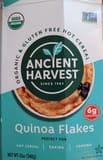 Quinoa Flakes Ancient Harvest · 12 oz No added sugars · No sugar Score 100 out of 100 , 22 points higher
 -
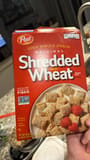 Shredded Wheat Original Post · 16.4 oz (465 g) No added sugars · No sugar Score 100 out of 100 , 22 points higher
The same kind of product, at least 10 points higher, sold in the US. Never paid placements.
The Receipt
Toasted O’s
Ingredients
- Sugar minus 20 points
Nutrition per 100 g
- Saturated fat 1.2 g / 100 g minus 1 points
- Salt 1.2 g / 100 g minus 5 points
- Energy 390 kcal / 100 g minus 2 points
- Fiber 7.3 g / 100 g plus 4 points
- Protein 12.2 g / 100 g plus 2 points
100 − 22 = 78
Can’t score above 79. Contains sugar, an ingredient of high concern. [1][2][3]
Nutrition per 100 g
| Energy | 390 kcal |
|---|---|
| Fat | 7.3 g |
| Saturated fat | 1.2 g |
| Trans fat | 0 g |
| Carbohydrates | 73.2 g |
| Sugars | 0 g |
| Added sugars | 0 g |
| Fiber | 7.3 g |
| Protein | 12.2 g |
| Salt | 1.2 g |
Serving: 1 portion (41 g)
Ingredients
- US (not recognized)
- reat (not recognized)
- about 8 servings per container (not recognized)
- Value (not recognized)
- 1 1/2 cup (41g) (not recognized)
- 160 (not recognized)
- oas (not recognized)
- Daily Valee (not recognized)
- Sp (not recognized)
- 4% (not recognized)
- Smurated Fat (not recognized)
- 3% (not recognized)
- Trans Fat (not recognized)
- Cholesterol Ong (not recognized)
- Monounsaturated Fat (not recognized)
- 0% (not recognized)
- Sodium
- 9% (not recognized)
- 11% (not recognized)
- Dietary Fiber
- 11% (not recognized)
- Total Sugars (high concern)
- Protein Sg (not recognized)
- Includes (not recognized)
- Added Sugars (high concern)
- 0% (not recognized)
- Vitamin D
- 15% (not recognized)
- 0% (not recognized)
- Calcumm 220m] (not recognized)
- Bon (not recognized)
- 80% (not recognized)
- Potassium
- Protein 4 (not recognized)
- NGREMENTS WHOLE (not recognized)
- 5-197 16.1 (not recognized)
- N6-0000,8155 (not recognized)
Label text, as published
US Nutrition Facts reat about 8 servings per container Value Serving size 1 1/2 cup (41g) Amount per serving Calories 160 oas * Daily Valee* Total Fat Sp 4% Smurated Fat 0.5g 3% Trans Fat 0g Polyunsaturaled Fat 1g Cholesterol Ong Monounsaturated Fat 1g 0% Sodium 200mg 9% Total Carbohydrate 30g 11% Dietary Fiber 3g 11% Total Sugars 0g Protein Sg Includes Og Added Sugars 0% Vitamin D Omcg 15% 0% Calcumm 220m] Bon 14.4mg 80% Potassium 130mg Protein 4 NGREMENTS WHOLE 5-197 16.1 N6-0000 8155
Allergens and diets
Contains: Gluten
- Not gluten-free
Always check the package: recipes change.
More extruded cereals on GoodSwap
-
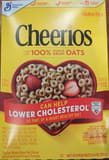 Cheerios General Mills · 8.9 oz Contains added sugarsContains whole grains Score 65 out of 100 Good
 -
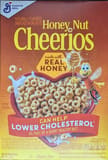 Honey Nut Cheerios General Mills · 10.8 oz Ultra-processedHigh in sugarContains added sugarsContains seed oils Score 17 out of 100 Bad
 -
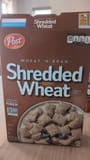 Shredded Wheat Post · 18 oz Contains whole grains Score 100 out of 100 Excellent
 -
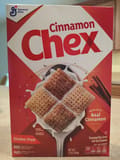 Chex Cinnamon gluten free General Mills · 12 oz Ultra-processedContains added sugarsContains seed oilsContains whole grains Score 21 out of 100 Poor
 -
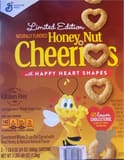 Honey Nut cheerios General Mills · 3 lb Ultra-processedHigh in sugarContains added sugarsContains seed oils Score 15 out of 100 Bad
 -
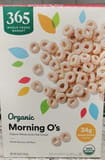 Morning O's 365 · 13 servings Contains added sugarsCertified organicContains whole grains Score 75 out of 100 Good
More from Great Value
-
 Purified Drinking Water Great Value · 16.9 fl oz (500 mL) Score 100 out of 100 Excellent
 -
 Greek Plain Great Value · 907 g Score 100 out of 100 Excellent
 -
 Purified Drinking Water with Flavor-Enhancing Minerals 40 Bottle Value Pack Great Value · 20 L Score 100 out of 100 Excellent
 -
 Bite Size Shredded Wheat Great Value · 8 servings Net wt 16.4 oz Score 100 out of 100 Excellent
Sources
-
Guideline: sugars intake for adults and children
“In both adults and children, WHO recommends reducing the intake of free sugars to less than 10% of total energy intake”
who.int
-
Dietary Guidelines for Americans, 2025–2030
“Limit foods and beverages that include artificial flavors, petroleum-based dyes, artificial preservatives, and low-calorie non-nutritive sweeteners.”
cdn.realfood.gov
-
Added and free sugars should be as low as possible
“Sugar consumption is a known cause of dental caries.”
efsa.europa.eu
-
Saturated fatty acid and trans-fatty acid intake for adults and children: WHO guideline
“WHO recommends that adults and children reduce saturated fatty acid intake to 10% of total energy intake (strong recommendation).”
who.int
-
“For adults, WHO recommends less than 2000 mg/day of sodium (equivalent to less than 5 g/day salt), or just under a teaspoon.”
who.int